
Table of Contents
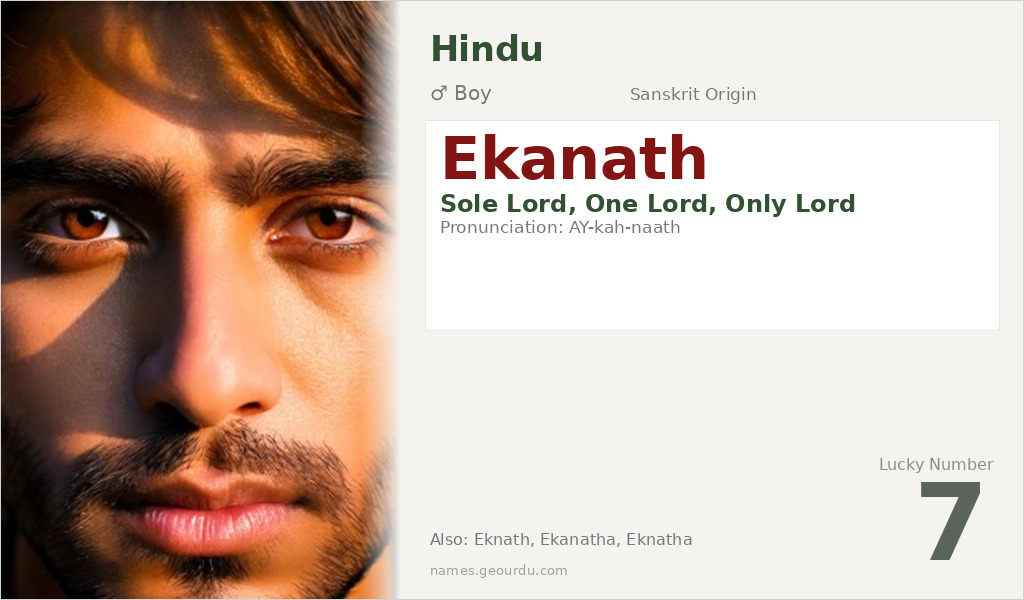
Ekanath is a profound Sanskrit name with deep spiritual resonance in Hindu tradition. Meaning ‘Sole Lord’ or ‘One Lord’, this name reflects the monotheistic aspects of Hindu devotion. Historically associated with saints and scholars, Ekanath carries centuries of religious and cultural significance. Today, it remains a meaningful choice for parents seeking a name with theological depth and historical legacy.
Meaning of Ekanath
Ekanath is a compound Sanskrit name formed from two elements: ‘eka’ (एक) meaning ‘one, sole, only’ and ‘nāth’ (नाथ) meaning ‘lord, master, protector’. The combination creates a meaning of ‘Sole Lord’ or ‘Only Lord’, referring to the supreme deity in Hindu monotheistic traditions. Linguistically, it follows classical Sanskrit compounding rules (samāsa) where ‘eka’ modifies ‘nāth’ to create a new semantic unit. This name appears in various Hindu texts and historical records, particularly associated with the Bhakti movement saints who emphasized devotion to a single God. The theological implication is significant – it denotes complete surrender to and recognition of one ultimate divine authority.
| 📛 Name | Ekanath |
| 💎 Meaning | Sole Lord, One Lord, Only Lord |
| 👤 Gender | Boy |
| 🕌 Religion | Hindu |
| 🌍 Origin | Sanskrit |
| 🗣 Pronunciation | AY-kah-naath |
| ✍️ Urdu | ایکاناتھ |
| ✍️ Arabic | إيكانات |
| 🔢 Numerology | 7 |
| ✨ Spellings | Eknath, Ekanatha, Eknatha |
Origin & Cultural Significance
Ekanath originates from classical Sanskrit, the ancient liturgical language of Hinduism. The name has been used for centuries within Hindu communities, particularly in Maharashtra and other regions of India where Sanskrit-derived names are traditional. Its most famous bearer, Sant Eknath (16th century), was a major figure in the Marathi Bhakti movement, which revitalized Hindu devotion through vernacular literature. The name gained prominence through his influential works and saintly reputation. Today, it remains primarily used in Hindu families, especially those with connections to Maharashtra or devotion to the Bhakti tradition. While less common than some other Sanskrit names, it carries significant cultural weight due to its association with important religious figures.
Personality Traits
Those named Ekanath often exhibit qualities of spiritual depth, intellectual curiosity, and principled leadership. They tend to be contemplative individuals who value truth and devotion in their personal and professional lives. With a natural inclination toward philosophical thinking, they often seek meaning beyond surface appearances and may excel in fields requiring analytical depth or spiritual insight. Their name’s meaning of ‘Sole Lord’ can manifest as focused determination and unwavering commitment to their beliefs and principles.
Similar Names
If you like Ekanath, consider: Ekapada, Ekanetra, Ekachandra, Nath, Ekaparnna
Famous People Named Ekanath
- Sant Eknath (1533–1599) — Renowned Marathi saint, scholar and poet of the Bhakti movement, author of Eknathi Bhagavata
- Eknath Easwaran (1910–1999) — Indian-born spiritual teacher, author and translator of Indian spiritual texts
Frequently Asked Questions About Ekanath
What does Ekanath mean?
Ekanath means 'Sole Lord' or 'One Lord' in Sanskrit, derived from 'eka' (one) and 'nāth' (lord).
Is Ekanath a boy or girl name?
Ekanath is exclusively a boy's name in Hindu naming tradition, following Sanskrit grammatical gender rules where '-nāth' endings are masculine.
What is the origin of Ekanath?
Ekanath originates from Sanskrit, the classical language of Hinduism, and has been used for centuries in Indian Hindu communities, particularly associated with the Bhakti movement.





