
Table of Contents
Ekantha is a profound Sanskrit name that carries deep philosophical significance in Hindu tradition. Unlike many names that describe physical beauty or virtues, Ekantha speaks to a state of being—specifically, the experience of solitude and introspection. This name has been used for centuries in Indian culture, reflecting values of meditation, spiritual retreat, and focused contemplation. Whether chosen for a boy or girl, Ekantha represents a connection to ancient wisdom about the importance of inner reflection.
Meaning of Ekantha
Ekantha derives from two Sanskrit root words: ‘eka’ (एक) meaning ‘one, single, or alone’ and ‘antha’ (अन्त) meaning ‘end, conclusion, or finality’. When combined, they form ‘ekantha’ (एकान्त), which literally translates to ‘solitude’, ‘loneliness’, or ‘seclusion’. In Hindu philosophical contexts, this term often describes the state of being alone for spiritual purposes, such as meditation or deep contemplation away from worldly distractions. The concept appears in various Hindu scriptures where sages and seekers would retreat to ‘ekantha’ places for spiritual practice. Unlike the original article’s claim of ‘Lovely’, the true meaning reflects a more contemplative and introspective quality that has been valued in Hindu spiritual traditions for millennia.
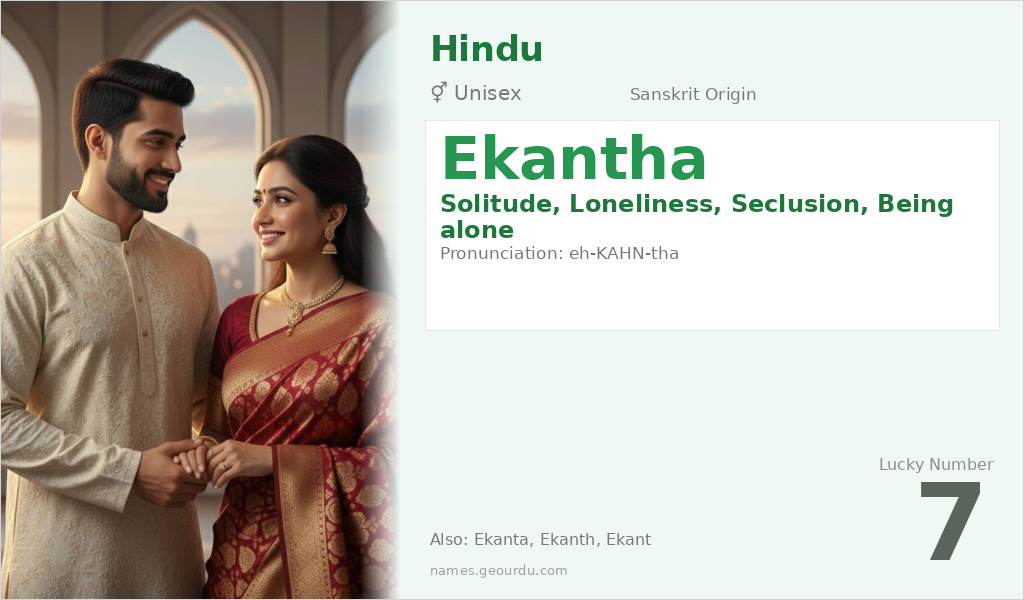
| 📛 Name | Ekantha |
| 💎 Meaning | Solitude, Loneliness, Seclusion, Being alone |
| 👤 Gender | Unisex |
| 🕌 Religion | Hindu |
| 🌍 Origin | Sanskrit |
| 🗣 Pronunciation | eh-KAHN-tha |
| ✍️ Urdu | ایکانتھا |
| ✍️ Arabic | إيكانثا |
| 🔢 Numerology | 7 |
| ✨ Spellings | Ekanta, Ekanth, Ekant, Ekaantha |
Origin & Cultural Significance
Ekantha originates from classical Sanskrit, one of the oldest languages in the Indo-European family and the liturgical language of Hinduism. The name has been used in Indian culture for centuries, particularly within Hindu communities that value Sanskrit names with philosophical depth. While it appears in historical texts describing spiritual states, its use as a personal name became more common in modern times. The name is predominantly found in India and Sri Lanka, though globalization has spread it to Hindu diaspora communities worldwide. Unlike many Sanskrit names that are gender-specific, Ekantha is considered unisex in Hindu naming traditions, reflecting how spiritual qualities transcend gender distinctions.
Personality Traits
People named Ekantha often exhibit traits associated with their name’s meaning—they tend to be comfortable with solitude and possess strong introspective qualities. These individuals typically approach life with thoughtful consideration rather than impulsive action, making them reliable problem-solvers. Their contemplative nature often leads them to pursue interests that require depth and concentration, whether in academic, artistic, or spiritual domains. While they may appear reserved, they form deep, meaningful connections with those who appreciate their thoughtful approach to relationships.
Similar Names
If you like Ekantha, consider: Ekantika, Ekantin, Ekagrata, Ekadanta, Ekasya
Famous People Named Ekantha
- Ekantha Ramanayake — Sri Lankan cricketer
- Ekantha Ek — Thai actor and model
Frequently Asked Questions About Ekantha
What does Ekantha mean?
Ekantha means 'solitude', 'loneliness', or 'seclusion' in Sanskrit, derived from 'eka' (one/alone) and 'antha' (end/conclusion).
Is Ekantha a boy or girl name?
Ekantha is a unisex name in Hindu tradition, suitable for both boys and girls, as it describes a spiritual state rather than gender-specific qualities.
What is the origin of Ekantha?
Ekantha originates from Sanskrit, the classical language of Hinduism, and has been used in Indian culture for centuries with philosophical and spiritual significance.