
Table of Contents
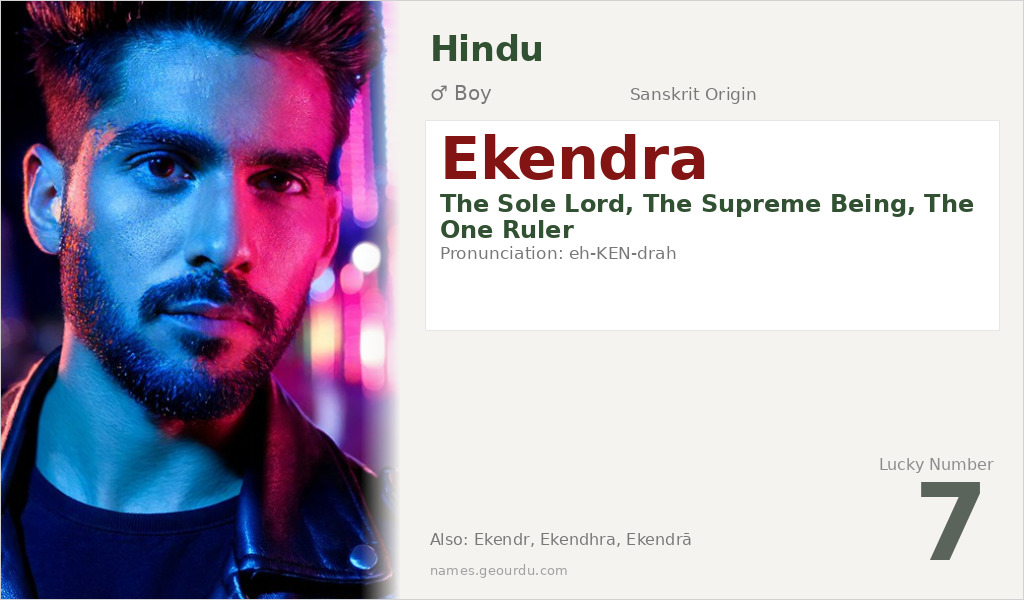
Ekendra is a powerful Sanskrit name that carries deep spiritual and royal connotations. Meaning ‘The Sole Lord’ or ‘The Supreme Being’, this name has been cherished in Hindu culture for centuries. With roots in ancient Indian traditions, Ekendra represents singular authority and divine leadership. Parents choosing this name often seek to bestow qualities of strength, independence, and spiritual significance upon their child.
Meaning of Ekendra
Ekendra derives from the Sanskrit language, combining two significant elements: ‘Eka’ (एक) meaning ‘one, sole, or single’ and ‘Indra’ (इन्द्र) meaning ‘lord, ruler, or king’. In Hindu mythology, Indra is the king of the Devas (gods) and ruler of Svarga (heaven), making this compound name particularly powerful. The complete meaning translates to ‘the sole Indra’ or ‘the one supreme ruler’, suggesting unparalleled authority and leadership. This name appears in various Hindu texts and classical Sanskrit literature as both a proper name and an epithet for deities. The linguistic construction follows standard Sanskrit compounding rules, creating a name that is both phonetically balanced and semantically rich.
| 📛 Name | Ekendra |
| 💎 Meaning | The Sole Lord, The Supreme Being, The One Ruler |
| 👤 Gender | Boy |
| 🕌 Religion | Hindu |
| 🌍 Origin | Sanskrit |
| 🗣 Pronunciation | eh-KEN-drah |
| ✍️ Urdu | ایکندر |
| ✍️ Arabic | إيكيندرا |
| 🔢 Numerology | 7 |
| ✨ Spellings | Ekendr, Ekendhra, Ekendrā |
Origin & Cultural Significance
Ekendra originates from classical Sanskrit, the ancient liturgical language of Hinduism, Buddhism, and Jainism. The name has been used in Indian subcontinent cultures for centuries, particularly within Hindu communities in India, Nepal, and diaspora populations. Its usage reflects the importance of Sanskrit names in Hindu naming traditions, where names often carry spiritual meanings and connections to deities. The name’s components—Eka and Indra—both have extensive histories in Vedic literature, with Indra being one of the most prominent deities in the Rigveda. While primarily associated with Hindu tradition, the name’s Sanskrit origin gives it cultural significance across South Asia, appearing in historical records, literature, and contemporary usage.
Personality Traits
Those named Ekendra are often perceived as natural leaders with strong, independent personalities. The name’s meaning suggests someone who stands alone in their authority and capabilities, which may translate to self-reliance and confidence in personal and professional spheres. They may exhibit determination, ambition, and a preference for taking charge rather than following others. While the name carries royal and divine connotations, individuals named Ekendra often balance this with practical leadership qualities and a sense of responsibility.
Similar Names
If you like Ekendra, consider: Ekesh, Ekapad, Indrajit, Indraneel, Mahendra
Famous People Named Ekendra
- Ekendra Bir Bikram Shah — Nepalese royal family member from the Shah dynasty
- Ekendra Lamsal — Contemporary Nepali poet and literary figure
Frequently Asked Questions About Ekendra
What does Ekendra mean?
Ekendra means 'The Sole Lord' or 'The Supreme Being' in Sanskrit. It combines 'Eka' (one) and 'Indra' (lord/ruler) to create a name meaning 'the one supreme ruler'.
Is Ekendra a boy or girl name?
Ekendra is exclusively a boy's name in Hindu naming traditions. The name's meaning and cultural usage are masculine, associated with leadership and authority typically attributed to male figures in traditional contexts.
What is the origin of Ekendra?
Ekendra originates from Sanskrit, the ancient classical language of India. It is a compound name with roots in Hindu mythology and Vedic tradition, specifically combining elements referring to the deity Indra, king of the gods.





