
Table of Contents
Ekeswara is a profound Sanskrit name that carries deep spiritual and philosophical weight. Primarily used for boys in Hindu communities, this name embodies the concept of divine unity and supreme lordship. With roots in ancient Indian scriptures, Ekeswara represents more than just an identifier—it reflects a worldview centered on monotheistic principles. Discover the rich etymology, cultural significance, and modern relevance of this meaningful name.
Meaning of Ekeswara
Ekeswara is a compound Sanskrit name formed from ‘Eka’ (एक), meaning ‘one’ or ‘sole’, and ‘Ishwara’ (ईश्वर), meaning ‘lord’, ‘god’, or ‘ruler’. Together, they create the meaning ‘The One Lord’ or ‘The Sole God’, emphasizing monotheistic belief within Hindu philosophy. This name appears in theological discussions about the nature of divinity, particularly in traditions that view God as a singular, supreme reality. The term ‘Ishwara’ itself derives from the Sanskrit root ‘īś’ (ईश्), meaning ‘to own, rule, or command’, giving the name connotations of sovereignty and authority. In classical texts, Ekeswara is sometimes used synonymously with Parameshwara (Supreme Lord) to denote the ultimate divine principle.
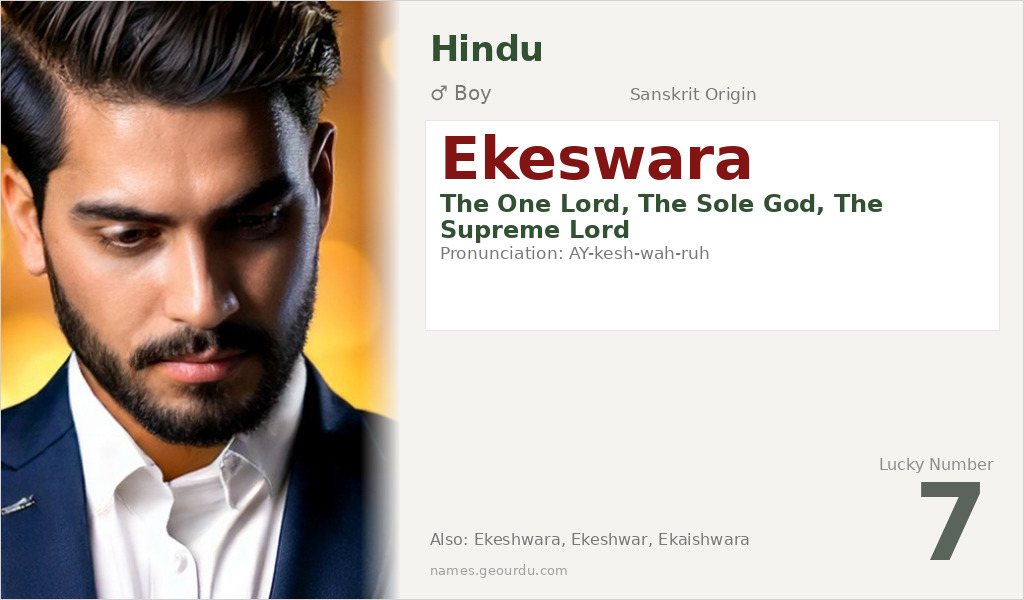
| 📛 Name | Ekeswara |
| 💎 Meaning | The One Lord, The Sole God, The Supreme Lord |
| 👤 Gender | Boy |
| 🕌 Religion | Hindu |
| 🌍 Origin | Sanskrit |
| 🗣 Pronunciation | AY-kesh-wah-ruh |
| ✍️ Urdu | ایکیشور |
| ✍️ Arabic | إيكيشوارا |
| 🔢 Numerology | 7 |
| ✨ Spellings | Ekeshwara, Ekeshwar, Ekaishwara, Ekaishwar |
Origin & Cultural Significance
Ekeswara originates from classical Sanskrit, the ancient liturgical language of Hinduism, Buddhism, and Jainism. It emerged from philosophical and religious discourses in India, particularly within Vedantic and Shaivite traditions that explore the nature of a single, supreme deity. The name reflects the concept of ‘Eka Ishwara Vad’ (doctrine of one God), which appears in various Hindu schools of thought. While more common in South India and among certain Hindu communities, the name carries pan-Indian religious significance. Historically, it has been used by scholars, priests, and devotees who emphasize monotheistic aspects of Hinduism, connecting it to broader spiritual principles rather than regional tribal origins.
Personality Traits
Named after the concept of divine unity, individuals called Ekeswara are often associated with qualities of focus, integrity, and spiritual depth. They may exhibit leadership tendencies, guided by strong principles and a desire for harmony. The name suggests a personality that values truth, devotion, and philosophical inquiry, potentially making them thoughtful and principled in their approach to life and relationships.
Similar Names
If you like Ekeswara, consider: Ekanath, Ekadanta, Ekapada, Ishwar, Maheshwara
Famous People Named Ekeswara
- Ekeswara Rao — Indian film actor known for Telugu cinema
- Ekeswara Sharma — Hindu priest and religious scholar from South India
Frequently Asked Questions About Ekeswara
What does Ekeswara mean?
Ekeswara means 'The One Lord' or 'The Sole God' in Sanskrit, combining 'Eka' (one) and 'Ishwara' (lord/god).
Is Ekeswara a boy or girl name?
Ekeswara is traditionally a masculine name used for boys in Hindu naming traditions, reflecting its grammatical and cultural gender associations in Sanskrit.
What is the origin of Ekeswara?
Ekeswara originates from Sanskrit, the classical language of ancient India, with roots in Hindu philosophical and religious texts discussing monotheistic concepts.





