
Table of Contents
Elada is a distinctive Hebrew name with deep biblical roots and profound spiritual meaning. Meaning ‘God has known’ or ‘God has acknowledged’, this name carries centuries of religious and cultural significance. While relatively uncommon today, Elada appears in the Hebrew Bible as the name of several figures, connecting modern bearers to ancient traditions. This guide explores the true etymology, pronunciation, and cultural context of this meaningful name.
Meaning of Elada
Elada derives from the Hebrew elements ‘El’ (אֵל), meaning ‘God’, and ‘yada’ (יָדַע), meaning ‘to know, to acknowledge, to recognize’. The complete name therefore translates to ‘God has known’ or ‘God has acknowledged’. This construction follows a common pattern in Hebrew theophoric names where ‘El’ is combined with a verb or attribute. In biblical context, ‘knowing’ carries deep significance beyond mere intellectual awareness—it implies intimate relationship, recognition, and divine attention. The name appears in two forms in the Hebrew Bible: as Eladah (אֶלְעָדָה) in 1 Chronicles 8:27 and possibly related forms elsewhere, always maintaining this core meaning of divine acknowledgment.
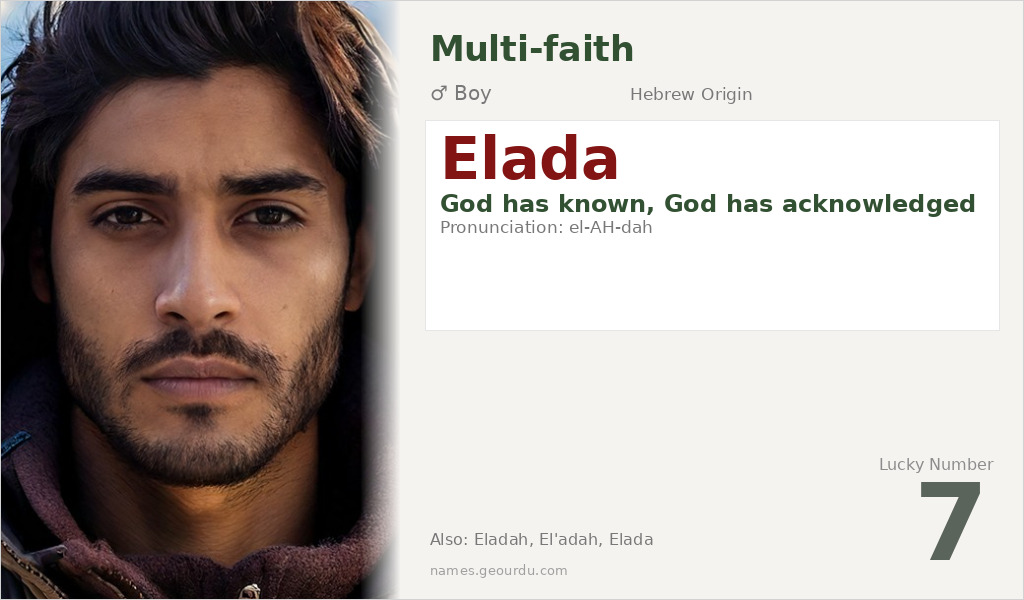
| 📛 Name | Elada |
| 💎 Meaning | God has known, God has acknowledged |
| 👤 Gender | Boy |
| 🕌 Religion | Multi-faith |
| 🌍 Origin | Hebrew |
| 🗣 Pronunciation | el-AH-dah |
| ✍️ Urdu | ایلادا |
| ✍️ Arabic | إلادا |
| 🔢 Numerology | 7 |
| ✨ Spellings | Eladah, El'adah, Elada, Elada |
Origin & Cultural Significance
Elada originates from ancient Hebrew and appears in the Hebrew Bible (Old Testament), specifically in the genealogical records of 1 Chronicles. The name belongs to the Benjaminite tribe, mentioned as a descendant of Benjamin. While the name has Hebrew origins, it has been used within Jewish, Christian, and occasionally Muslim communities where biblical names are appreciated. Unlike many modern invented names, Elada has documented historical usage dating back thousands of years. The name’s preservation in biblical texts ensures its authenticity as a genuine Hebrew name rather than a modern construction, though it remains relatively rare in contemporary usage across all religious traditions.
Personality Traits
Those named Elada often embody qualities of introspection, spiritual depth, and thoughtful consideration. The name’s meaning—’God has known’—suggests an individual who seeks meaningful connections and values being truly understood. They may exhibit analytical tendencies, carefully considering decisions and relationships. This name often correlates with people who appreciate tradition while maintaining personal authenticity, reflecting the balance between divine acknowledgment and individual identity inherent in the name’s etymology.
Similar Names
If you like Elada, consider: Elad, Elhanan, Eliad, Eliezer, Elimelech
Famous People Named Elada
- Eladah (Biblical figure) — Son of Ephraim mentioned in 1 Chronicles 7:20
- Eladah ben Benjamin — Biblical descendant of Benjamin mentioned in 1 Chronicles 8:27
Frequently Asked Questions About Elada
What does Elada mean?
Elada means 'God has known' or 'God has acknowledged' in Hebrew, derived from 'El' (God) and 'yada' (to know).
Is Elada a boy or girl name?
Elada is traditionally a masculine name, appearing as such in biblical records. There are no documented feminine uses in historical sources.
What is the origin of Elada?
Elada originates from ancient Hebrew and appears in the Hebrew Bible/Old Testament, specifically in 1 Chronicles as the name of Benjaminite descendants.





