
Table of Contents
Elisabeth is a timeless name with profound religious and historical significance. Derived from ancient Hebrew roots meaning ‘God is my oath,’ this name has been borne by queens, saints, and influential figures throughout history. Its enduring popularity across cultures speaks to its elegant sound and meaningful origin. From biblical times to modern royalty, Elisabeth continues to be a cherished choice for girls worldwide.
Meaning of Elisabeth
The name Elisabeth carries the powerful meaning ‘God is my oath’ or ‘consecrated to God,’ originating from the Hebrew name Elisheva (אֱלִישֶׁבַע). This compound name combines ‘El,’ referring to God, and ‘sheva,’ meaning oath or seven—with seven symbolizing completeness in biblical tradition. In the New Testament, Elisabeth appears as the mother of John the Baptist, establishing its Christian significance as a name representing faith and divine promise. Through Greek (Ἐλισάβετ) and Latin adaptations, the name spread throughout Europe, maintaining its core meaning while evolving in pronunciation and spelling across languages including German, Scandinavian, and Slavic variations.
| 📛 Name | Elisabeth |
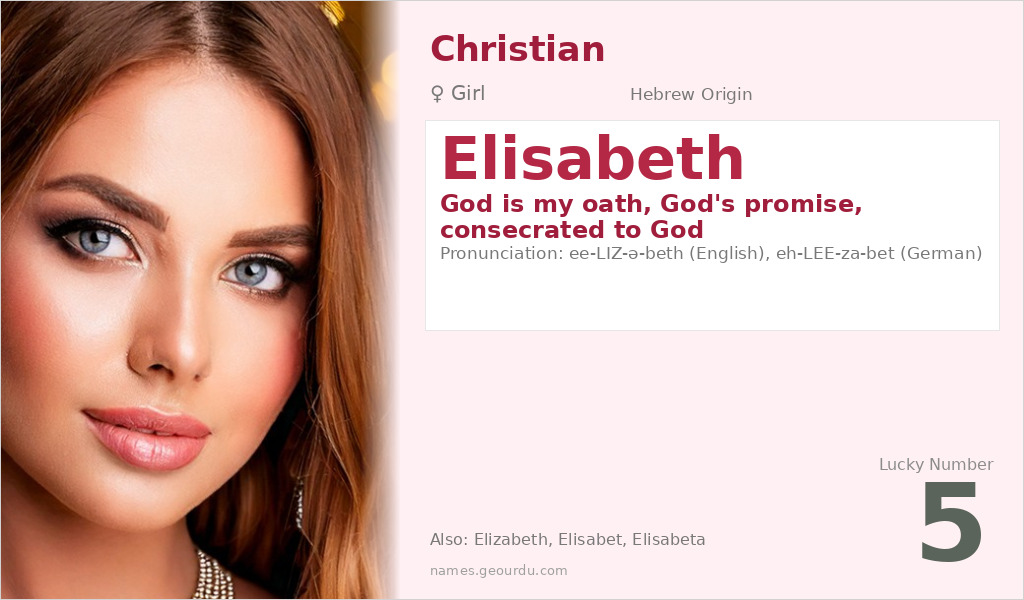
| 💎 Meaning | God is my oath, God's promise, consecrated to God |
| 👤 Gender | Girl |
| 🕌 Religion | Christian |
| 🌍 Origin | Hebrew |
| 🗣 Pronunciation | ee-LIZ-ə-beth (English), eh-LEE-za-bet (German) |
| ✍️ Urdu | ایلزبتھ |
| ✍️ Arabic | إليزابيث |
| 🔢 Numerology | 5 |
| ✨ Spellings | Elizabeth, Elisabet, Elisabeta, Elisavet, Elżbieta, Elisheva, Elisabete |
Origin & Cultural Significance
Elisabeth has its roots in ancient Hebrew culture, specifically from the biblical name Elisheva, wife of Aaron in the Old Testament. The name gained prominence in Christian tradition through Saint Elisabeth, mother of John the Baptist in the New Testament. During the Middle Ages, the name spread across Europe through religious texts and royal lineages, with variations developing in different linguistic regions. Notable historical bearers include several European queens and saints, cementing its status as a classic name with both religious and aristocratic associations that continue to influence its usage today.
Personality Traits
Those named Elisabeth often embody qualities of intelligence, grace, and steadfastness. The name’s meaning suggests individuals who value commitment and integrity, often displaying strong leadership qualities and compassion. Many Elisabeths are known for their diplomatic nature and ability to maintain meaningful relationships, reflecting the name’s association with covenant and promise. These traits have made the name popular among families seeking a name with both traditional values and contemporary appeal.
Similar Names
If you like Elisabeth, consider: Isabella, Elisa, Beth, Elise, Elspeth
Famous People Named Elisabeth
- Queen Elizabeth II — Longest-reigning British monarch
- Elisabeth of Bavaria — Empress of Austria and Queen of Hungary, known as 'Sisi'
Frequently Asked Questions About Elisabeth
What does Elisabeth mean?
Elisabeth means 'God is my oath' or 'consecrated to God,' originating from the Hebrew name Elisheva, combining 'El' (God) and 'sheva' (oath).
Is Elisabeth a boy or girl name?
Elisabeth is exclusively a feminine name across all cultural contexts, with no masculine variants in its historical usage.
What is the origin of Elisabeth?
Elisabeth originates from Hebrew (Elisheva), was adapted into Greek and Latin, and spread through Christian tradition across Europe and beyond.





