
Table of Contents
Elyzabeth is an elegant and timeless variant of the classic name Elizabeth, carrying profound meaning rooted in ancient Hebrew tradition. With its beautiful ‘y’ spelling adding a modern twist, this name has graced queens, saints, artists, and leaders across centuries. Discover the rich linguistic heritage and cultural significance behind this enduring name that continues to inspire parents worldwide.
Meaning of Elyzabeth
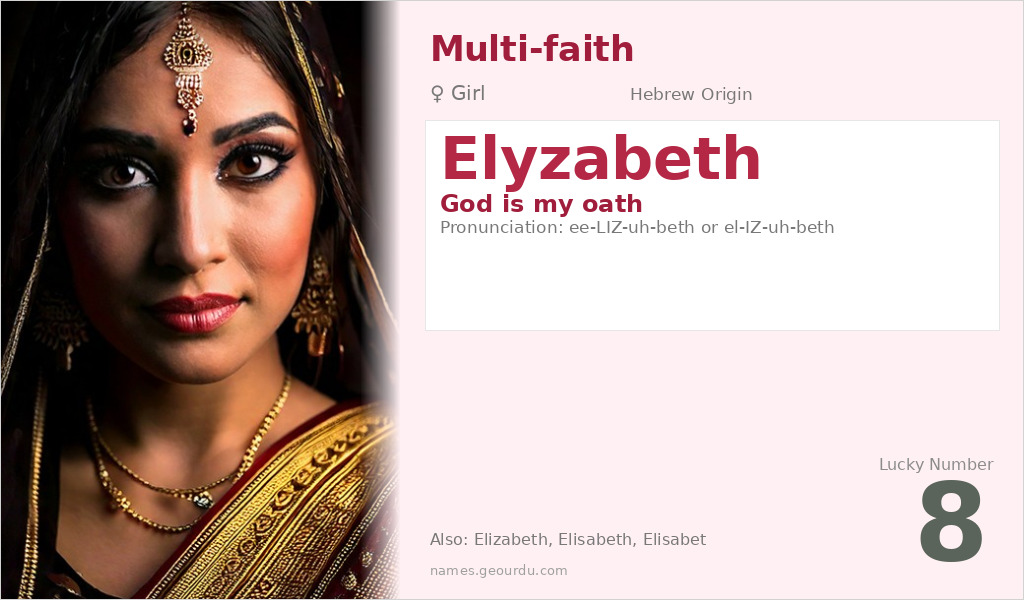
The name Elyzabeth derives from the Hebrew name Elisheva (אֱלִישֶׁבַע), which literally translates to ‘God is my oath’ or ‘God is abundance.’ This meaningful construction combines ‘El’ (אֵל), the Hebrew word for God, with ‘sheva’ (שֶׁבַע), meaning ‘oath’ or the number seven—a symbol of completeness and perfection in Jewish tradition. The name first appears in the Torah as Elisheva, wife of Aaron the High Priest, establishing its biblical significance. Through linguistic evolution, it became Elisabet in Greek, then Elisabeth in Latin, before entering European languages with various spellings like Elizabeth and its variant Elyzabeth. The core meaning has remained consistent across millennia, representing a covenant or promise with the divine.
| 📛 Name | Elyzabeth |
| 💎 Meaning | God is my oath |
| 👤 Gender | Girl |
| 🕌 Religion | Multi-faith |
| 🌍 Origin | Hebrew |
| 🗣 Pronunciation | ee-LIZ-uh-beth or el-IZ-uh-beth |
| ✍️ Urdu | الیزابیتھ |
| ✍️ Arabic | إليزابيث |
| 🔢 Numerology | 8 |
| ✨ Spellings | Elizabeth, Elisabeth, Elisabet, Elisheva, Elisavet, Elżbieta, Elisabetta, Elisabeta |
Origin & Cultural Significance
Elyzabeth originates from the Hebrew name Elisheva, which dates back to the biblical period (approximately 13th century BCE). The name entered Christian tradition through the New Testament figure Elizabeth, mother of John the Baptist, and spread throughout Europe via Latin and Greek translations. During the Middle Ages, the name became particularly popular in England after Queen Elizabeth I’s reign (16th century), solidifying its status in English-speaking cultures. The ‘y’ spelling variant (Elyzabeth) emerged as a phonetic alternative in modern times, though the traditional Elizabeth remains more common. Today, the name and its variants are used globally across multiple faiths including Judaism, Christianity, and Islam (as Ilyasabat or similar forms), demonstrating its cross-cultural appeal.
Personality Traits
Those named Elizabeth or its variant Elyzabeth are often associated with qualities of wisdom, reliability, and moral strength. Historical and cultural references suggest individuals with this name tend to exhibit leadership capabilities, organizational skills, and a deep sense of responsibility. They frequently balance traditional values with creative expression, making them effective in both structured environments and artistic pursuits. The name’s meaning—’God is my oath’—often correlates with perceived traits of integrity, faithfulness, and principled decision-making in personal and professional spheres.
Similar Names
If you like Elyzabeth, consider: Eliana, Elise, Elisa, Elisheva, Isabella, Bethany, Elspeth, Eliza, Elsa, Elisavet
Famous People Named Elyzabeth
- Queen Elizabeth II — Longest-reigning British monarch (1926-2022)
- Elizabeth Taylor — Iconic American actress (1932-2011)
- Elizabeth I — Queen of England during the Elizabethan era (1533-1603)
- Elizabeth Warren — American politician and senator (born 1949)
- Elizabeth Blackwell — First woman to receive a medical degree in the U.S. (1821-1910)
Frequently Asked Questions About Elyzabeth
What does Elyzabeth mean?
Elyzabeth means 'God is my oath' or 'God is abundance,' originating from the Hebrew name Elisheva (אֱלִישֶׁבַע), composed of 'El' (God) and 'sheva' (oath/seven).
Is Elyzabeth a boy or girl name?
Elyzabeth is exclusively a feminine name across all cultural contexts. It is the variant spelling of Elizabeth, which has been used for girls and women for millennia.
What is the origin of Elyzabeth?
Elyzabeth originates from Hebrew through the biblical name Elisheva, which was Hellenized to Elisabet in Greek, Latinized to Elisabeth, then adapted into various European languages including English, where the 'y' spelling variant emerged.





