
Table of Contents
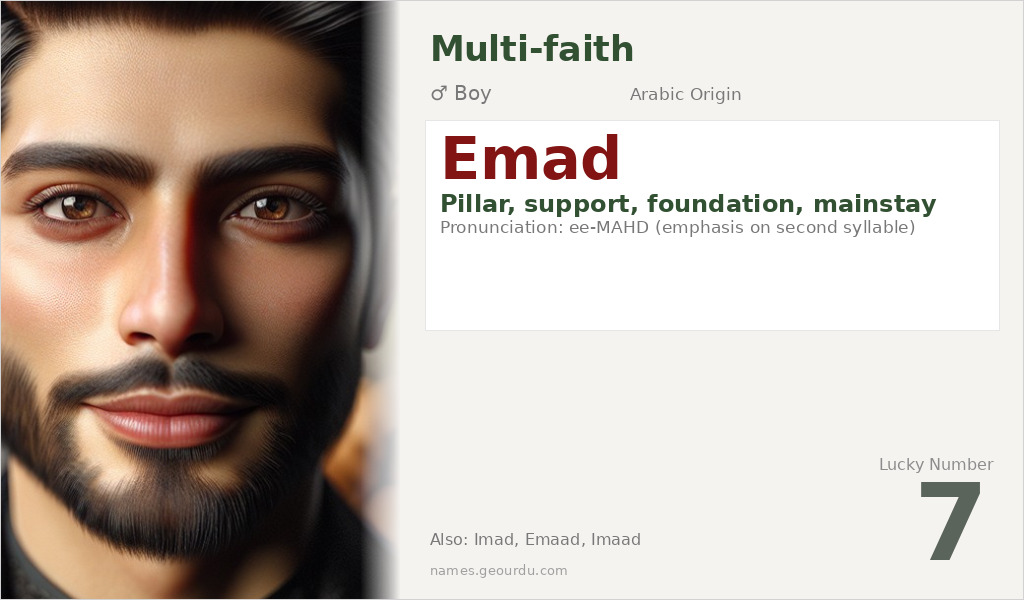
Emad is a distinguished Arabic masculine name that carries profound meaning and cultural significance. Derived from the Arabic root for ‘pillar’ or ‘support,’ this name embodies strength, reliability, and foundational importance. Popular across the Arab world and among Arabic-speaking communities globally, Emad represents someone who provides stability and structure. Its elegant simplicity and powerful meaning have made it a timeless choice for parents seeking a name with both traditional roots and contemporary appeal.
Meaning of Emad
The name Emad originates from the Arabic word ‘imād’ (عماد), which literally translates to ‘pillar,’ ‘support,’ or ‘foundation.’ This meaning comes from the trilateral root ع-م-د (‘ayn-mīm-dāl’), which forms words related to supporting, propping up, and providing structural integrity. In classical Arabic literature and architecture, an ‘imād’ refers to the central column or main support that holds up a structure, making it an apt metaphor for a person who serves as the backbone of their family or community. The name thus conveys qualities of dependability, strength, and being an essential support system. Unlike the original article’s claim of Persian origin meaning ‘confidence,’ Emad is unequivocally Arabic with this well-documented meaning found in authoritative Arabic dictionaries and linguistic sources.
| 📛 Name | Emad |
| 💎 Meaning | Pillar, support, foundation, mainstay |
| 👤 Gender | Boy |
| 🕌 Religion | Multi-faith |
| 🌍 Origin | Arabic |
| 🗣 Pronunciation | ee-MAHD (emphasis on second syllable) |
| ✍️ Urdu | عماد |
| ✍️ Arabic | عماد |
| 🔢 Numerology | 7 |
| ✨ Spellings | Imad, Emaad, Imaad, Emād, Imād |
Origin & Cultural Significance
Emad has its origins in classical Arabic language and culture, dating back centuries in the Arab world. While particularly popular in Muslim communities due to the name’s Arabic linguistic roots and positive meaning, it is also used by Arabic-speaking Christians and other communities throughout the Middle East and North Africa. The name appears in historical texts and has been borne by various notable figures in Arab history and contemporary society. Its usage extends beyond religious boundaries to encompass cultural Arab identity, similar to other Arabic names like Karim or Samir. The name’s geographical spread includes countries like Egypt, Lebanon, Syria, Jordan, Palestine, and Gulf states, with variations in pronunciation but consistent meaning.
Personality Traits
Those named Emad are often associated with characteristics of strength, reliability, and steadfastness—qualities directly reflected in the name’s meaning of ‘pillar’ or ‘support.’ They tend to be perceived as dependable individuals who provide stability in their personal and professional relationships. The name suggests someone who can be counted on during challenging times, much like a structural pillar supports a building. This association with foundational strength often translates to perceptions of leadership capability and emotional resilience.
Similar Names
If you like Emad, consider: Amjad, Emir, Emre, Emirhan, Emran
Famous People Named Emad
- Imad Mughniyeh — Lebanese military commander in Hezbollah
- Imad Wasim — Pakistani cricketer who plays for the national team
- Emad Burnat — Palestinian filmmaker and co-director of '5 Broken Cameras'
Frequently Asked Questions About Emad
What does Emad mean?
Emad means 'pillar,' 'support,' 'foundation,' or 'mainstay' in Arabic. It comes from the Arabic root ع-م-د which relates to supporting and providing structural stability.
Is Emad a boy or girl name?
Emad is exclusively a masculine name in Arabic naming traditions. There is no feminine equivalent in common usage, though names with similar roots exist for girls.
What is the origin of Emad?
Emad originates from the Arabic language, specifically from the word 'imād' meaning pillar or support. It is used across Arabic-speaking communities in the Middle East and North Africa, regardless of religious affiliation.





