
Table of Contents
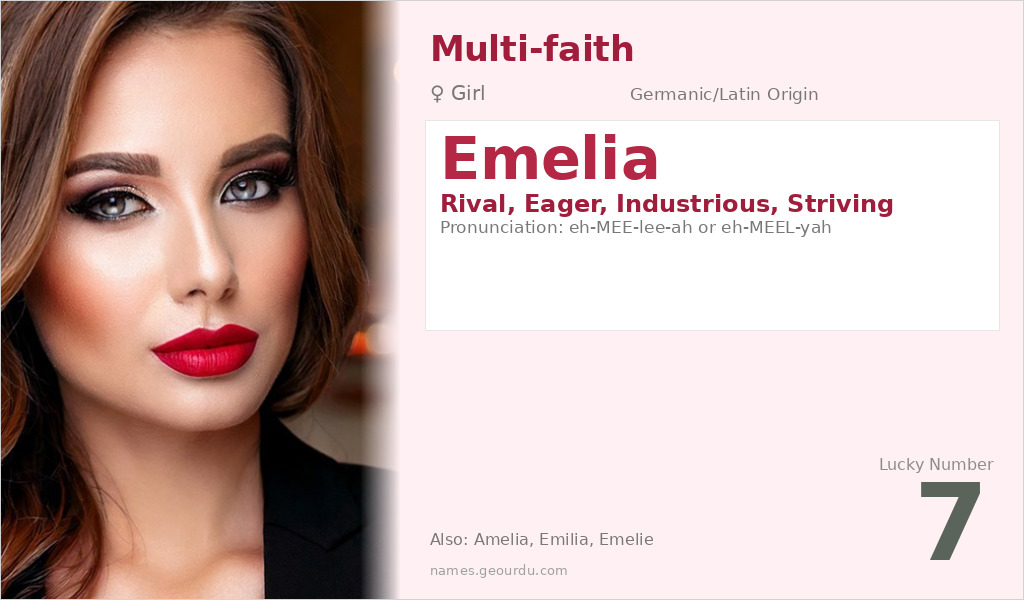
Emelia is a beautiful and timeless name that has captivated parents across generations and cultures. With roots stretching back to ancient Germanic and Latin origins, this name carries meanings of industriousness, rivalry, and striving. Whether spelled as Emelia, Amelia, or Emilia, this name has maintained its popularity while evolving through different linguistic traditions. Let’s explore the rich history and significance behind this classic name.
Meaning of Emelia
The name Emelia derives from the Germanic name Amalia, which comes from the element ‘amal’ meaning ‘work, labor, or effort’. This evolved through Latin influence where it became associated with the Roman family name Aemilius, from ‘aemulus’ meaning ‘rival’ or ’emulating’. The dual meanings of ‘industrious’ from Germanic roots and ‘rival’ from Latin roots give Emelia a rich semantic background. Throughout history, the name has been associated with hard work, ambition, and competitive spirit. The spelling variation ‘Emelia’ emerged as a phonetic adaptation while maintaining these core meanings across different language traditions.
| 📛 Name | Emelia |
| 💎 Meaning | Rival, Eager, Industrious, Striving |
| 👤 Gender | Girl |
| 🕌 Religion | Multi-faith |
| 🌍 Origin | Germanic/Latin |
| 🗣 Pronunciation | eh-MEE-lee-ah or eh-MEEL-yah |
| ✍️ Urdu | ایمیلیا |
| ✍️ Arabic | إميليا |
| 🔢 Numerology | 7 |
| ✨ Spellings | Amelia, Emilia, Emelie, Amelie, Emelya |
Origin & Cultural Significance
Emelia has a fascinating cross-cultural origin story that begins with ancient Germanic tribes. The original Germanic name Amalia traveled through Europe, being adopted into Latin as Aemilia during Roman times. During the Middle Ages, the name spread throughout Europe via saints and nobility, particularly Saint Amelia (also known as Saint Amalberga) in the 7th century. The name gained particular popularity in English-speaking countries during the 18th century through German princesses named Amelia who married into British royalty. Today, Emelia and its variants are used globally across Christian, Muslim, Hindu, and secular communities, demonstrating its universal appeal beyond any single religious tradition.
Personality Traits
Those named Emelia are often described as determined, intelligent, and spiritually aware individuals. They tend to approach life with analytical precision and a quest for deeper understanding. With their industrious nature rooted in the name’s etymology, Emelias typically display strong work ethics and ambition. Their thoughtful disposition often makes them excellent problem-solvers who value truth and authenticity in their relationships and endeavors.
Similar Names
If you like Emelia, consider: Amelia, Emilia, Emily, Emma, Amelie
Famous People Named Emelia
- Emelia Brobbey — Ghanaian actress and television presenter
- Emelia Hartford — American automotive influencer and television personality
Frequently Asked Questions About Emelia
What does Emelia mean?
Emelia means 'rival' from Latin roots and 'industrious' or 'striving' from Germanic origins. The name combines these meanings to represent someone who is ambitious, hardworking, and competitive.
Is Emelia a boy or girl name?
Emelia is primarily a girl's name across all cultures where it is used. While there are masculine forms like Emil or Emilio, Emelia specifically is feminine.
What is the origin of Emelia?
Emelia has dual origins: Germanic (from 'amal' meaning work) and Latin (from 'aemulus' meaning rival). The name evolved through Medieval Europe and became popular in English-speaking countries in the 18th century.





