
Table of Contents
Eric is a classic masculine name with deep roots in Norse history and mythology. Derived from Old Norse elements meaning ‘ever’ and ‘ruler’, this name has traveled through centuries from Viking warriors to modern celebrities. Its timeless appeal lies in its strong, regal meaning and straightforward pronunciation that works across cultures.
Meaning of Eric
The name Eric originates from the Old Norse name Eiríkr, which combines two elements: ‘ei’ meaning ‘ever, always, eternal’ and ‘ríkr’ meaning ‘ruler, powerful, mighty’. This creates the comprehensive meaning of ‘eternal ruler’ or ‘ever powerful’. The name first appeared in historical records with Eiríkr inn Rauda (Eric the Red), the 10th-century Norse explorer who founded the first settlement in Greenland. Through linguistic evolution, the name spread to other Germanic languages and eventually entered English, where it has maintained its core meaning while adapting to different cultural contexts over a millennium of use.
| 📛 Name | Eric |
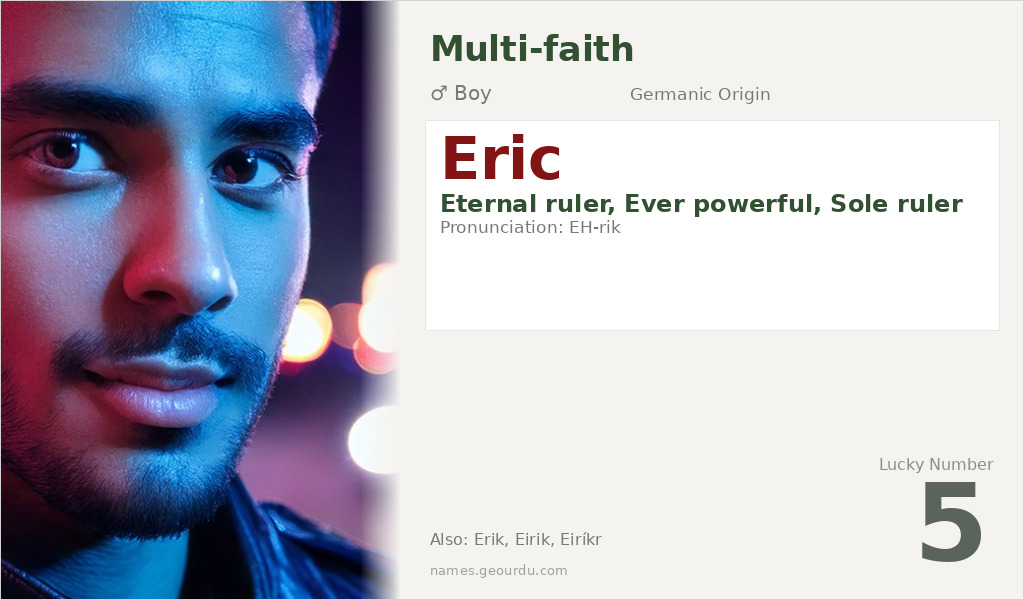
| 💎 Meaning | Eternal ruler, Ever powerful, Sole ruler |
| 👤 Gender | Boy |
| 🕌 Religion | Multi-faith |
| 🌍 Origin | Germanic |
| 🗣 Pronunciation | EH-rik |
| ✍️ Urdu | ایرک |
| ✍️ Arabic | إيريك |
| 🔢 Numerology | 5 |
| ✨ Spellings | Erik, Eirik, Eiríkr, Eric, Erick, Eryk |
Origin & Cultural Significance
Eric has its origins in Old Norse culture during the Viking Age (approximately 793-1066 CE). The name was borne by several notable Norse figures, most famously Eiríkr inn Rauda (Eric the Red), who established Norse settlements in Greenland around 985 CE. The name spread throughout Scandinavia and was later introduced to England by Norse settlers and Norman conquerors. During the Middle Ages, it became established across Europe and eventually gained popularity in English-speaking countries during the 19th century. Today, Eric remains popular in Scandinavian countries, English-speaking nations, and has variations in many European languages.
Personality Traits
People named Eric are often associated with leadership qualities, resilience, and a pioneering spirit—traits that echo the name’s Norse heritage of explorers and rulers. They typically exhibit confidence and determination in pursuing their goals, combined with an adventurous nature that embraces new challenges. The name’s meaning of ‘eternal ruler’ suggests individuals who are natural organizers with lasting influence in their personal and professional circles.
Similar Names
If you like Eric, consider: Erik, Derrick, Frederick, Richard, Henry
Famous People Named Eric
- Eric Clapton — English rock and blues guitarist, singer, and songwriter
- Eric the Red — Norse explorer who founded the first Norse settlement in Greenland
Frequently Asked Questions About Eric
What does Eric mean?
Eric means 'eternal ruler' or 'ever powerful', derived from the Old Norse elements 'ei' (ever) and 'ríkr' (ruler).
Is Eric a boy or girl name?
Eric is traditionally and overwhelmingly a masculine name, though rare feminine variants exist in some cultures.
What is the origin of Eric?
Eric originates from Old Norse (Eiríkr) and has Germanic roots, first appearing in Viking Age Scandinavia before spreading throughout Europe.





