
Table of Contents
Ernestine is a classic feminine name with deep historical roots and a meaning that speaks to character and integrity. As the feminine counterpart to Ernest, this name carries forward a tradition of seriousness and determination that has appealed to parents across centuries. From European royalty to pioneering feminists, Ernestine has been borne by women of substance and purpose. Let’s explore the rich etymology and cultural journey of this distinguished name.
Meaning of Ernestine
Ernestine derives from the Germanic name Ernst, which originates from the Old High German word ‘ernust’ meaning ‘seriousness, earnestness, battle to the death’. The name entered the English language through Norman French after the Norman Conquest of 1066. As a feminine form, Ernestine developed in the 18th and 19th centuries, particularly popular in German-speaking regions before spreading throughout Europe and the Americas. The core meaning of ‘earnest’ or ‘serious’ reflects qualities of sincerity, determination, and resolute character that have made this name enduring across generations.
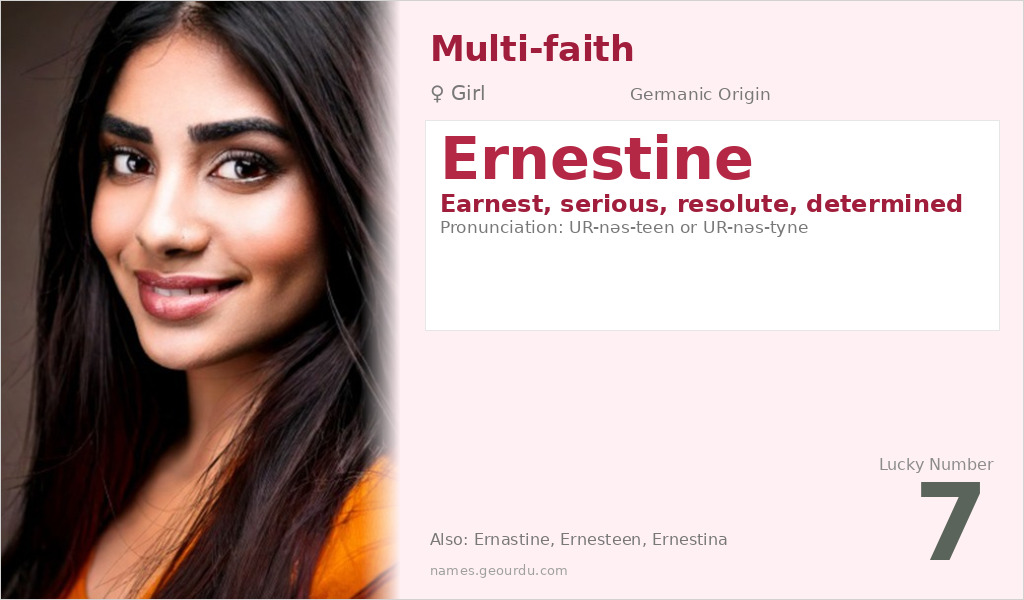
| 📛 Name | Ernestine |
| 💎 Meaning | Earnest, serious, resolute, determined |
| 👤 Gender | Girl |
| 🕌 Religion | Multi-faith |
| 🌍 Origin | Germanic |
| 🗣 Pronunciation | UR-nəs-teen or UR-nəs-tyne |
| ✍️ Urdu | ارنسٹائن |
| ✍️ Arabic | إرنستين |
| 🔢 Numerology | 7 |
| ✨ Spellings | Ernastine, Ernesteen, Ernestina, Ernstine |
Origin & Cultural Significance
Ernestine has its roots in Germanic languages and culture, specifically from the Old High German ‘ernust’. The name gained prominence in the Holy Roman Empire through various noble families, including the House of Wettin which produced several Ernestines. During the 19th century, the name spread across Europe and to English-speaking countries, often associated with literary and royal figures. While not tied to any specific religion, Ernestine has been used by Christians, Jews, and secular families alike, reflecting its cultural rather than religious origins. The name’s popularity peaked in the late 19th and early 20th centuries but remains in use today as a classic choice.
Personality Traits
Those named Ernestine are often associated with qualities of seriousness, sincerity, and determination. They tend to approach life with purpose and thoughtfulness, valuing depth over superficiality. Their earnest nature makes them reliable and trustworthy individuals who build meaningful relationships based on mutual respect and integrity. While sometimes perceived as reserved, Ernestines typically possess strong convictions and the perseverance to see their goals through to completion.
Similar Names
If you like Ernestine, consider: Ernest, Erna, Ernestina, Ernestyna, Ernesta
Famous People Named Ernestine
- Ernestine Rose — 19th century feminist, abolitionist, and freethinker of Polish-Jewish origin
- Ernestine Schumann-Heink — Austrian-American operatic contralto who performed in the late 19th and early 20th centuries
Frequently Asked Questions About Ernestine
What does Ernestine mean?
Ernestine means 'earnest, serious, resolute, determined' and comes from the Germanic name Ernst, derived from Old High German 'ernust' meaning 'seriousness, earnestness'.
Is Ernestine a boy or girl name?
Ernestine is exclusively a feminine name, being the feminine form of the masculine name Ernest. It has been used for girls since at least the 18th century.
What is the origin of Ernestine?
Ernestine originates from Germanic languages, specifically from Old High German 'ernust'. It developed as the feminine form of Ernest and gained popularity in German-speaking regions before spreading throughout Europe and the Americas.





