
Table of Contents
Errik is a distinctive masculine name with deep roots in Norse history and mythology. As a variant of the classic Eric, this name carries the powerful meaning of ‘eternal ruler’ or ‘sole ruler’, reflecting strength and leadership qualities. While popular in Scandinavian countries, Errik has found appreciation across various cultures and religious traditions. This guide explores the authentic etymology, cultural significance, and modern usage of this enduring name.
Meaning of Errik
The name Errik derives from the Old Norse name Eiríkr, which is composed of two elements: ‘ei-‘ meaning ‘ever, always, one, alone’ and ‘-ríkr’ meaning ‘ruler, mighty’. This combination creates the meaning ‘ever ruler’, ‘eternal ruler’, or ‘sole ruler’. The name entered English through Old English as Eoríc, maintaining the same core meaning. Throughout Germanic languages, variations preserve this etymology, with the ‘ei-‘ element consistently representing permanence or singularity and ‘-ríkr’ denoting power or rulership. The name’s meaning has remained remarkably stable across centuries of linguistic evolution.
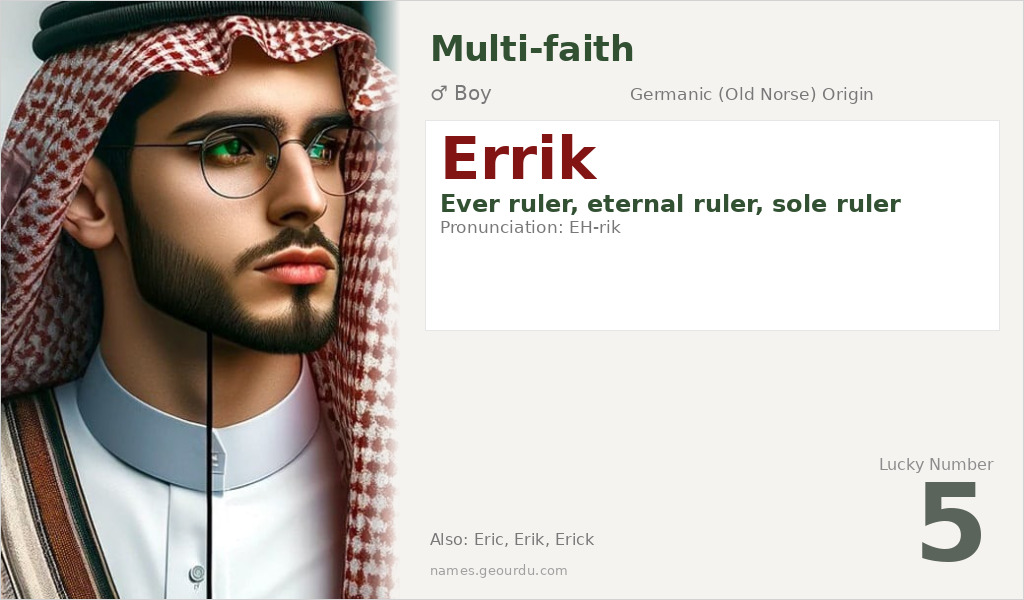
| 📛 Name | Errik |
| 💎 Meaning | Ever ruler, eternal ruler, sole ruler |
| 👤 Gender | Boy |
| 🕌 Religion | Multi-faith |
| 🌍 Origin | Germanic (Old Norse) |
| 🗣 Pronunciation | EH-rik |
| ✍️ Urdu | ایرک |
| ✍️ Arabic | إيريك |
| 🔢 Numerology | 5 |
| ✨ Spellings | Eric, Erik, Erick, Eirik, Eiríkr, Eryk |
Origin & Cultural Significance
Errik originates from Old Norse, specifically from the name Eiríkr, which was common among Norse peoples during the Viking Age (8th-11th centuries). The name spread throughout Scandinavia and was carried by Norse settlers to places like Iceland, Greenland, and the British Isles. During the medieval period, it gained popularity across Europe through royal usage, including several Scandinavian kings named Eric. While the name has strong historical connections to Norse paganism, it was later adopted by Christians and is now used by people of various faiths without specific religious connotations. The variant spelling Errik represents a modern adaptation of this ancient name.
Personality Traits
Those named Errik are often associated with leadership qualities, reflecting the name’s meaning of ‘ruler’. They typically exhibit confidence, determination, and a natural ability to take charge in various situations. With their adventurous spirit and adaptability, Erriks tend to embrace challenges and seek new experiences, making them dynamic individuals in both personal and professional contexts.
Similar Names
If you like Errik, consider: Eric, Erik, Frederick, Richard, Henry, Roderick
Famous People Named Errik
- Eric Clapton — English rock and blues guitarist, singer, and songwriter
- Erik the Red — Norse explorer who founded the first Norse settlement in Greenland
Frequently Asked Questions About Errik
What does Errik mean?
Errik means 'ever ruler', 'eternal ruler', or 'sole ruler'. It originates from Old Norse Eiríkr, combining 'ei-' (ever/alone) and '-ríkr' (ruler/mighty).
Is Errik a boy or girl name?
Errik is exclusively a masculine name. All historical and contemporary usage across cultures identifies it as a boy's name, with no recorded feminine variants.
What is the origin of Errik?
Errik originates from Old Norse (Germanic language family) as a variant of Eiríkr. It has Scandinavian roots dating back to the Viking Age and spread throughout Europe during medieval times.





