
Table of Contents
Ervad is a distinctive name with deep roots in one of the world’s oldest continuously practiced religions. Far from being just another name, it represents a sacred title and vocation within Zoroastrian tradition. This name carries centuries of spiritual heritage and scholarly pursuit, making it a meaningful choice for families connected to Parsi culture. Understanding its true origin reveals a rich tapestry of religious history and linguistic evolution.
Meaning of Ervad
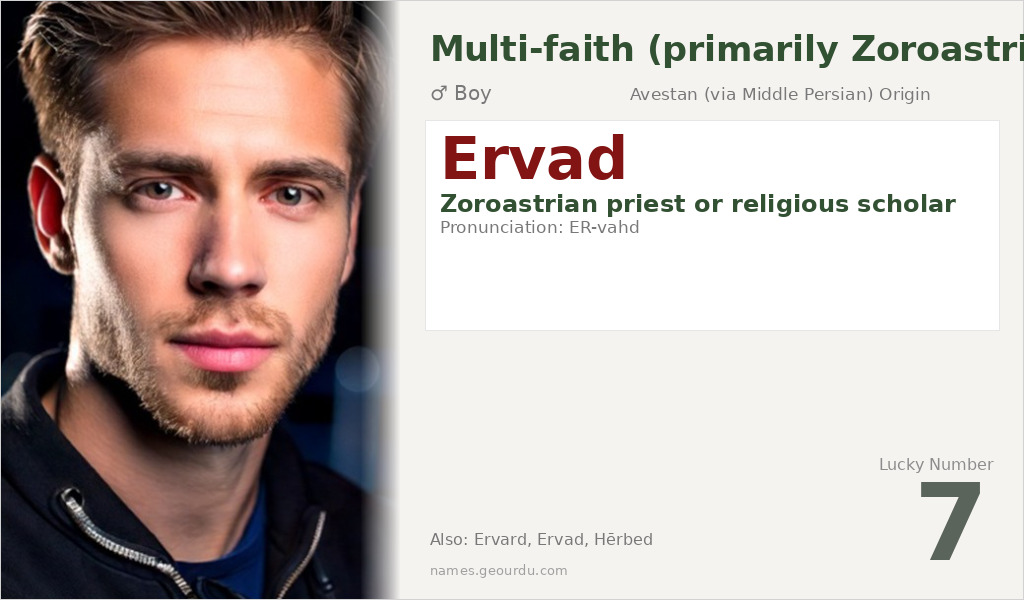
The name Ervad originates from the Avestan language, specifically from the term ‘aēθrapaiti’ which translates to ‘master of righteousness’ or ‘spiritual teacher’. This evolved through Middle Persian as ‘hērbed’ before becoming ‘Ervad’ in modern usage among Parsi communities in India. In Zoroastrianism, an Ervad is an ordained priest who has completed extensive religious education, typically at an Athornan Institute, and is qualified to perform complex rituals like the Yasna ceremony. The title indicates someone who has memorized large portions of the Avesta (Zoroastrian scriptures) and can recite them with proper pronunciation and ritual precision. This isn’t merely a general religious teacher but a specific priestly rank within the Zoroastrian hierarchy.
| 📛 Name | Ervad |
| 💎 Meaning | Zoroastrian priest or religious scholar |
| 👤 Gender | Boy |
| 🕌 Religion | Multi-faith (primarily Zoroastrian/Parsi, also used by some Hindus) |
| 🌍 Origin | Avestan (via Middle Persian) |
| 🗣 Pronunciation | ER-vahd |
| ✍️ Urdu | اروید |
| ✍️ Arabic | إرفاد |
| 🔢 Numerology | 7 |
| ✨ Spellings | Ervard, Ervad, Hērbed, Herbad |
Origin & Cultural Significance
Ervad has its origins in ancient Iranian religious tradition, specifically within Zoroastrianism which dates back over 3,000 years. When Zoroastrians (Parsis) migrated from Persia to India from the 8th century onward, they brought their religious titles and terminology with them. The name became established within the Parsi community in Gujarat and Maharashtra, where it functions both as a title for priests and occasionally as a given name. While primarily associated with Zoroastrianism, some Hindu families in regions with significant Parsi populations have adopted the name, appreciating its scholarly and spiritual connotations. The name represents a living connection to one of humanity’s oldest prophetic traditions and its preservation through centuries of migration and cultural adaptation.
Personality Traits
Those named Ervad often embody qualities associated with spiritual leadership and intellectual depth. They tend to be thoughtful, disciplined individuals who value knowledge and tradition. With their connection to priestly scholarship, they may demonstrate strong analytical abilities and a respect for ritual and ceremony. These individuals often serve as bridges between ancient wisdom and contemporary understanding, balancing reverence for the past with engagement in the present.
Similar Names
If you like Ervad, consider: Dastur, Mobed, Athravan, Zarathushtra, Faredoon
Famous People Named Ervad
- Ervad Sheriarji Dadabhai Bharucha — renowned 19th century Parsi priest and scholar who compiled important Zoroastrian texts
- Ervad Dr. Ramiyar Karanjia — contemporary Zoroastrian scholar and principal of Mumbai's M. F. Cama Athornan Institute
Frequently Asked Questions About Ervad
What does Ervad mean?
Ervad means 'Zoroastrian priest' or 'religious scholar' originating from the Avestan word 'aēθrapaiti' meaning 'master of righteousness'.
Is Ervad a boy or girl name?
Ervad is traditionally a masculine name, as it refers to a male priest in Zoroastrian tradition, though naming conventions may vary in modern usage.
What is the origin of Ervad?
Ervad originates from the Avestan language of Zoroastrianism, evolving through Middle Persian into its current form among Parsi communities in India.





