
Table of Contents
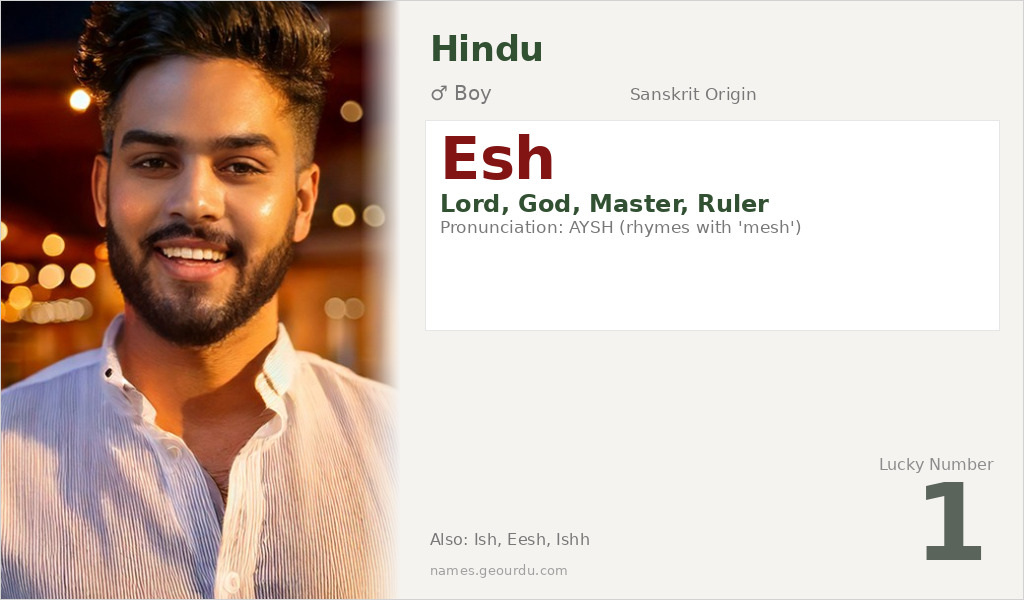
Esh is a powerful Sanskrit name meaning ‘Lord’ or ‘God’ that carries deep spiritual significance in Hindu tradition. Derived from the ancient word ‘īśa’, this name has been used for centuries in Indian culture and philosophy. While simple in sound, Esh embodies concepts of divinity, mastery, and spiritual authority. Today, it remains a meaningful choice for parents seeking a name with profound religious and philosophical roots.
Meaning of Esh
The name Esh originates from the Sanskrit word ‘ईश’ (īśa), which literally translates to ‘lord’, ‘god’, ‘master’, or ‘ruler’. This term appears extensively in Hindu scriptures, particularly in the Upanishads where ‘Ishvara’ refers to the supreme controller or personal god. The linguistic root ‘īś’ means ‘to own, rule, or be master of’, giving the name connotations of authority and divinity. In contemporary usage, Esh is often considered a shortened form of names like Eshaan or Ishwar, though it stands independently with its own complete meaning. The Hebrew word אֵשׁ (esh) meaning ‘fire’ represents a separate linguistic origin, though some cross-cultural borrowing may occur in modern multicultural contexts.
| 📛 Name | Esh |
| 💎 Meaning | Lord, God, Master, Ruler |
| 👤 Gender | Boy |
| 🕌 Religion | Hindu |
| 🌍 Origin | Sanskrit |
| 🗣 Pronunciation | AYSH (rhymes with 'mesh') |
| ✍️ Urdu | ایش |
| ✍️ Arabic | إيش |
| 🔢 Numerology | 1 |
| ✨ Spellings | Ish, Eesh, Ishh, Eshh |
Origin & Cultural Significance
Esh has its primary origins in ancient Sanskrit, the classical language of India that dates back over 3,500 years. As a Hindu name, it connects directly to Vedic philosophy where terms like ‘Ish’ and ‘Isha’ denote divine authority and spiritual mastery. The name appears in sacred texts including the Isha Upanishad, one of the principal Upanishads that explores the nature of the supreme being. While predominantly used in Hindu communities, the name has gained some cross-cultural appeal due to its simplicity and profound meaning. In recent decades, Esh has seen increased usage beyond South Asia as global awareness of Sanskrit names has grown.
Personality Traits
Those named Esh often embody qualities of leadership, confidence, and spiritual depth. The name’s meaning as ‘lord’ or ‘master’ can manifest as natural authority and decision-making ability. Individuals with this name may display determination and purpose-driven behavior, along with a philosophical or spiritual orientation. While strong-willed, they often balance this with wisdom and consideration for others, reflecting the responsible aspect of rulership implied by their name’s etymology.
Similar Names
If you like Esh, consider: Ishaan, Ishwar, Ishant, Eshaan, Ishani
Famous People Named Esh
- Esh Appleton — British actor known for roles in 'The Bill' and 'Doctors'
- Esh Winning — Village in County Durham, England, though this is a place name rather than a person
Frequently Asked Questions About Esh
What does Esh mean?
Esh means 'Lord', 'God', 'Master', or 'Ruler' in Sanskrit, derived from the word 'īśa'. It has deep roots in Hindu philosophy and scriptures.
Is Esh a boy or girl name?
Esh is primarily a boy's name in Hindu tradition, though names with similar roots like 'Isha' can be feminine. The masculine usage dominates in cultural practice.
What is the origin of Esh?
Esh originates from Sanskrit, the ancient classical language of India. It's specifically derived from 'īśa' meaning 'lord' or 'master', with significant usage in Hindu religious texts.





