
Table of Contents
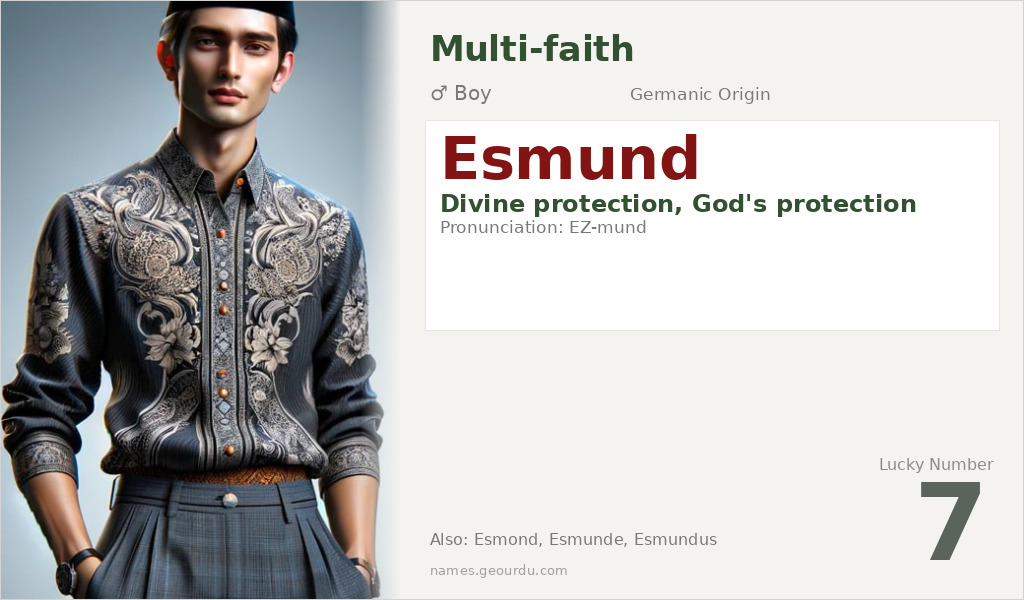
Esmund is a distinguished name with deep historical roots in Anglo-Saxon England, carrying the powerful meaning of ‘divine protection’ or ‘God’s protection’. This Germanic-derived name has survived centuries, maintaining its noble connotations of guardianship and spiritual safeguarding. While less common today than in medieval times, Esmund retains an air of tradition and strength that appeals to parents seeking meaningful historical names.
Meaning of Esmund
The name Esmund originates from Old English, specifically from the Germanic elements ‘os’ meaning ‘god’ or ‘divine being’ and ‘mund’ meaning ‘protection’, ‘guardian’, or ‘hand’. This combination creates the literal meaning ‘divine protection’ or ‘God’s protection’. The ‘os’ element appears in numerous Germanic names and relates to the concept of divine beings or gods in pre-Christian Germanic religion. The ‘mund’ element is equally significant, appearing in many Germanic names and conveying the important cultural value of protection and guardianship. This name represents a direct linguistic connection to Anglo-Saxon England before the Norman Conquest of 1066.
| 📛 Name | Esmund |
| 💎 Meaning | Divine protection, God's protection |
| 👤 Gender | Boy |
| 🕌 Religion | Multi-faith |
| 🌍 Origin | Germanic |
| 🗣 Pronunciation | EZ-mund |
| ✍️ Urdu | ایسمنڈ |
| ✍️ Arabic | إزموند |
| 🔢 Numerology | 7 |
| ✨ Spellings | Esmond, Esmunde, Esmundus, Asmund, Osmund |
Origin & Cultural Significance
Esmund has its origins in Germanic languages, specifically Old English where it was used by Anglo-Saxons before the Norman Conquest. The name appears in historical records including the Domesday Book of 1086, where individuals named Esmund are recorded as landowners. It shares roots with the Old Norse name Ásmundr and Old High German Ansmund, showing the widespread use of this name element combination across Germanic cultures. While the name declined after the Norman Conquest when French names became fashionable, it survived as a surname and experienced occasional revivals. Today, it’s considered a traditional English name with historical depth rather than being tied to any single religious tradition.
Personality Traits
Those named Esmund often embody the protective qualities suggested by their name’s meaning. They tend to be reliable, thoughtful individuals who take their responsibilities seriously, particularly when it comes to safeguarding others. With the ‘divine’ element in their name’s etymology, many Esmunds develop spiritual or philosophical interests, seeking deeper meaning in life. Their combination of practical protection and spiritual awareness creates balanced personalities who can be both grounded and insightful.
Similar Names
If you like Esmund, consider: Osmond, Edmund, Raymond, Sigmund, Redmond
Famous People Named Esmund
- Esmond Knight — British actor known for roles in Shakespearean theatre and films like 'The Red Shoes'
- Esmond Harmsworth — 2nd Viscount Rothermere, British newspaper proprietor
Frequently Asked Questions About Esmund
What does Esmund mean?
Esmund means 'divine protection' or 'God's protection', derived from Old English 'os' (god/divine) and 'mund' (protection/guardian).
Is Esmund a boy or girl name?
Esmund is traditionally a masculine name with historical usage exclusively for boys/men in Anglo-Saxon and Germanic cultures.
What is the origin of Esmund?
Esmund originates from Old English (Germanic language family), specifically from Anglo-Saxon England before the Norman Conquest, with cognates in Old Norse (Ásmundr) and Old High German (Ansmund).





