
Table of Contents
Ethelfleda is a name that carries the weight of Anglo-Saxon history and nobility. With roots in 9th-century England, this name combines two powerful Old English elements to create a meaning that has resonated for over a millennium. Once borne by one of England’s most remarkable medieval rulers, Ethelfleda represents strength, beauty, and aristocratic heritage. Today, it offers a distinctive choice with deep historical connections.
Meaning of Ethelfleda
Ethelfleda derives from the Old English elements ‘æðel’ meaning ‘noble’ and ‘flæd’ meaning ‘beauty’ or ‘beautiful’. This compound structure follows typical Germanic naming conventions where two meaningful components create a name with specific virtues. The ‘æðel’ element appears in many Anglo-Saxon names (like Æthelred, Æthelbert) and denotes aristocratic status or noble character. The ‘flæd’ element is less common but appears in several Anglo-Saxon women’s names, always conveying beauty or splendor. Together, they create a name meaning ‘noble beauty’ or ‘noble and beautiful’, reflecting the values of Anglo-Saxon aristocracy.
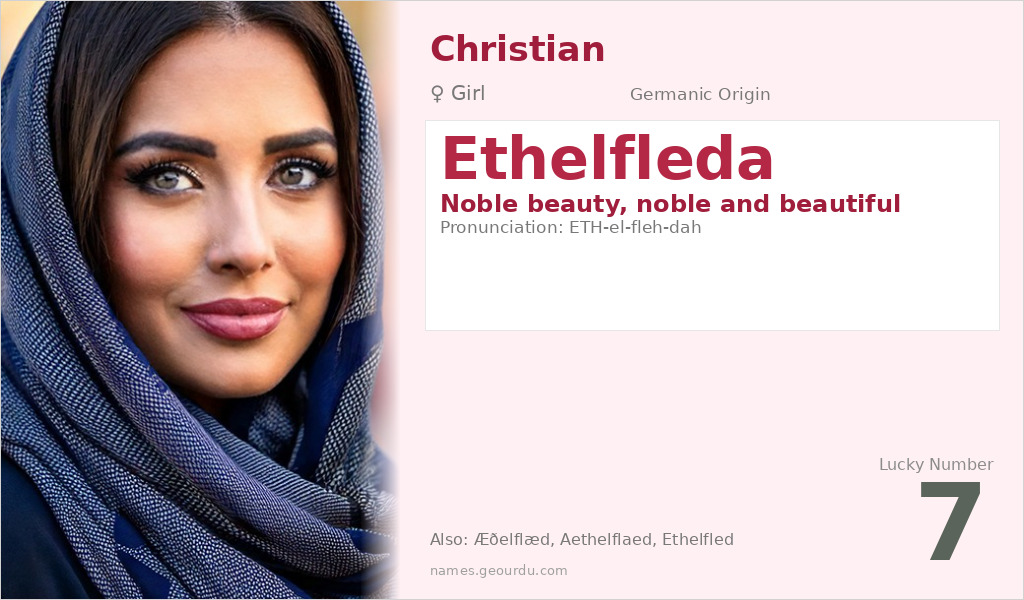
| 📛 Name | Ethelfleda |
| 💎 Meaning | Noble beauty, noble and beautiful |
| 👤 Gender | Girl |
| 🕌 Religion | Christian |
| 🌍 Origin | Germanic |
| 🗣 Pronunciation | ETH-el-fleh-dah |
| ✍️ Urdu | ایتھلفلیڈا |
| ✍️ Arabic | إيثلفليدا |
| 🔢 Numerology | 7 |
| ✨ Spellings | Æðelflæd, Aethelflaed, Ethelfled, Aethelfleda |
Origin & Cultural Significance
Ethelfleda originated in Anglo-Saxon England during the 9th century as part of the Old English naming tradition. The name gained prominence through Æthelflæd, Lady of the Mercians (c. 870-918), daughter of Alfred the Great and one of medieval England’s most significant female rulers. She successfully defended Mercia against Viking invasions and established fortified towns. The name reflects the Germanic linguistic roots of the Anglo-Saxons who settled in England after the Roman withdrawal. While the name fell out of common use after the Norman Conquest, it has seen occasional revivals as part of the Victorian and modern interest in historical names.
Personality Traits
The historical associations of Ethelfleda suggest personality traits of leadership, intelligence, and cultural refinement. As the name of a successful medieval ruler, it carries connotations of strategic ability and administrative skill. The ‘noble’ element implies dignity, honor, and high moral character, while ‘beauty’ suggests both aesthetic appreciation and inner grace. Those named Ethelfleda might be perceived as having traditional values combined with strong personal authority.
Similar Names
If you like Ethelfleda, consider: Æthelthryth, Ælfflæd, Eadgifu, Godgifu, Wulfthryth
Famous People Named Ethelfleda
- Æthelflæd, Lady of the Mercians (c. 870-918) — Daughter of Alfred the Great who ruled Mercia and led military campaigns against Viking invaders
- Saint Æthelflæd of Romsey (10th century) — Anglo-Saxon abbess and saint
Frequently Asked Questions About Ethelfleda
What does Ethelfleda mean?
Ethelfleda means 'noble beauty' or 'noble and beautiful'. It comes from the Old English elements 'æðel' (noble) and 'flæd' (beauty).
Is Ethelfleda a boy or girl name?
Ethelfleda is exclusively a feminine name. Historically, it was borne by several Anglo-Saxon women, most notably Æthelflæd, Lady of the Mercians in the 9th-10th centuries.
What is the origin of Ethelfleda?
Ethelfleda originates from Old English (Anglo-Saxon) language and culture. It was used in England during the Anglo-Saxon period before the Norman Conquest of 1066.





