
Table of Contents
Fell is a distinctive name with deep roots in Northern European geography and language. Derived from ancient words for mountains and hills, this name carries the strength and permanence of natural landscapes. While relatively uncommon as a given name today, Fell has a rich history as both a surname and place name across Scandinavia and England.
Meaning of Fell
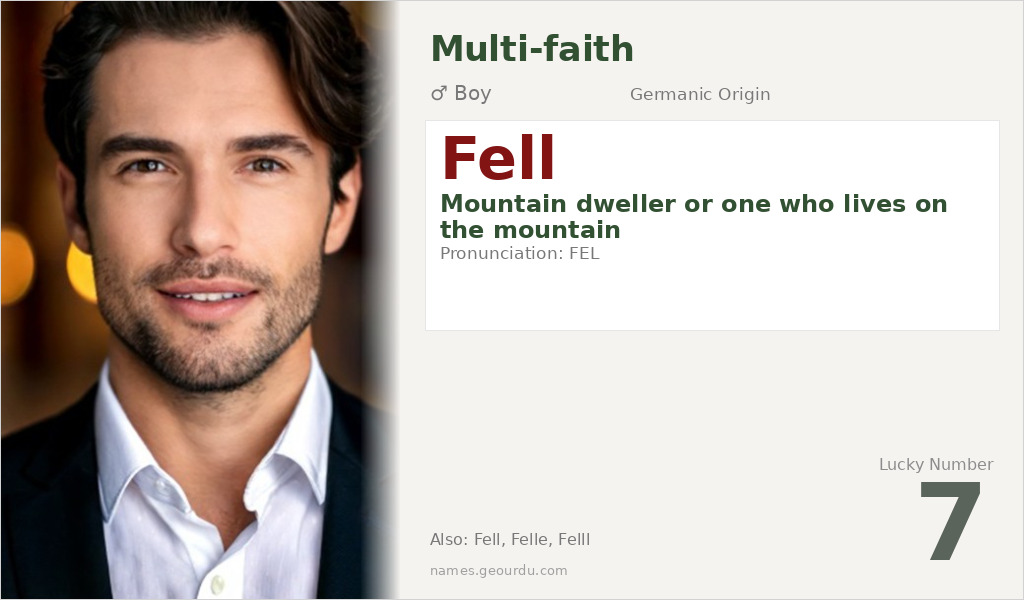
The name Fell has a clear and well-documented meaning: ‘mountain dweller’ or ‘one who lives on the mountain.’ This meaning comes from two related linguistic sources. In Old Norse, the word ‘fjall’ (pronounced ‘fyall’) means mountain, while in Old English, ‘fell’ refers specifically to a hill or mountain, particularly in northern England where Norse influence was strong. The name was originally topographic, describing where someone lived rather than being a personal characteristic. This etymology is supported by numerous place names across England and Scandinavia containing ‘fell’ elements, such as Scafell Pike in England’s Lake District.
| 📛 Name | Fell |
| 💎 Meaning | Mountain dweller or one who lives on the mountain |
| 👤 Gender | Boy |
| 🕌 Religion | Multi-faith |
| 🌍 Origin | Germanic |
| 🗣 Pronunciation | FEL |
| ✍️ Urdu | فیل |
| ✍️ Arabic | فيل |
| 🔢 Numerology | 7 |
| ✨ Spellings | Fell, Felle, Felll |
Origin & Cultural Significance
Fell originates from Germanic languages, specifically the Old Norse and Old English branches. The name emerged during the Viking Age when Norse settlers brought their language to England, particularly in northern regions. It first appeared as a surname in medieval records, identifying families who lived in mountainous areas. While primarily used in England and Scandinavia historically, the name has spread to other English-speaking countries. Unlike many names with religious connotations, Fell is secular in origin, derived from geographical features rather than religious texts or figures.
Personality Traits
Those named Fell often embody characteristics associated with mountains: stability, strength, and endurance. They tend to be practical problem-solvers who approach life with steady determination. While sometimes perceived as reserved or serious, they typically demonstrate deep loyalty and reliability in relationships, much like the enduring landscapes their name references.
Similar Names
If you like Fell, consider: Fjell, Fjeld, Berg, Hill, Montgomery
Famous People Named Fell
- Fell Swoop — Australian thoroughbred racehorse named after the phrase meaning 'sudden descent'
- Fell Hound — Breed of hunting dog from the Lake District region of England
Frequently Asked Questions About Fell
What does Fell mean?
Fell means 'mountain dweller' or 'one who lives on the mountain.' This meaning comes from Old Norse 'fjall' (mountain) and Old English 'fell' (hill or mountain), making it a topographic name describing where someone lived.
Is Fell a boy or girl name?
Fell is traditionally a masculine name, though as a surname-derived name, it could theoretically be used for any gender. Historically and in contemporary usage, it is overwhelmingly used for boys.
What is the origin of Fell?
Fell originates from Germanic languages, specifically Old Norse and Old English. It emerged as a topographic surname during the Viking Age when Norse settlers influenced northern England's language and culture.





