
Table of Contents
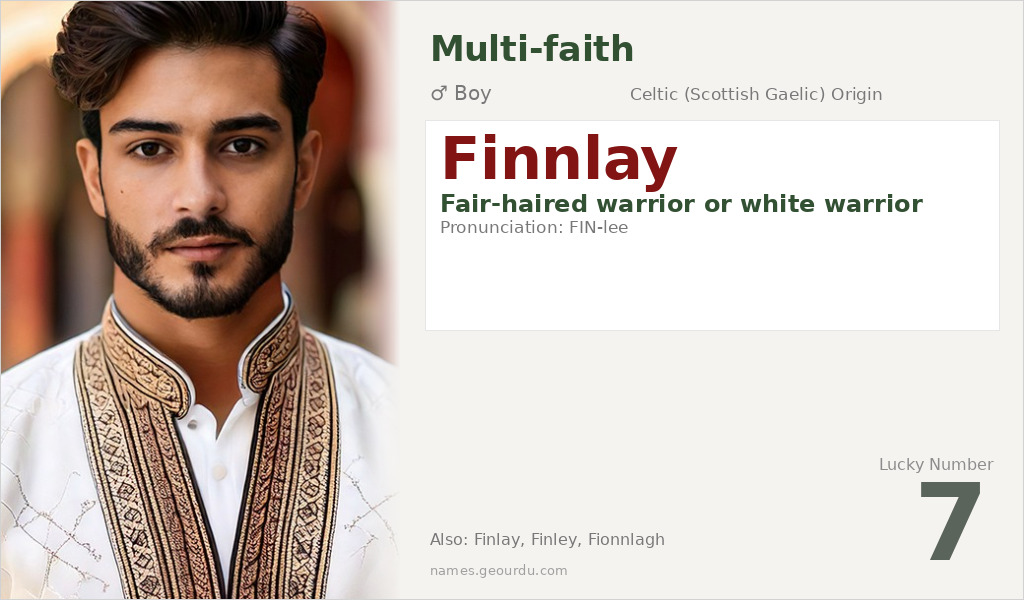
Finnlay is a distinctive boy’s name with deep roots in Celtic mythology and Scottish heritage. Meaning ‘fair-haired warrior’, this name combines physical description with heroic qualities that have appealed to parents for centuries. From its origins in Gaelic Scotland to modern international usage, Finnlay carries a legacy of strength and nobility. This comprehensive guide explores everything about this compelling name.
Meaning of Finnlay
The name Finnlay derives from the Scottish Gaelic name Fionnlagh, which is composed of two elements: ‘fionn’ meaning ‘fair’, ‘white’, or ‘bright’ and ‘laoch’ meaning ‘warrior’ or ‘hero’. This combination creates the meaning ‘fair-haired warrior’ or ‘white warrior’. The ‘fionn’ element connects to the legendary Irish hero Fionn mac Cumhaill (Finn McCool), leader of the Fianna warriors in Irish mythology. The name evolved through various spellings including Finlay and Finley as it moved from Gaelic to English usage. In Celtic tradition, fair hair was often associated with nobility and otherworldly qualities, adding depth to the name’s significance beyond mere physical description.
| 📛 Name | Finnlay |
| 💎 Meaning | Fair-haired warrior or white warrior |
| 👤 Gender | Boy |
| 🕌 Religion | Multi-faith |
| 🌍 Origin | Celtic (Scottish Gaelic) |
| 🗣 Pronunciation | FIN-lee |
| ✍️ Urdu | فِنلے |
| ✍️ Arabic | فينلي |
| 🔢 Numerology | 7 |
| ✨ Spellings | Finlay, Finley, Fionnlagh, Fionnlaoch, Findlay |
Origin & Cultural Significance
Finnlay originates from Scotland, specifically from the Gaelic-speaking regions where Fionnlagh was a traditional name. It gained popularity through historical figures like Saint Finlag, a 6th-century Irish missionary who founded a monastery on the Isle of Bute. The name spread throughout Scotland and into northern England, where it was Anglicized into various forms. During the Highland Clearances and subsequent Scottish diaspora, the name traveled to North America, Australia, and other regions. Today, while maintaining its Scottish heritage, Finnlay is used by families of various cultural backgrounds who appreciate its strong, melodic sound and heroic meaning.
Personality Traits
Those named Finnlay often embody characteristics suggested by their name’s meaning: they tend to be protective, honorable, and clear in their intentions. The warrior aspect suggests resilience and courage in facing challenges, while the ‘fair’ element implies honesty, fairness in dealings with others, and perhaps intellectual clarity. Many Finnlays are natural leaders who combine strategic thinking with principled action, reflecting the balanced qualities of their namesake warriors from Celtic legend.
Similar Names
If you like Finnlay, consider: Finn, Fionn, Lachlan, Callum, Alistair
Famous People Named Finnlay
- Finlay Calder — Scottish rugby union player who captained the British Lions
- Finlay Currie — Scottish actor known for roles in 'Great Expectations' and 'Ben-Hur'
Frequently Asked Questions About Finnlay
What does Finnlay mean?
Finnlay means 'fair-haired warrior' or 'white warrior', derived from the Scottish Gaelic name Fionnlagh combining 'fionn' (fair/white) and 'laoch' (warrior).
Is Finnlay a boy or girl name?
Finnlay is traditionally a boy's name with masculine Celtic warrior associations, though some modern parents use it for girls as naming conventions evolve.
What is the origin of Finnlay?
Finnlay originates from Scottish Gaelic (Celtic language family) as an Anglicized form of Fionnlagh, with roots in Irish mythology through the hero Fionn mac Cumhaill.





