
Table of Contents
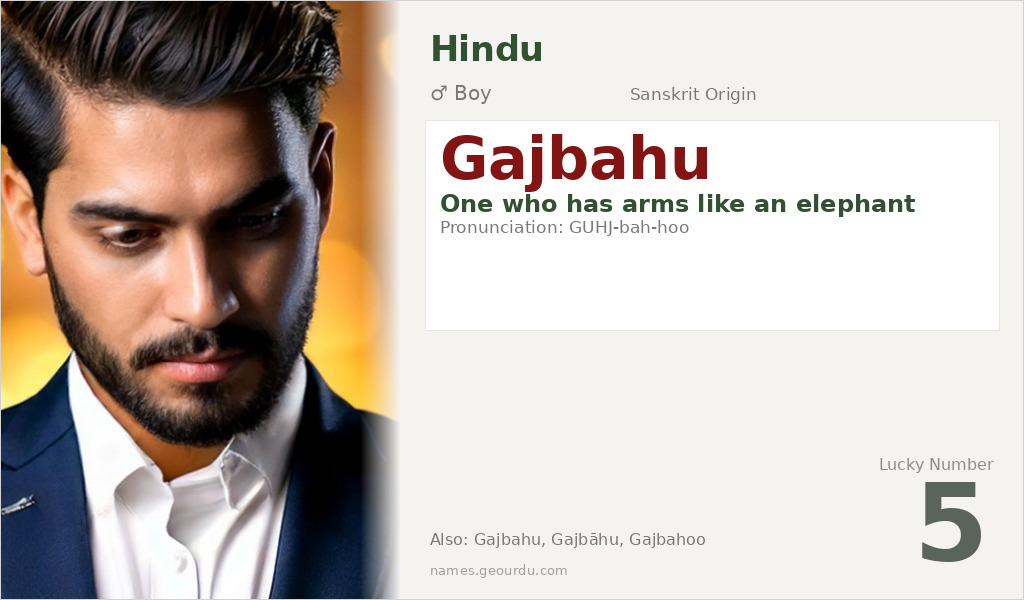
Gajbahu is a powerful and evocative name with deep roots in Sanskrit and Hindu tradition. Meaning ‘one who has arms like an elephant’, this name carries connotations of immense strength and resilience. It has been used historically in Indian epics and royal lineages, symbolizing physical might and protective qualities. Today, it remains a distinctive choice for parents seeking a name with cultural heritage and strong imagery.
Meaning of Gajbahu
Gajbahu is a compound Sanskrit name composed of ‘gaja’ (elephant) and ‘bahu’ (arm or shoulder). In Sanskrit linguistics, ‘gaja’ derives from the root ‘gaj’ meaning ‘to roar’ or ‘to be mighty’, while ‘bahu’ refers specifically to the upper limbs. The name literally translates to ‘elephant-armed’, describing someone with arms as powerful as an elephant’s trunk or limbs. This metaphorical usage is common in Sanskrit literature, where warriors and heroes are often described with animalistic strength. The name appears in texts like the Mahabharata and Puranas, emphasizing valor. Unlike some names that have evolved across languages, Gajbahu remains firmly rooted in its Sanskrit etymology.
| 📛 Name | Gajbahu |
| 💎 Meaning | One who has arms like an elephant |
| 👤 Gender | Boy |
| 🕌 Religion | Hindu |
| 🌍 Origin | Sanskrit |
| 🗣 Pronunciation | GUHJ-bah-hoo |
| ✍️ Urdu | گج باہو |
| ✍️ Arabic | غاج باهو |
| 🔢 Numerology | 5 |
| ✨ Spellings | Gajbahu, Gajbāhu, Gajbahoo |
Origin & Cultural Significance
Gajbahu originates from classical Sanskrit, the ancient language of Hindu scriptures and Indian literature. It is primarily found in Hindu cultural contexts, particularly within Indian and Sri Lankan traditions. Historically, the name appears in references to legendary kings and warriors, such as in Jain chronicles and regional histories. While not among the most common names today, it persists in certain communities as a traditional choice reflecting strength. The name’s usage is almost exclusively within Hindu families, though it may occasionally appear in broader Indian cultural settings without specific religious connotations.
Personality Traits
Those named Gajbahu are often associated with traits of strength, stability, and protection, much like the elephant in Indian symbolism. They may be seen as grounded individuals with a calm yet powerful demeanor, capable of bearing great responsibilities. Their elephantine association suggests both physical prowess and gentle wisdom, making them reliable figures in personal and professional spheres.
Similar Names
If you like Gajbahu, consider: Gajendra, Gajanan, Bahu, Gajadhar, Gajapati
Famous People Named Gajbahu
- Gajbahu — A legendary king mentioned in ancient Indian texts and Jain literature, known for his strength and valor
- Gajbahu I — Historical ruler of the Anuradhapura Kingdom in Sri Lanka (2nd century CE), though historical records vary on this attribution
Frequently Asked Questions About Gajbahu
What does Gajbahu mean?
Gajbahu means 'one who has arms like an elephant' in Sanskrit, combining 'gaja' (elephant) and 'bahu' (arm).
Is Gajbahu a boy or girl name?
Gajbahu is traditionally a boy name in Hindu culture, reflecting masculine strength and valor.
What is the origin of Gajbahu?
Gajbahu originates from Sanskrit, an ancient Indian language, and is used primarily in Hindu naming traditions.





