
Table of Contents
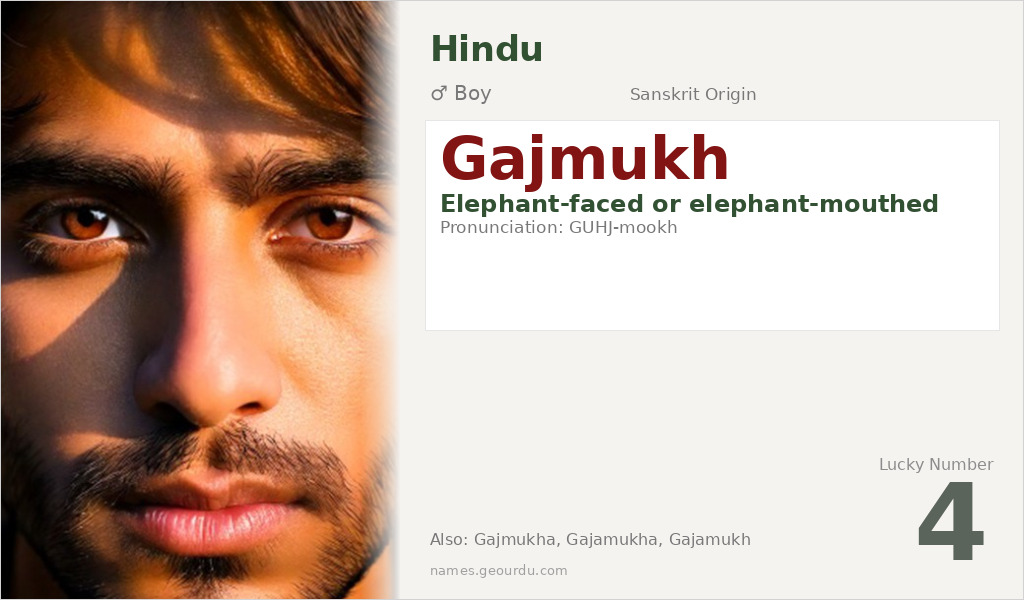
Gajmukh is a distinctive Hindu boy name with deep roots in Sanskrit and Hindu mythology. Meaning ‘elephant-faced’ or ‘elephant-mouthed,’ this name directly references Lord Ganesha, one of the most beloved deities in Hinduism. Parents choosing this name often seek to imbue their child with the qualities of wisdom, intelligence, and obstacle-removing power associated with Ganesha. The name carries centuries of religious and cultural significance across Hindu communities.
Meaning of Gajmukh
Gajmukh is a Sanskrit compound name with precise linguistic components. The first element ‘gaja’ (गज) comes from ancient Sanskrit and means ‘elephant,’ appearing in numerous Hindu scriptures and classical literature. The second element ‘mukha’ (मुख) means ‘face,’ ‘mouth,’ or ‘entrance.’ When combined, Gajmukh literally translates to ‘elephant-faced’ or ‘one with an elephant’s face.’ This is not merely a descriptive term but a specific epithet for Lord Ganesha, who is traditionally depicted with an elephant head. The name appears in various Hindu texts including the Ganesha Purana and is used in devotional contexts. Unlike some names that have evolved meanings, Gajmukh maintains its original Sanskrit meaning consistently across Hindu traditions.
| 📛 Name | Gajmukh |
| 💎 Meaning | Elephant-faced or elephant-mouthed |
| 👤 Gender | Boy |
| 🕌 Religion | Hindu |
| 🌍 Origin | Sanskrit |
| 🗣 Pronunciation | GUHJ-mookh |
| ✍️ Urdu | گج مکھ |
| ✍️ Arabic | غاجموخ |
| 🔢 Numerology | 4 |
| ✨ Spellings | Gajmukha, Gajamukha, Gajamukh |
Origin & Cultural Significance
Gajmukh originates from classical Sanskrit, the ancient liturgical language of Hinduism. As a theophoric name, it directly references Lord Ganesha, who is worshipped as the remover of obstacles and patron of arts and sciences. The name has been used for centuries in Hindu communities, particularly in India and Nepal, though it remains relatively uncommon compared to other Ganesha-related names like Ganesh or Vinayak. In Hindu naming traditions, names derived from deity epithets are chosen to invoke divine qualities and protection. The cultural context is exclusively Hindu, with no significant usage in other religious traditions. The name reflects the rich tradition of Sanskrit compound names in Hindu onomastics.
Personality Traits
In Hindu naming traditions, names are believed to influence personality. Gajmukh, as a name derived from Lord Ganesha, suggests someone who is wise, intelligent, and capable of overcoming challenges. Like the elephant—a symbol of strength, memory, and dignity in Hindu culture—individuals with this name may exhibit patience, loyalty, and thoughtful decision-making. The name carries expectations of leadership and problem-solving abilities, reflecting Ganesha’s role as the remover of obstacles in Hindu mythology.
Similar Names
If you like Gajmukh, consider: Gajanana, Gajavadana, Gajakarna, Gajanan, Vinayaka
Famous People Named Gajmukh
- No widely known contemporary figures with this name, but it appears in Hindu religious texts as an epithet for Lord Ganesha
Frequently Asked Questions About Gajmukh
What does Gajmukh mean?
Gajmukh means 'elephant-faced' or 'elephant-mouthed' in Sanskrit. It is an epithet of Lord Ganesha, the Hindu deity with an elephant head.
Is Gajmukh a boy or girl name?
Gajmukh is exclusively a boy name in Hindu tradition, as it refers to the male deity Lord Ganesha. There is no feminine usage of this name.
What is the origin of Gajmukh?
Gajmukh originates from Sanskrit, the classical language of Hinduism. It is a compound of 'gaja' (elephant) and 'mukha' (face), specifically referring to Lord Ganesha in Hindu religious texts.





