
Table of Contents
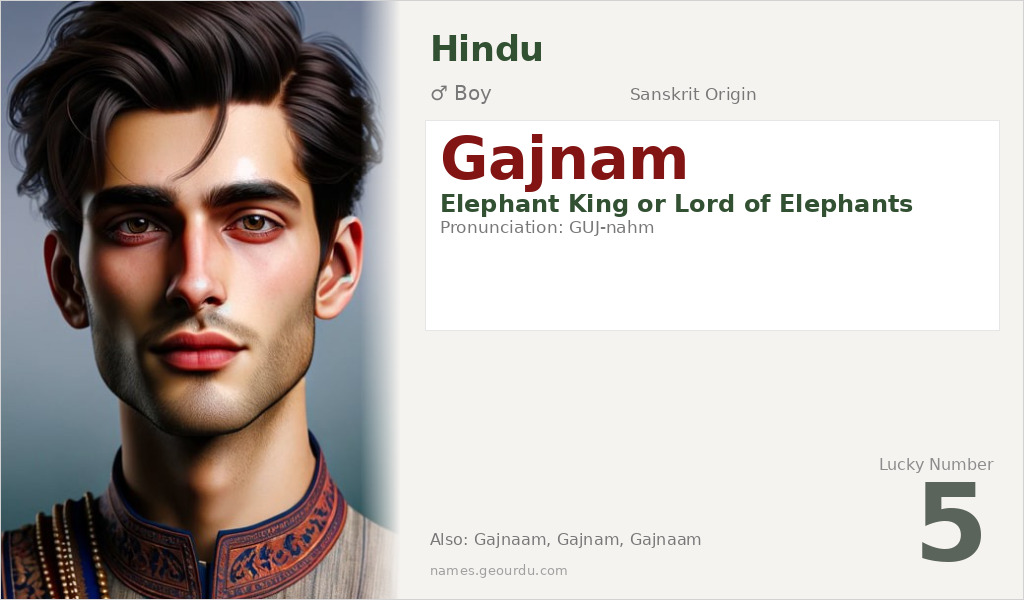
Gajnam is a powerful Sanskrit name that carries the majestic meaning of ‘Elephant King’ or ‘Lord of Elephants.’ Rooted in ancient Indian tradition, this name symbolizes strength, wisdom, and royal authority. Often chosen for boys in Hindu families, Gajnam represents both physical power and spiritual depth. Its rich cultural heritage makes it a meaningful choice for parents seeking a name with historical significance.
Meaning of Gajnam
The name Gajnam originates from classical Sanskrit, combining ‘gaja’ (elephant) and ‘nam’ (name/lord). In Hindu mythology and culture, elephants symbolize strength, wisdom, royalty, and good fortune—attributes associated with deities like Ganesha and Indra’s mount Airavata. The ‘nam’ element derives from ‘nāma’ meaning name or ‘nāman’ indicating lordship, creating a compound that literally means ‘Elephant King.’ This naming convention reflects the Sanskrit tradition of using animal attributes to denote desirable qualities, with elephants particularly representing memory, stability, and protective power. The name appears in historical texts and regional variations across South Asia.
| 📛 Name | Gajnam |
| 💎 Meaning | Elephant King or Lord of Elephants |
| 👤 Gender | Boy |
| 🕌 Religion | Hindu |
| 🌍 Origin | Sanskrit |
| 🗣 Pronunciation | GUJ-nahm |
| ✍️ Urdu | گجنم |
| ✍️ Arabic | غاجنام |
| 🔢 Numerology | 5 |
| ✨ Spellings | Gajnaam, Gajnam, Gajnaam |
Origin & Cultural Significance
Gajnam has its roots in ancient Sanskrit literature and Hindu naming traditions. Sanskrit, as the liturgical language of Hinduism, has produced numerous compound names combining natural elements with titles of respect. The name follows the pattern seen in other Sanskrit names like Gajendra (elephant lord) and Gajanan (elephant-faced, an epithet of Ganesha). While primarily used in Hindu communities across India and Nepal, the name’s components appear in various South Asian languages influenced by Sanskrit. Historical records show usage in royal contexts and warrior lineages, emphasizing the elephant’s association with military strength and royal processions in ancient Indian kingdoms.
Personality Traits
Those named Gajnam are often associated with elephantine qualities: strength combined with gentleness, excellent memory, and natural leadership. They tend to be reliable, protective figures who approach challenges with steady determination. Their personality reflects the cultural symbolism of elephants in Hinduism—creatures of great power who are also considered wise, loyal, and auspicious. This balance makes them respected in both personal and professional spheres.
Similar Names
If you like Gajnam, consider: Gajendra, Gajanan, Gajadhar, Gajapati, Gajkumar
Famous People Named Gajnam
- Gajnam Singh — Historical figure in Indian folklore known for strength and leadership
- Gajnam Sharma — Contemporary Indian scholar specializing in Sanskrit literature
Frequently Asked Questions About Gajnam
What does Gajnam mean?
Gajnam means 'Elephant King' or 'Lord of Elephants,' derived from the Sanskrit words 'gaja' (elephant) and 'nam' (name/lord).
Is Gajnam a boy or girl name?
Gajnam is exclusively a boy's name in Hindu naming traditions, reflecting masculine qualities of strength and leadership.
What is the origin of Gajnam?
Gajnam originates from Sanskrit, the classical language of Hinduism, and is used primarily in Hindu communities across South Asia.





