
Table of Contents
Gajpathi is a powerful Sanskrit name that carries the majestic imagery of elephant lordship. Rooted in ancient Hindu tradition, this name evokes strength, wisdom, and divine protection. As a name meaning ‘Lord of Elephants’, it connects directly to Lord Ganesha, the beloved elephant-headed deity who removes obstacles. Parents choosing this name often seek to bestow qualities of leadership, intelligence, and spiritual grace upon their child.
Meaning of Gajpathi
Gajpathi is a classical Sanskrit compound name with clear etymological roots. The first component ‘gaja’ (गज) refers specifically to elephants, particularly male elephants, and appears throughout Sanskrit literature including the Mahabharata and Puranas. The second component ‘pati’ (पति) is one of Sanskrit’s most productive suffixes, denoting mastery, ownership, or lordship, as seen in words like ‘rajapati’ (lord of kings) and ‘grihapati’ (master of the house). Together, they form ‘gajapati’, which phonetically evolved to ‘gajpathi’ in some regional pronunciations. This name isn’t merely descriptive but carries the cultural weight of elephants as symbols of royalty, wisdom, and divine power in Indian tradition.
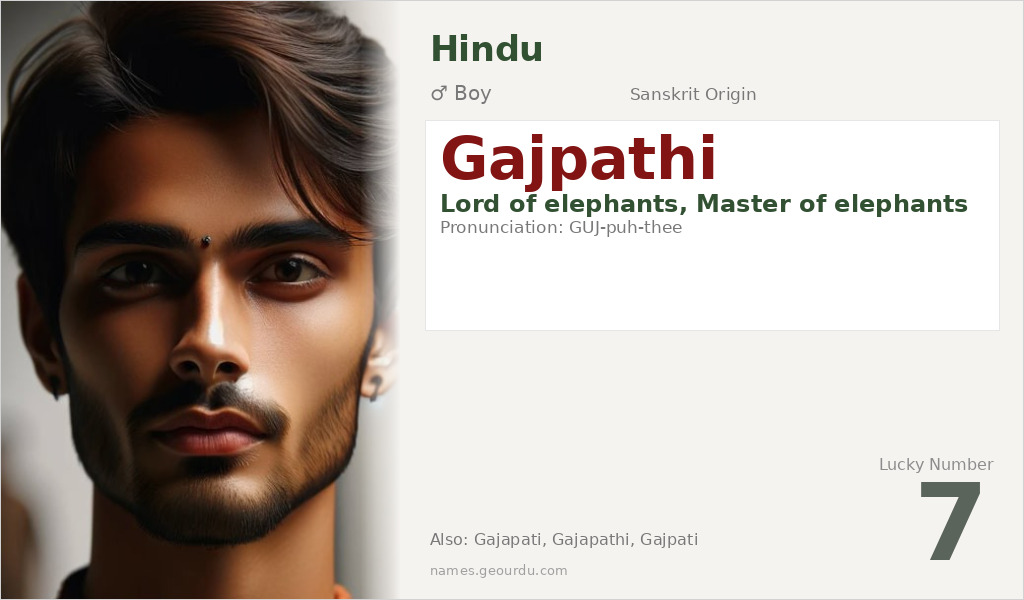
| 📛 Name | Gajpathi |
| 💎 Meaning | Lord of elephants, Master of elephants |
| 👤 Gender | Boy |
| 🕌 Religion | Hindu |
| 🌍 Origin | Sanskrit |
| 🗣 Pronunciation | GUJ-puh-thee |
| ✍️ Urdu | گجپتی |
| ✍️ Arabic | غاجاباتي |
| 🔢 Numerology | 7 |
| ✨ Spellings | Gajapati, Gajapathi, Gajpati |
Origin & Cultural Significance
Gajpathi originates from classical Sanskrit, the liturgical language of Hinduism, and has been used historically as both a given name and a royal title. In medieval India, ‘Gajapati’ was an honorific title for rulers of the Eastern Ganga dynasty in Odisha, who were known for their elephant armies and patronage of temple architecture. The name’s association with Lord Ganesha makes it particularly significant in Hindu naming traditions, where names of deities or their attributes are considered auspicious. While primarily used in Hindu communities, the name’s Sanskrit roots give it pan-Indian recognition across various linguistic regions where Sanskrit-derived names are valued.
Personality Traits
Those named Gajpathi are believed to embody the noble qualities associated with elephants in Indian culture: strength, memory, loyalty, and intelligence. They often display natural leadership abilities combined with a calm, thoughtful demeanor. Like the elephant who clears paths through dense forests, individuals with this name are seen as problem-solvers who can overcome obstacles with patience and determination. Their presence tends to be both commanding and reassuring, making them natural protectors and guides in their communities.
Similar Names
If you like Gajpathi, consider: Ganesha, Gajanan, Gajendra, Gajadhar, Gajkumar
Famous People Named Gajpathi
- Gajapati Kulottunga I — 12th century Chola emperor who also ruled the Eastern Ganga dynasty
- Gajapati Prataparudra Deva — Last independent Hindu king of Odisha before Mughal conquest
Frequently Asked Questions About Gajpathi
What does Gajpathi mean?
Gajpathi means 'Lord of Elephants' or 'Master of Elephants' in Sanskrit, derived from 'gaja' (elephant) and 'pati' (lord/master).
Is Gajpathi a boy or girl name?
Gajpathi is exclusively a masculine name in Hindu naming tradition, reflecting its association with male deities and royal titles.
What is the origin of Gajpathi?
Gajpathi originates from Sanskrit, the classical language of Hinduism, and has historical usage as both a personal name and royal title in medieval Indian kingdoms.





