
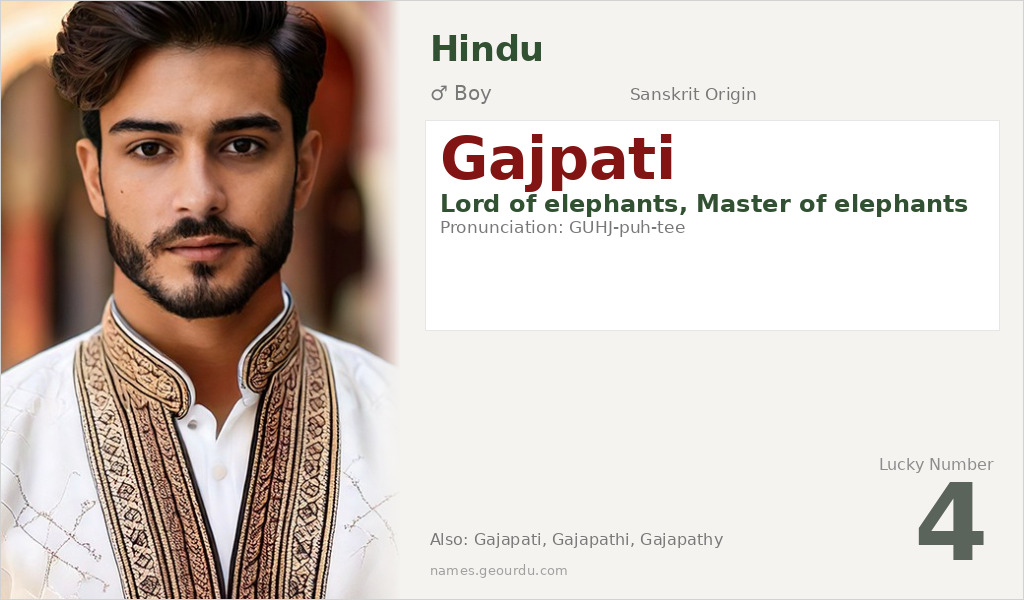
Table of Contents
Gajpati is a powerful Sanskrit name with deep cultural resonance in Hindu tradition. Meaning ‘Lord of elephants’ or ‘Master of elephants’, this name carries connotations of strength, wisdom, and royal authority. Historically used as both a personal name and a regal title, Gajpati connects its bearer to the majestic symbolism of elephants in Indian culture. This name continues to be chosen by parents seeking a name with traditional roots and noble meaning.
Meaning of Gajpati
Gajpati is a classical Sanskrit compound name with transparent etymology. The first component ‘gaja’ (गज) specifically means ‘elephant’, derived from the Sanskrit verbal root √gaj meaning ‘to roar’ or ‘to sound’, referencing the elephant’s distinctive trumpeting. The second component ‘pati’ (पति) is a common Sanskrit suffix meaning ‘lord, master, ruler, or husband’, appearing in numerous Indian names and titles. When combined, Gajpati literally translates to ‘lord of elephants’ or ‘master of elephants’. This name has been used historically as an epithet for Hindu deities, particularly Lord Ganesha who is venerated as the elephant-headed god, and also as a royal title in various Indian kingdoms, especially in Odisha where the Gajapati kings ruled.
| 📛 Name | Gajpati |
| 💎 Meaning | Lord of elephants, Master of elephants |
| 👤 Gender | Boy |
| 🕌 Religion | Hindu |
| 🌍 Origin | Sanskrit |
| 🗣 Pronunciation | GUHJ-puh-tee |
| ✍️ Urdu | گجپتی |
| ✍️ Arabic | غاجباتي |
| 🔢 Numerology | 4 |
| ✨ Spellings | Gajapati, Gajapathi, Gajapathy |
Origin & Cultural Significance
Gajpati originates from classical Sanskrit, the ancient liturgical language of Hinduism, with documented usage dating back centuries in Indian literature and inscriptions. The name gained particular prominence as a regal title in medieval Odisha (eastern India), where rulers of the Gajapati dynasty used it to signify their sovereignty and connection to elephant symbolism, which represented royal power and military strength. In Hindu tradition, the name is closely associated with Lord Ganesha, the elephant-headed deity of wisdom and remover of obstacles. While primarily a Hindu name, its Sanskrit roots mean it could theoretically be used across Indian religious communities, though it remains predominantly within Hindu naming traditions.
Personality Traits
Those named Gajpati are often associated with elephantine qualities: strength, memory, loyalty, and gentle power. They tend to be natural leaders who command respect through wisdom rather than aggression, with a protective instinct toward their community. The name suggests someone who is grounded, patient, and formidable when necessary, carrying themselves with the dignity associated with their namesake animal.
Similar Names
If you like Gajpati, consider: Gajendra, Gajanan, Ganesh, Gajadhar, Patiputra
Famous People Named Gajpati
- Gajapati Kulottunga I — 12th century Chola emperor who used this title
- Gajapati Prataparudra Deva — 16th century ruler of Odisha who bore this regal title
Frequently Asked Questions About Gajpati
What does Gajpati mean?
Gajpati means 'Lord of elephants' or 'Master of elephants'. It is a Sanskrit compound name from 'gaja' (elephant) and 'pati' (lord/master).
Is Gajpati a boy or girl name?
Gajpati is exclusively a boy's name in Hindu naming tradition. The '-pati' suffix in Sanskrit is masculine, and historical usage has always been for males.
What is the origin of Gajpati?
Gajpati originates from Sanskrit, the ancient language of India. It has been used both as a personal name and as a royal title, particularly in the Odisha region where Gajapati kings ruled.





