
Table of Contents
Ganesa is a profound Sanskrit name with deep roots in Hindu mythology and spirituality. As an alternative spelling of Ganesha, this name carries the weight of one of Hinduism’s most beloved and widely worshipped deities. Parents choosing this name often seek to imbue their child with qualities of wisdom, intellect, and the ability to overcome life’s obstacles. The name resonates across cultures where Hindu traditions are practiced.
Meaning of Ganesa
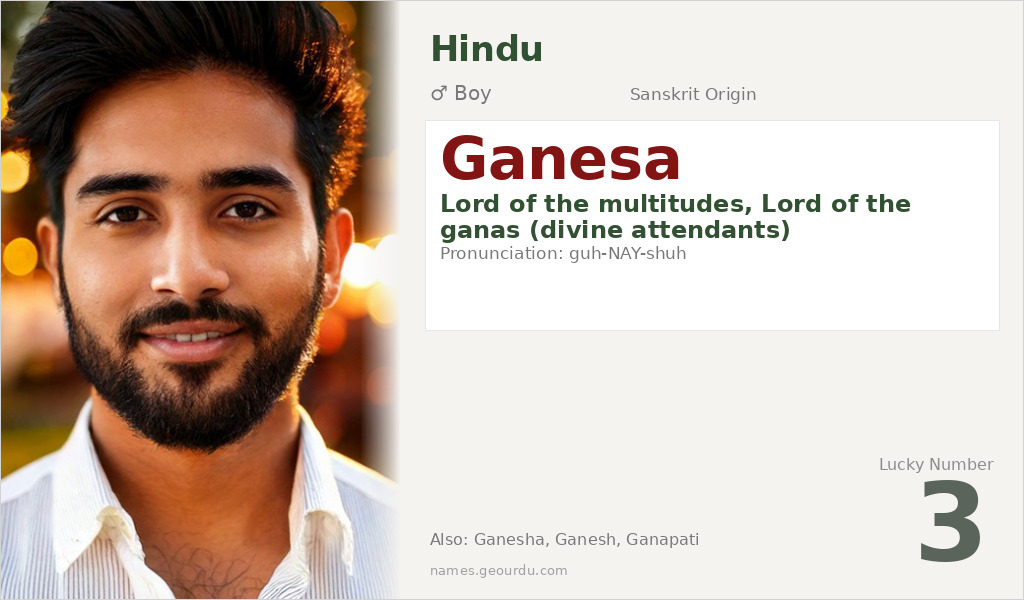
The name Ganesa originates from the Sanskrit language, combining two elements: ‘gana’ meaning ‘multitude’, ‘group’, or specifically referring to the celestial attendants of Shiva, and ‘īśa’ meaning ‘lord’ or ‘master’. Thus, Ganesa literally translates to ‘Lord of the Ganas’ or ‘Lord of the multitudes’. In Hindu theology, the ganas are divine beings who serve as Shiva’s attendants, and Ganesa/Ganesha is their commander. This etymology is consistently documented across Sanskrit scriptures including the Puranas and various Hindu texts. The name represents not just leadership but also the qualities associated with the deity: wisdom, intellect, and the removal of obstacles that block spiritual and material progress.
| 📛 Name | Ganesa |
| 💎 Meaning | Lord of the multitudes, Lord of the ganas (divine attendants) |
| 👤 Gender | Boy |
| 🕌 Religion | Hindu |
| 🌍 Origin | Sanskrit |
| 🗣 Pronunciation | guh-NAY-shuh |
| ✍️ Urdu | گنیش |
| ✍️ Arabic | غانيش |
| 🔢 Numerology | 3 |
| ✨ Spellings | Ganesha, Ganesh, Ganapati, Vinayaka |
Origin & Cultural Significance
Ganesa has its origins in ancient Sanskrit and Hindu religious traditions dating back thousands of years. The name is primarily associated with Ganesha, one of the principal deities in Hinduism who is worshipped at the beginning of rituals and ventures as the remover of obstacles. While the name appears in various forms across South and Southeast Asia due to the spread of Hindu and Buddhist traditions, its core remains in Sanskrit literature and practice. The worship of Ganesha (and by extension the use of the name Ganesa) became particularly prominent during the Gupta period (4th-6th centuries CE) and has continued through modern times. In contemporary usage, Ganesa is used as a given name primarily in Hindu communities, particularly in India, Nepal, and the diaspora.
Personality Traits
Those named Ganesa are often perceived as intelligent, wise, and protective figures in their communities. The name’s association with the deity Ganesha suggests qualities of problem-solving, learning, and guidance. Individuals with this name may be seen as natural leaders who help others navigate challenges, reflecting the deity’s role as ‘Vighnaharta’ or remover of obstacles. The name carries expectations of intellectual curiosity and spiritual depth.
Similar Names
If you like Ganesa, consider: Ganapati, Vinayaka, Vighnesh, Gajanan, Heramba
Famous People Named Ganesa
- Ganesha — The Hindu deity, son of Shiva and Parvati, worshipped as the remover of obstacles and god of wisdom
- Ganesh Acharya — Indian choreographer and film director known for his work in Bollywood
Frequently Asked Questions About Ganesa
What does Ganesa mean?
Ganesa means 'Lord of the multitudes' or 'Lord of the ganas' in Sanskrit, referring to the divine attendants of Shiva in Hindu mythology.
Is Ganesa a boy or girl name?
Ganesa is exclusively a boy's name, as it refers to the male Hindu deity Ganesha, the elephant-headed god of wisdom and remover of obstacles.
What is the origin of Ganesa?
Ganesa originates from Sanskrit and Hindu religious tradition, where it is an alternative spelling of Ganesha, one of the most important deities in Hinduism.





