
Table of Contents
Ganesan is a traditional Hindu name with deep spiritual significance, particularly popular in Tamil culture. Meaning ‘Son of Ganesha’ or ‘Devotee of Ganesha’, this name carries the blessings of the beloved elephant-headed deity who removes obstacles. Parents choosing this name often seek to instill qualities of wisdom, perseverance, and spiritual devotion in their child. With its rich linguistic heritage, Ganesan connects the bearer to ancient Hindu traditions while remaining relevant in modern times.
Meaning of Ganesan
Ganesan is a compound name with clear etymological roots in both Sanskrit and Tamil languages. The first component ‘Ganesha’ comes from Sanskrit, where ‘gana’ means ‘multitude’, ‘troop’, or ‘group’ and ‘isha’ means ‘lord’ or ‘ruler’—together referring to the deity who is lord of Shiva’s ganas (divine attendants). The Tamil suffix ‘-an’ is a possessive marker indicating relationship or belonging. Thus, Ganesan literally translates to ‘son of Ganesha’, ‘belonging to Ganesha’, or ‘devotee of Ganesha’. This construction is common in Tamil naming traditions, where ‘-an’ suffixes create patronymic or devotional names. The name emphasizes a spiritual connection rather than literal parentage, expressing devotion to Lord Ganesha, the remover of obstacles and god of wisdom.
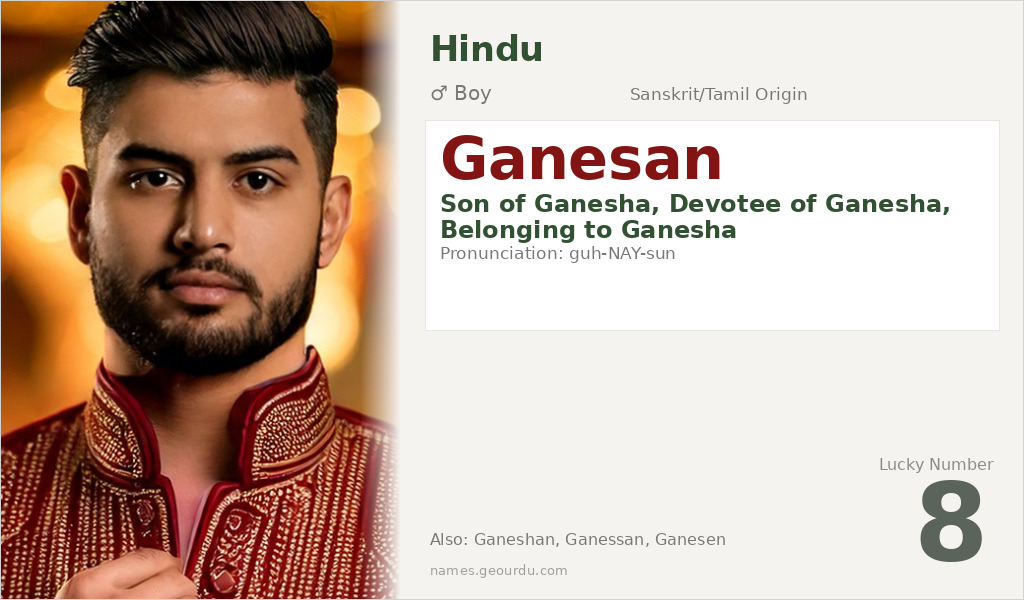
| 📛 Name | Ganesan |
| 💎 Meaning | Son of Ganesha, Devotee of Ganesha, Belonging to Ganesha |
| 👤 Gender | Boy |
| 🕌 Religion | Hindu |
| 🌍 Origin | Sanskrit/Tamil |
| 🗣 Pronunciation | guh-NAY-sun |
| ✍️ Urdu | گنیشن |
| ✍️ Arabic | غانيشان |
| 🔢 Numerology | 8 |
| ✨ Spellings | Ganeshan, Ganessan, Ganesen |
Origin & Cultural Significance
Ganesan originates from South India, specifically Tamil Nadu, where it has been used for centuries within Hindu communities. The name reflects the syncretic linguistic heritage of the region, combining Sanskrit (the classical language of Hindu scriptures) with Tamil (one of the world’s oldest living languages). As a devotional name, it emerged from the widespread worship of Lord Ganesha, who is particularly venerated at the beginning of rituals and new ventures. The name gained popularity through Tamil literature, temple traditions, and cultural practices that honor Ganesha as a protective deity. Today, it remains common among Tamil Hindus worldwide, serving as both a given name and sometimes as a surname indicating family devotion to Ganesha.
Personality Traits
Those named Ganesan are often perceived as possessing qualities associated with their namesake deity. They tend to be intelligent, practical, and good problem-solvers who approach challenges with determination. Many exhibit leadership abilities and organizational skills, along with a spiritual depth that guides their decisions. The connection to Lord Ganesha—the remover of obstacles—often translates to a personality that perseveres through difficulties and helps others overcome their own challenges.
Similar Names
If you like Ganesan, consider: Ganesh, Ganapati, Vinayak, Gajanan, Ganapathy
Famous People Named Ganesan
- Ganesan Krishnan — Malaysian politician and former Deputy Minister
- Ganesan Veerappan — Indian film director and screenwriter in Tamil cinema
Frequently Asked Questions About Ganesan
What does Ganesan mean?
Ganesan means 'Son of Ganesha', 'Devotee of Ganesha', or 'Belonging to Ganesha'. It's a Tamil name derived from Sanskrit, combining the deity name Ganesha with the Tamil possessive suffix '-an'.
Is Ganesan a boy or girl name?
Ganesan is exclusively a masculine name used for boys in Hindu naming traditions, particularly among Tamil-speaking communities. The '-an' suffix is typically masculine in Tamil grammar.
What is the origin of Ganesan?
Ganesan originates from Tamil Nadu, South India, with linguistic roots in both Tamil and Sanskrit. It's a devotional name expressing connection to Lord Ganesha, reflecting the syncretic Hindu culture of the region.





