Table of Contents
Ganika is a name with deep roots in ancient Indian culture and Sanskrit literature. While beautiful in sound, it carries complex historical meanings that reflect the social structures of classical India. This name offers a fascinating glimpse into how naming traditions evolve and how meanings transform across centuries.
Meaning of Ganika
The name Ganika originates from the Sanskrit word ‘ganika’ (गणिका), which in classical Indian literature specifically referred to a courtesan, dancer, or prostitute. These women were often highly educated, skilled in arts like music and dance, and occupied a specific social position in ancient Indian society. The term appears in foundational texts like Vatsyayana’s Kamasutra and Kautilya’s Arthashastra, where ganikas are described as accomplished entertainers. While some modern interpretations associate Ganika with ‘flower’ or ‘blossom,’ this appears to be a regional or euphemistic adaptation rather than the original linguistic meaning documented in Sanskrit sources.
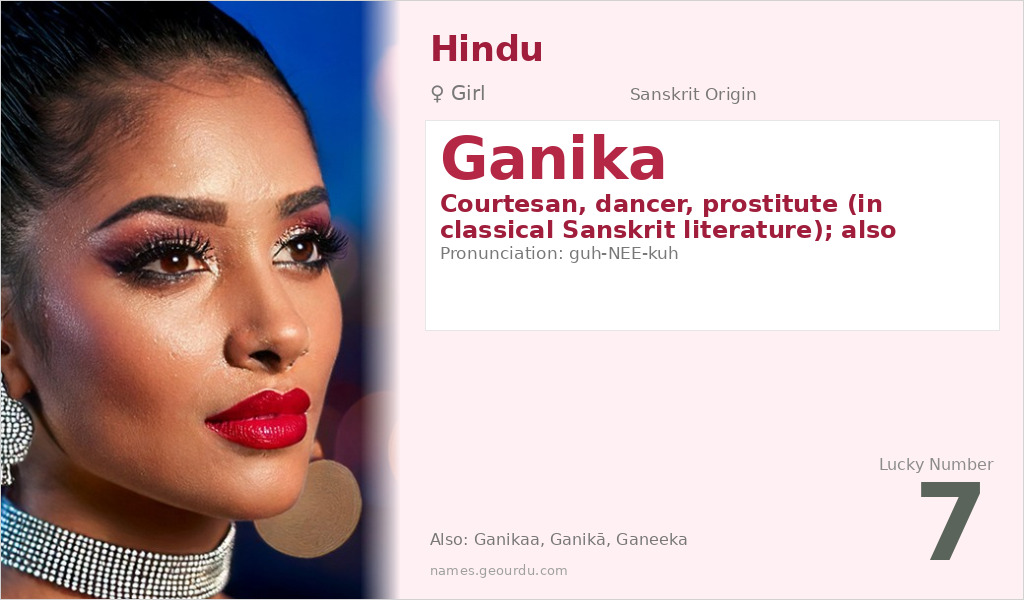
| 📛 Name | Ganika |
| 💎 Meaning | Courtesan, dancer, prostitute (in classical Sanskrit literature); also means 'flower' or 'blossom' in some regional interpretations |
| 👤 Gender | Girl |
| 🕌 Religion | Hindu |
| 🌍 Origin | Sanskrit |
| 🗣 Pronunciation | guh-NEE-kuh |
| ✍️ Urdu | گنیکا |
| ✍️ Arabic | جانيكا |
| 🔢 Numerology | 7 |
| ✨ Spellings | Ganikaa, Ganikā, Ganeeka |
Origin & Cultural Significance
Ganika has its origins in classical Sanskrit literature and ancient Indian culture. During the Gupta period and other classical eras, ganikas were recognized as skilled artists and entertainers who often received royal patronage. The name reflects a specific social institution documented in historical texts, temple sculptures, and dramatic works. While traditionally associated with courtesans, the name has been reinterpreted in some modern Hindu contexts, though it remains relatively uncommon compared to other Sanskrit names with more straightforward positive connotations.
Personality Traits
Those named Ganika are often imagined to embody artistic sensibility and social intelligence, reflecting the historical association with skilled entertainers. They might display natural grace, cultural awareness, and communicative abilities. The name suggests someone who appreciates beauty and expression, potentially excelling in creative or performing arts.
Similar Names
If you like Ganika, consider: Gauri, Ganga, Gayatri, Gitanjali, Gulab
Famous People Named Ganika
- Ganika — character in ancient Indian literature and temple sculptures, often depicted as a skilled dancer
- Ganika — historical courtesans mentioned in Sanskrit dramas like Mrichchhakatika
Frequently Asked Questions About Ganika
What does Ganika mean?
Ganika primarily means 'courtesan,' 'dancer,' or 'prostitute' in classical Sanskrit literature. Some regional interpretations associate it with 'flower,' but the documented meaning in ancient texts is the former.
Is Ganika a boy or girl name?
Ganika is exclusively a girl's name, derived from the feminine Sanskrit noun 'ganika' (गणिका).
What is the origin of Ganika?
Ganika originates from Sanskrit, the classical language of ancient India, where it appears in literary and historical texts describing courtesans and entertainers.