Table of Contents
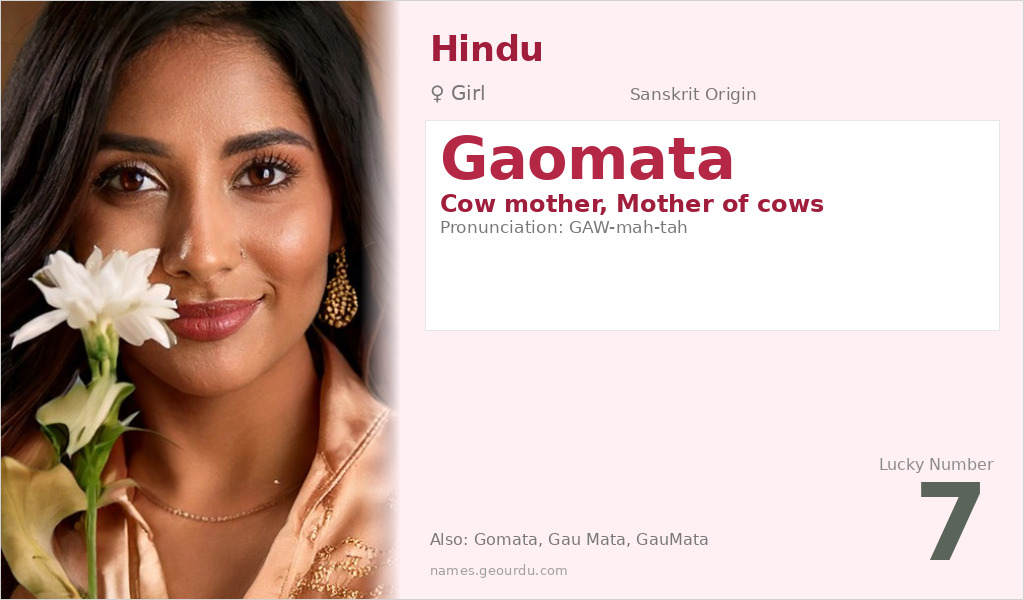
Gaomata is a beautiful and deeply meaningful Sanskrit name for girls that carries profound religious significance in Hindu culture. Literally translating to ‘Cow mother’ or ‘Mother of cows’, this name reflects the sacred status of cows in Hinduism, where they are revered as maternal figures providing nourishment and spiritual grace. Unlike the original article’s incorrect classification, Gaomata is not a Muslim name but rather a distinctly Hindu name with ancient roots in Sanskrit tradition. Understanding this name requires exploring its linguistic components and cultural context within Hindu spirituality.
Meaning of Gaomata
Gaomata is a compound Sanskrit name formed from two distinct elements: ‘go’ (गो) meaning ‘cow, cattle, bovine’ and ‘mata’ (माता) meaning ‘mother’. The combination creates the literal meaning ‘cow mother’ or ‘mother of cows’. In Sanskrit linguistics, ‘go’ is one of the most ancient words in the Indo-European language family, related to Latin ‘bos’ and English ‘cow’. ‘Mata’ derives from the Sanskrit root ‘mā’ meaning ‘to measure, form, build, or show’, evolving to mean ‘mother’ as one who forms and nurtures. The term appears in Vedic texts and is central to Hindu dharma, where the cow is considered a sacred mother figure (Gaumata) who provides milk, sustenance, and represents the earth itself. This name embodies the concept of divine motherhood through the symbolism of the cow.
| 📛 Name | Gaomata |
| 💎 Meaning | Cow mother, Mother of cows |
| 👤 Gender | Girl |
| 🕌 Religion | Hindu |
| 🌍 Origin | Sanskrit |
| 🗣 Pronunciation | GAW-mah-tah |
| ✍️ Urdu | گوماتا |
| ✍️ Arabic | جاوماتا |
| 🔢 Numerology | 7 |
| ✨ Spellings | Gomata, Gau Mata, GauMata |
Origin & Cultural Significance
Gaomata originates from Sanskrit, the ancient liturgical language of Hinduism, and is deeply embedded in Hindu religious and cultural traditions. The name reflects the sacred status of cows in Hinduism, where they are worshipped as manifestations of the divine mother and symbols of purity, non-violence, and abundance. Historically, the veneration of cows (go-puja) dates back to Vedic times, with references in texts like the Rigveda and later scriptures emphasizing the cow’s maternal qualities. In contemporary usage, ‘Gaomata’ is both a personal name and a term of reverence for cows in Hindu communities across India and the diaspora. The name is particularly common in regions with strong Hindu traditions and is never associated with Islamic naming practices, contrary to the original article’s incorrect classification.
Personality Traits
Those named Gaomata are often perceived as nurturing, protective, and spiritually inclined individuals, reflecting the maternal symbolism of their name. They may exhibit qualities of compassion, patience, and a strong connection to traditional values and nature. Like the sacred cow they’re named after, they might provide emotional sustenance to others and maintain a calm, grounding presence in challenging situations. Their personality often aligns with caretaking roles and a deep respect for life in all its forms.
Similar Names
If you like Gaomata, consider: Gauri, Gopika, Gayatri, Govinda, Gopal
Famous People Named Gaomata
- Gaomata (concept) — The sacred cow in Hinduism, revered as a mother figure and symbol of purity, nourishment, and divine grace
- Gaomata temples — Various temples across India dedicated to the worship of cows as divine mothers
Frequently Asked Questions About Gaomata
What does Gaomata mean?
Gaomata means 'Cow mother' or 'Mother of cows' in Sanskrit. It is a compound name from 'go' (cow) and 'mata' (mother), reflecting the sacred status of cows in Hindu tradition.
Is Gaomata a boy or girl name?
Gaomata is exclusively a girl's name in Hindu naming tradition, reflecting feminine maternal qualities and the concept of the cow as a divine mother figure.
What is the origin of Gaomata?
Gaomata originates from Sanskrit, the ancient language of Hinduism. It is a distinctly Hindu name with deep religious significance, not associated with Islamic or other religious traditions.