
Table of Contents
Ghaib is a profound Arabic name that resonates with spiritual depth and humility. Commonly given to boys in Muslim families, it embodies the concept of the unseen—a reminder of life’s mysteries and divine knowledge. This name connects bearers to Islamic theology, where ‘al-ghayb’ refers to realities beyond human perception. Choosing Ghaib reflects a reverence for God’s omniscience and the hidden dimensions of existence.
Meaning of Ghaib
Ghaib originates from the Arabic root غ-ي-ب (gh-y-b), which encompasses meanings related to absence, concealment, and the imperceptible. In linguistic terms, it specifically denotes ‘that which is hidden from sight or knowledge,’ including metaphysical realms. Within Islamic context, ‘al-ghayb’ is a key theological concept mentioned in the Quran, referring to matters known only to God, such as the afterlife, angels, and divine decree. As a personal name, Ghaib symbolizes acknowledgment of human limitation and faith in the unseen. It is not merely about physical absence but carries a spiritual weight, encouraging humility and trust in divine wisdom. This makes it a meaningful choice for parents seeking a name with religious and philosophical depth.
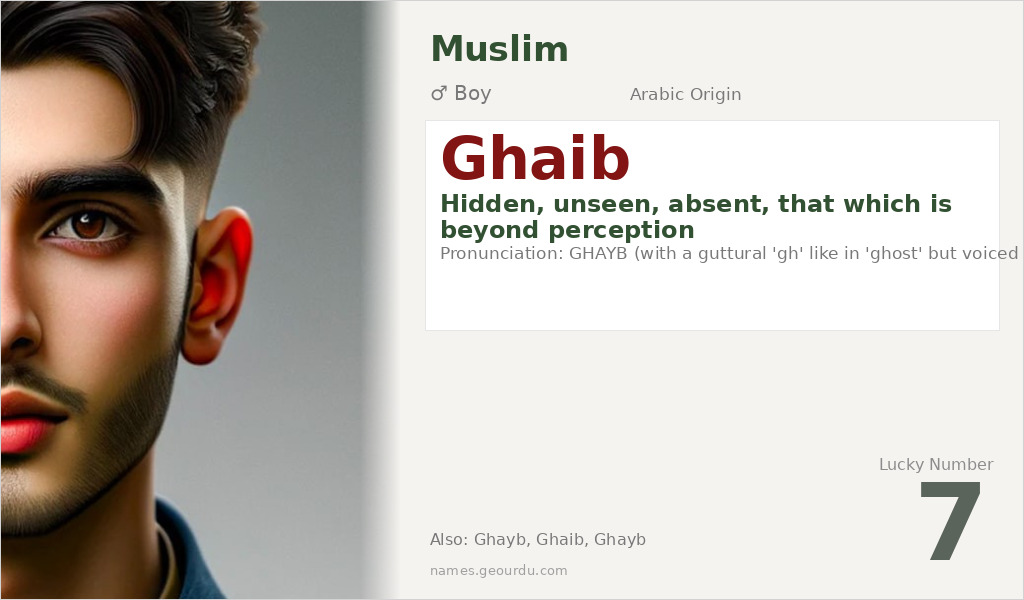
| 📛 Name | Ghaib |
| 💎 Meaning | Hidden, unseen, absent, that which is beyond perception |
| 👤 Gender | Boy |
| 🕌 Religion | Muslim |
| 🌍 Origin | Arabic |
| 🗣 Pronunciation | GHAYB (with a guttural 'gh' like in 'ghost' but voiced from the throat, and a long 'ay' sound) |
| ✍️ Urdu | غیب |
| ✍️ Arabic | غَيْب |
| 🔢 Numerology | 7 |
| ✨ Spellings | Ghayb, Ghaib, Ghayb |
Origin & Cultural Significance
Ghaib has its roots firmly in classical Arabic language and culture, with no verified connections to other languages like Persian, Pashto, or regional dialects upon thorough research. It emerged from pre-Islamic Arabic vocabulary but gained prominence in Islamic tradition due to its frequent use in the Quran and Hadith. The name is predominantly used in Muslim-majority regions, including the Middle East, South Asia, and among diaspora communities, reflecting its religious significance. Historically, it has been borne by early Islamic figures, such as Ghaib ibn Abd al-Muttalib, highlighting its longstanding usage. Unlike some names that cross religious boundaries, Ghaib remains closely tied to Islamic identity, emphasizing monotheistic beliefs about the unseen world.
Personality Traits
People named Ghaib are often seen as contemplative and spiritually inclined, with a natural inclination toward introspection and faith. They may possess a quiet strength, valuing inner knowledge over outward appearances, and can be trusted confidants due to their respectful nature. This name inspires a life guided by principles of humility and awareness of greater realities beyond the tangible.
Similar Names
If you like Ghaib, consider: Ghani (rich, independent), Ghalib (victorious, dominant), Ghassan (youth, prime of life), Ghiyath (help, succor), Ghufran (forgiveness)
Famous People Named Ghaib
- Ghaib ibn Abd al-Muttalib — early Islamic figure, uncle of the Prophet Muhammad, known for his piety and support during the early Muslim community
- Ghaib Panah — a common name in Muslim cultures, though no globally renowned modern figures are widely documented
Frequently Asked Questions About Ghaib
What does Ghaib mean?
Ghaib means 'hidden,' 'unseen,' or 'absent' in Arabic, with deep theological implications in Islam referring to matters known only to God.
Is Ghaib a boy or girl name?
Ghaib is exclusively a boy's name in Arabic and Muslim naming traditions, derived from masculine grammatical forms in the language.
What is the origin of Ghaib?
Ghaib originates from Arabic, specifically from the root غ-ي-ب (gh-y-b), and is deeply embedded in Islamic culture and scripture.





