
Table of Contents
Gharibi is a meaningful Arabic name that resonates deeply within Muslim cultures. Often given to boys, it embodies themes of spiritual journey and humility. This name has been cherished for centuries, reflecting values of detachment from worldly concerns. Explore its rich etymology and cultural significance in this detailed guide.
Meaning of Gharibi
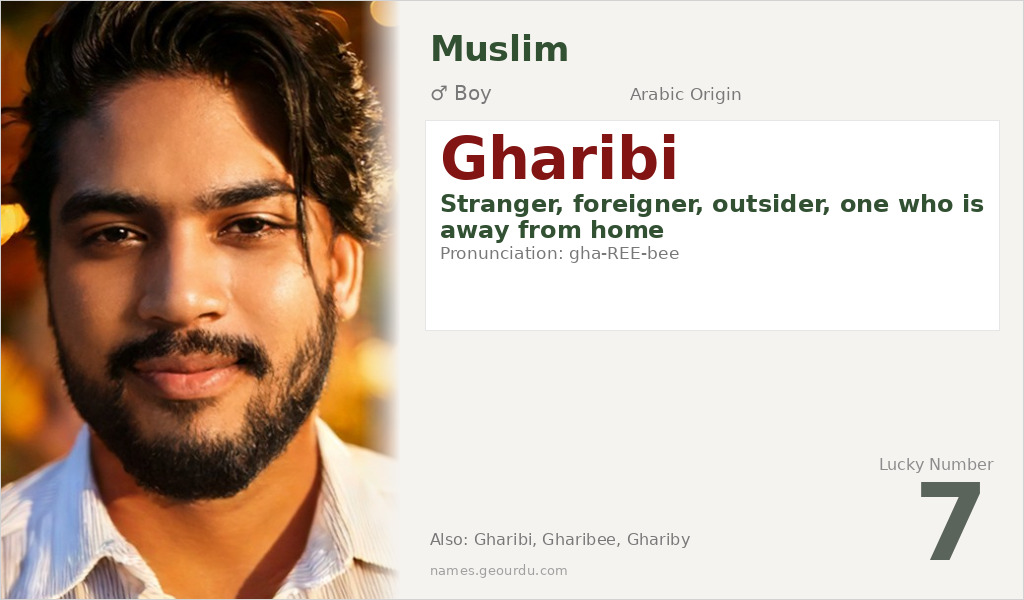
Gharibi originates from the Arabic word ‘gharīb’ (غريب), which translates to ‘stranger,’ ‘foreigner,’ or ‘one who is away from home.’ In classical Arabic, this term can denote something rare, unusual, or distant, often used in poetry and religious texts to describe spiritual seekers or those detached from material life. The name is common in Islamic naming traditions, where it symbolizes humility before God and the transient nature of human existence. Linguistically, it shares roots with similar words in Persian and Urdu, maintaining its core meaning across these languages. Its usage highlights a cultural appreciation for names that reflect inner qualities rather than outward status.
| 📛 Name | Gharibi |
| 💎 Meaning | Stranger, foreigner, outsider, one who is away from home |
| 👤 Gender | Boy |
| 🕌 Religion | Muslim |
| 🌍 Origin | Arabic |
| 🗣 Pronunciation | gha-REE-bee |
| ✍️ Urdu | غریبی |
| ✍️ Arabic | غريبي |
| 🔢 Numerology | 7 |
| ✨ Spellings | Gharibi, Gharibee, Ghariby, Gharibi |
Origin & Cultural Significance
Gharibi has its origins in the Arabic language, with widespread adoption in Muslim communities across the Middle East, South Asia, and beyond. Historically, it appears in Sufi literature and Islamic scholarship, where names denoting ‘stranger’ or ‘traveler’ are valued for their spiritual connotations. In cultures like Persian, Urdu, and Pashto, the name is used without significant alteration, emphasizing its pan-Islamic appeal. It is particularly popular in regions with strong Sufi influences, such as Iran, Afghanistan, Pakistan, and parts of the Arab world. The name’s endurance showcases the importance of meaningful, linguistically rooted names in Islamic tradition.
Personality Traits
Those named Gharibi are often seen as reflective and spiritually aware individuals. Their name suggests a personality that values depth over superficiality, possibly leading them to pursue paths of learning or introspection. They may exhibit resilience and adaptability, akin to a traveler navigating life’s journeys. This name inspires a sense of uniqueness and inner strength, guiding them toward meaningful connections and personal growth.
Similar Names
If you like Gharibi, consider: Gharib, Ghariba, Ajeeb, Azeem, Fareed
Famous People Named Gharibi
- Gharibi (historical figure) — A common name among Sufi poets and scholars in Persian and Urdu literature, symbolizing spiritual estrangement
- Modern bearers — Various individuals in Muslim-majority regions, particularly in Iran, Afghanistan, Pakistan, and Arab countries
Frequently Asked Questions About Gharibi
What does Gharibi mean?
Gharibi means 'stranger,' 'foreigner,' or 'outsider' in Arabic, derived from the root word 'gharīb.' It symbolizes spiritual detachment and humility in Islamic contexts.
Is Gharibi a boy or girl name?
Gharibi is traditionally a boy's name in Muslim cultures, though variations like Ghariba exist for girls. It is predominantly masculine in usage.
What is the origin of Gharibi?
Gharibi originates from the Arabic language, with deep roots in Islamic tradition. It is commonly used in Arabic, Persian, Urdu, and related cultures, especially among Muslim communities.





