
Table of Contents
Ghayb is a profound Arabic name that carries significant theological weight in Islamic tradition. Meaning ‘the unseen’ or ‘hidden,’ this name connects directly to one of the fundamental concepts in Muslim belief—faith in what lies beyond ordinary human perception. While relatively uncommon as a personal name, Ghayb represents a beautiful expression of spiritual consciousness and metaphysical awareness. Parents choosing this name often seek to instill values of faith in divine wisdom and acceptance of life’s mysteries.
Meaning of Ghayb
The name Ghayb originates from the classical Arabic root غ-ي-ب (gh-y-b), which encompasses meanings of absence, concealment, and the imperceptible. In its most significant usage, ‘al-ghayb’ refers specifically to the unseen realm in Islamic theology—those aspects of existence known only to God, including the afterlife, divine decree, angels, and spiritual realities. The term appears prominently in the Quran, most notably in Surah Al-Baqarah (2:3) which describes the righteous as ‘those who believe in the unseen.’ This connection gives the name deep religious resonance. Linguistically, related forms include ghaiba (absence), gha’ib (absent one), and taghayyaba (to disappear), all sharing the core concept of being beyond ordinary perception.
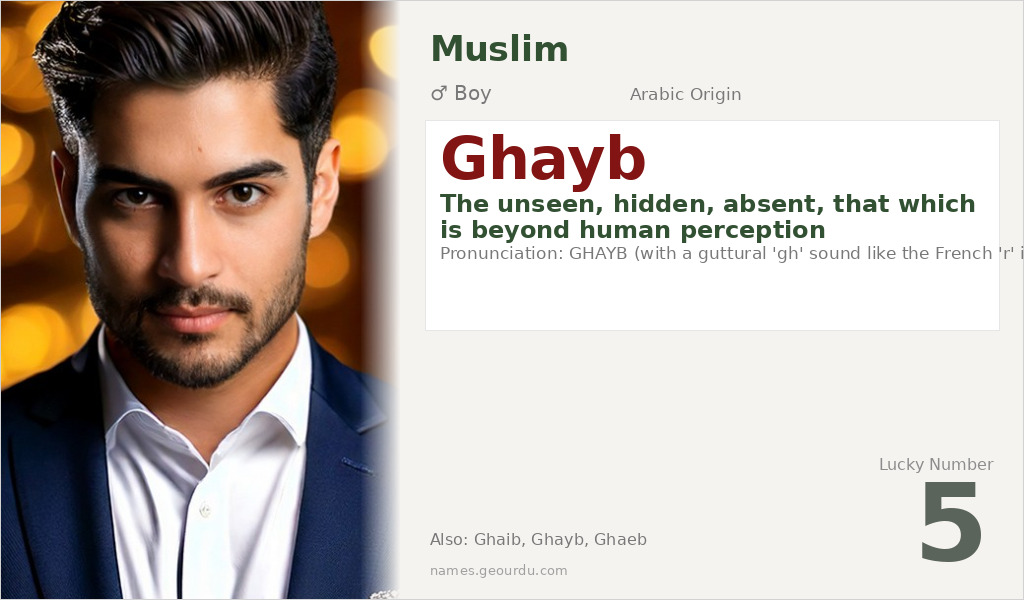
| 📛 Name | Ghayb |
| 💎 Meaning | The unseen, hidden, absent, that which is beyond human perception |
| 👤 Gender | Boy |
| 🕌 Religion | Muslim |
| 🌍 Origin | Arabic |
| 🗣 Pronunciation | GHAYB (with a guttural 'gh' sound like the French 'r' in 'Paris', rhyming with 'type') |
| ✍️ Urdu | غیب |
| ✍️ Arabic | غَيْب |
| 🔢 Numerology | 5 |
| ✨ Spellings | Ghaib, Ghayb, Ghaeb, Gha'ib |
Origin & Cultural Significance
Ghayb has its origins in pre-Islamic Arabic language but gained profound significance with the advent of Islam in the 7th century. The concept of ‘al-ghayb’ became central to Islamic theology, distinguishing Muslim belief from purely materialistic worldviews. While used occasionally as a personal name in various Muslim cultures, it appears more frequently in scholarly and poetic contexts addressing metaphysical themes. In South Asia, the name has been adopted by some Pashtun and Urdu-speaking communities, often among families with religious scholarly traditions. Unlike many Arabic names that spread through conquest or trade, Ghayb’s dissemination followed Islamic theological education and Sufi traditions emphasizing spiritual knowledge.
Personality Traits
Those named Ghayb are often associated with contemplative, spiritually-aware personalities. They may exhibit a natural inclination toward philosophical thinking and religious reflection, valuing inner truth over superficial appearances. In social contexts, they might prefer meaningful conversations to casual chatter, and their quiet depth can make them trusted confidants. While sometimes perceived as reserved or mysterious themselves, they typically seek understanding rather than mystery for its own sake.
Similar Names
If you like Ghayb, consider: Ghalib, Ghassan, Ghazi, Ghayth, Ghufran
Famous People Named Ghayb
- Ghayb Tana Gharan — 19th century Pashto poet and scholar from the Gharan region of Afghanistan
- Ghayb Ali Shah — Sufi saint and scholar in the Indian subcontinent during the Mughal era
Frequently Asked Questions About Ghayb
What does Ghayb mean?
Ghayb means 'the unseen,' 'hidden,' or 'that which is beyond human perception' in Arabic. It's a theological term in Islam referring to realities known only to God.
Is Ghayb a boy or girl name?
Ghayb is exclusively a boy's name in Arabic and Islamic naming traditions. The grammatical structure and usage history confirm its masculine gender assignment.
What is the origin of Ghayb?
Ghayb originates from classical Arabic language and Islamic theology. It comes from the root غ-ي-ب (gh-y-b) and gained significance through Quranic usage describing belief in the unseen realm.





