
Table of Contents
Ghislaine is an elegant name with deep historical roots that has maintained its charm across centuries. Originating from medieval France, this name carries the meaningful connotation of ‘pledge’ or ‘oath’ from its Germanic linguistic origins. While relatively uncommon today, Ghislaine represents a connection to Frankish heritage and Christian tradition. Its sophisticated sound and rich background make it a distinctive choice for parents seeking a name with historical significance.
Meaning of Ghislaine
The name Ghislaine derives from the Old Frankish elements ‘gisil’ meaning ‘pledge, hostage’ and ‘hard’ meaning ‘brave, hardy, strong’. This Germanic origin reflects the name’s emergence during the Frankish period in what is now France and Belgium. The name evolved through French linguistic adaptation, with the feminine ‘-aine’ suffix distinguishing it from the masculine Ghislain. Historically, the concept of a ‘pledge’ or ‘hostage’ in medieval Germanic societies often referred to a solemn promise or bond, giving the name connotations of commitment and fidelity. The name’s preservation through Christian tradition, particularly via Saint Ghislain, helped maintain its original meaning while spreading its usage.
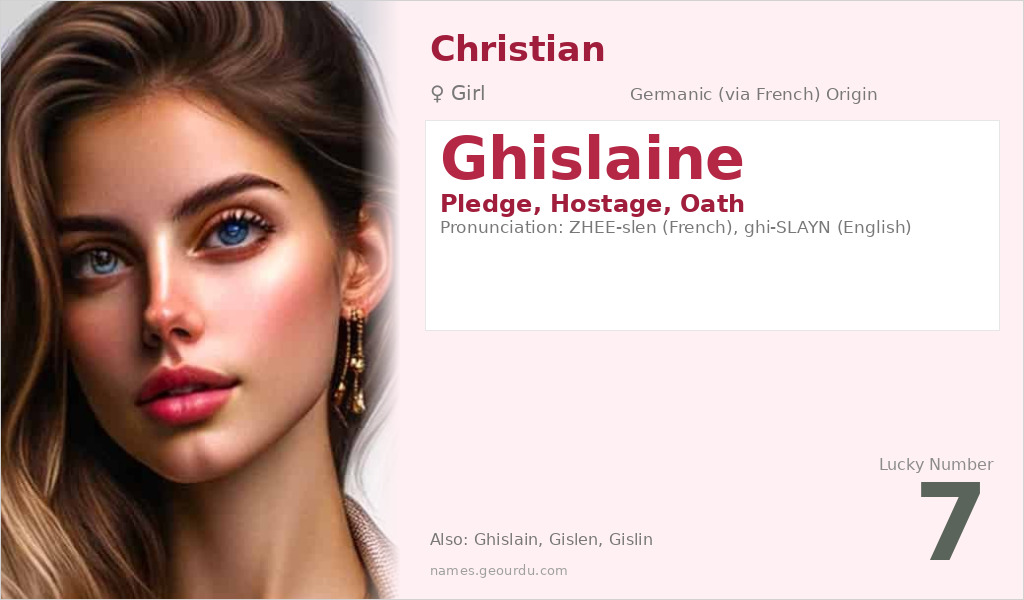
| 📛 Name | Ghislaine |
| 💎 Meaning | Pledge, Hostage, Oath |
| 👤 Gender | Girl |
| 🕌 Religion | Christian |
| 🌍 Origin | Germanic (via French) |
| 🗣 Pronunciation | ZHEE-slen (French), ghi-SLAYN (English) |
| ✍️ Urdu | غسلین |
| ✍️ Arabic | غيسلين |
| 🔢 Numerology | 7 |
| ✨ Spellings | Ghislain, Gislen, Gislin, Ghislène, Gislaine |
Origin & Cultural Significance
Ghislaine originated as a French feminine form of the Germanic name Gislen during the medieval period. The name gained prominence through Saint Ghislain, a 7th-century Frankish hermit who founded the Benedictine monastery of Saint-Ghislain in present-day Belgium. This Christian association helped establish the name in French-speaking regions, particularly in Belgium and northern France. While the name has remained most common in French-speaking countries, it has seen occasional use in English-speaking nations, often among families with French heritage. The name’s usage declined in the late 20th century but retains historical and cultural significance in regions with Frankish heritage.
Personality Traits
Those named Ghislaine are often perceived as sophisticated, intelligent, and somewhat reserved individuals. The name’s historical and linguistic roots suggest qualities of loyalty and commitment, reflecting its meaning of ‘pledge’. People with this name may exhibit a thoughtful, analytical approach to life, valuing depth in both personal relationships and intellectual pursuits. Their connection to the name’s medieval origins might indicate an appreciation for tradition and history.
Similar Names
If you like Ghislaine, consider: Giselle, Gillian, Gisela, Ghislain, Gislenus
Famous People Named Ghislaine
- Ghislaine Maxwell — British socialite and convicted sex offender
- Ghislaine Arabian — French chef and restaurateur
- Ghislaine Dunant — French writer and biographer
Frequently Asked Questions About Ghislaine
What does Ghislaine mean?
Ghislaine means 'pledge', 'hostage', or 'oath' in its original Old Frankish context, derived from the elements 'gisil' (pledge) and 'hard' (brave).
Is Ghislaine a boy or girl name?
Ghislaine is predominantly a feminine name, being the French feminine form of the masculine name Ghislain. While historically related to a male saint, the name Ghislaine itself is used almost exclusively for girls.
What is the origin of Ghislaine?
Ghislaine originates from Old Frankish (Germanic) roots, adapted into French as a feminine name. It gained prominence through Christian tradition, particularly associated with Saint Ghislain in 7th-century Belgium.





