
Table of Contents
Gilad is a distinctive masculine name with deep roots in biblical history and Hebrew language. While often associated with the ancient region east of the Jordan River, the name carries beautiful meanings related to enduring happiness and testimony. Today, Gilad remains popular in Jewish communities worldwide and has gained recognition across cultures for its strong, melodic sound and rich heritage.
Meaning of Gilad
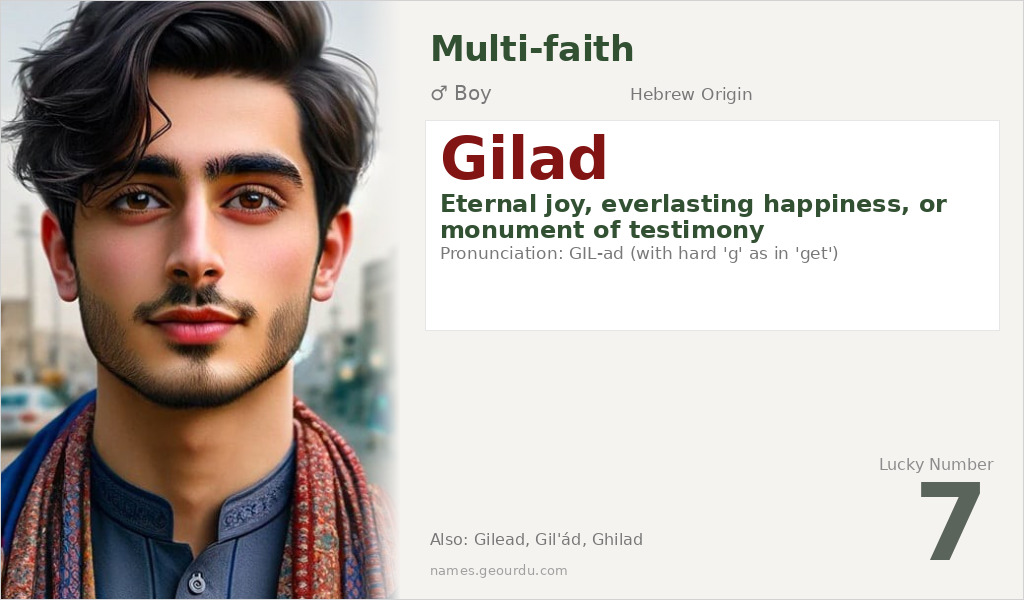
The name Gilad originates from the Hebrew language and carries two primary interpretations. The most common meaning combines the Hebrew elements ‘gil’ (joy, happiness) and ‘ad’ (eternity, forever), resulting in ‘eternal joy’ or ‘everlasting happiness.’ Alternatively, some scholars trace it to ‘gal’ (heap of stones, monument) and ‘ed’ (witness, testimony), giving ‘monument of testimony’—a reference to the biblical region of Gilead that served as a boundary marker. This dual etymology reflects both emotional and geographical significance, with the name appearing multiple times in the Hebrew Bible as both a place name and personal name. The region of Gilead was known for its fertile lands and balm, adding layers of positive association to the name.
| 📛 Name | Gilad |
| 💎 Meaning | Eternal joy, everlasting happiness, or monument of testimony |
| 👤 Gender | Boy |
| 🕌 Religion | Multi-faith |
| 🌍 Origin | Hebrew |
| 🗣 Pronunciation | GIL-ad (with hard 'g' as in 'get') |
| ✍️ Urdu | جلعاد |
| ✍️ Arabic | جلعاد |
| 🔢 Numerology | 7 |
| ✨ Spellings | Gilead, Gil'ád, Ghilad |
Origin & Cultural Significance
Gilad has its origins in ancient Hebrew culture and the biblical narrative. The name first appears in the Book of Genesis as a descendant of Manasseh (1 Chronicles 7:17) and later refers to the mountainous region east of the Jordan River that was allocated to the tribes of Gad and Manasseh. Throughout biblical history, Gilead was strategically important and known for its natural resources. While primarily used in Jewish communities historically, the name has spread to Christian contexts through biblical familiarity and more recently gained some usage in secular Western societies. It is not traditionally an Islamic name, though Arabic speakers may recognize it from biblical references shared across Abrahamic traditions.
Personality Traits
Those named Gilad often exhibit characteristics of depth, resilience, and spiritual awareness. They tend to be reflective individuals who value authenticity and meaningful connections. With their analytical minds and strong moral compass, Gilads frequently excel in fields requiring careful thought and ethical consideration. Their name’s association with enduring joy often manifests as an optimistic outlook even during challenging circumstances.
Similar Names
If you like Gilad, consider: Gideon, Eliad, Gil, Gad, Elad, Galia, Gili, Adir, Oded, Amichai
Famous People Named Gilad
- Gilad Shalit — Israeli soldier held captive by Hamas for over five years (2006-2011)
- Gilad Atzmon — British-Israeli jazz musician and writer
- Gilad Hekselman — Israeli jazz guitarist based in New York
Frequently Asked Questions About Gilad
What does Gilad mean?
Gilad means 'eternal joy' or 'everlasting happiness' in Hebrew, derived from 'gil' (joy) and 'ad' (eternity). Alternatively, it can mean 'monument of testimony' from 'gal' (heap of stones) and 'ed' (witness).
Is Gilad a boy or girl name?
Gilad is exclusively a masculine name in all cultural contexts where it is used, particularly in Hebrew and Jewish naming traditions.
What is the origin of Gilad?
Gilad originates from Hebrew language and biblical tradition, specifically from the ancient region of Gilead east of the Jordan River and appearing in the Hebrew Bible/Tanakh.





