
Table of Contents
Gorakhnath is a name that resonates through centuries of Hindu spiritual tradition. Named after the legendary yogi who founded the influential Nath Sampradaya, this name carries the weight of ascetic discipline and philosophical depth. More than just a personal identifier, Gorakhnath represents a connection to India’s rich yogic heritage and continues to inspire parents seeking names with profound spiritual meaning. Discover the etymology, cultural significance, and modern relevance of this timeless name.
Meaning of Gorakhnath
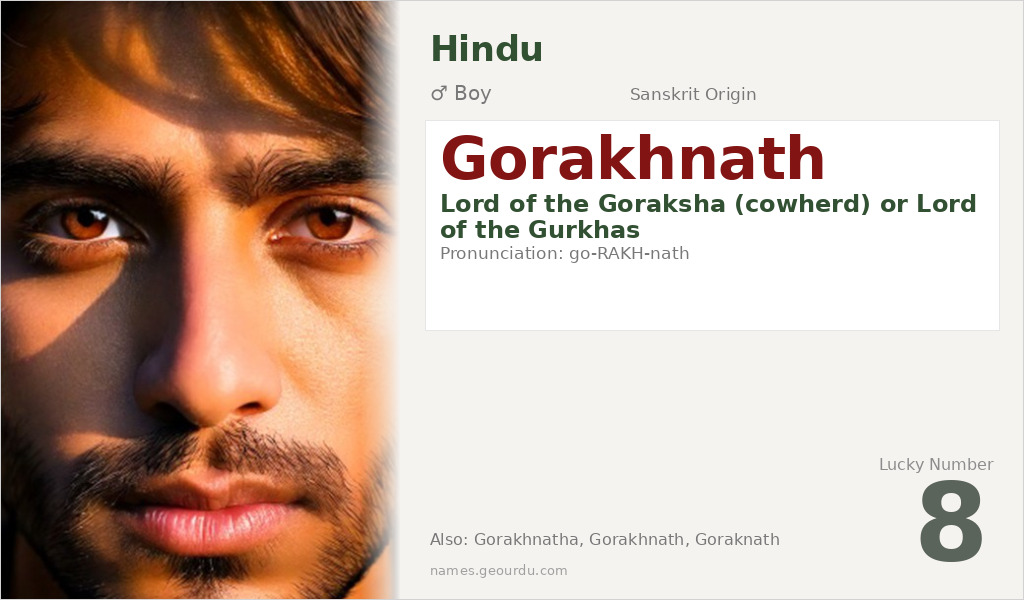
The name Gorakhnath derives from classical Sanskrit, combining two meaningful elements that reveal its spiritual essence. ‘Goraksha’ (गोरक्ष) breaks down to ‘go’ meaning ‘cow’ and ‘raksha’ meaning ‘protection’ or ‘herding’, referring to a cowherd or protector of cows—a significant role in Hindu culture where cows are revered. The suffix ‘Nath’ (नाथ) means ‘lord’, ‘master’, or ‘protector’, commonly used in names of spiritual leaders. Thus, Gorakhnath literally translates to ‘Lord of the Cowherd’ or ‘Master Protector of Cows’. In some regional interpretations, particularly in Nepali context, it’s also understood as ‘Lord of the Gurkhas’, connecting to the legendary warrior community. This dual interpretation reflects the name’s historical evolution across South Asian cultures.
| 📛 Name | Gorakhnath |
| 💎 Meaning | Lord of the Goraksha (cowherd) or Lord of the Gurkhas |
| 👤 Gender | Boy |
| 🕌 Religion | Hindu |
| 🌍 Origin | Sanskrit |
| 🗣 Pronunciation | go-RAKH-nath |
| ✍️ Urdu | گورکھ ناتھ |
| ✍️ Arabic | غوراخ ناث |
| 🔢 Numerology | 8 |
| ✨ Spellings | Gorakhnatha, Gorakhnath, Goraknath |
Origin & Cultural Significance
Gorakhnath originates from 11th-12th century India as the name of the founder of the Nath Sampradaya, a Shaivite yogic tradition that significantly influenced Hindu spirituality. Historical records place Gorakhnath as a disciple of Matsyendranath, with both figures central to Hatha Yoga’s development. The name became institutionalized through the Gorakhnath Math in Gorakhpur, which remains an important Hindu pilgrimage site. Beyond India, the name spread to Nepal where it’s associated with the Gurkha warriors and their patron deity. Today, Gorakhnath appears primarily among Hindu communities in India, Nepal, and the diaspora, maintaining its religious and cultural significance across generations.
Personality Traits
Those named Gorakhnath are often perceived as having a spiritual and disciplined character, reflecting the name’s yogic origins. They may exhibit natural leadership abilities combined with a protective instinct toward family and community. The name suggests someone who values tradition, philosophical inquiry, and may possess an ascetic streak—finding meaning in simplicity and self-discipline. While individual personalities vary, the historical weight of the name often inspires expectations of wisdom, strength, and spiritual depth.
Similar Names
If you like Gorakhnath, consider: Goraksha, Gopinath, Gopalnath, Dattatreya, Matsyendranath
Famous People Named Gorakhnath
- Gorakhnath — 11th-12th century Hindu yogi, founder of Nath tradition
- Gorakhnath Temple — Important Hindu temple in Gorakhpur, India
Frequently Asked Questions About Gorakhnath
What does Gorakhnath mean?
Gorakhnath means 'Lord of the Cowherd' or 'Lord of the Gurkhas' in Sanskrit, combining 'Goraksha' (cowherd/protector) and 'Nath' (lord/master).
Is Gorakhnath a boy or girl name?
Gorakhnath is exclusively a boy's name in Hindu tradition, named after the male founder of the Nath yogic movement.
What is the origin of Gorakhnath?
Gorakhnath originates from Sanskrit and Hindu tradition, specifically as the name of the 11th-12th century yogi who founded the Nath Sampradaya monastic order.





