
Table of Contents
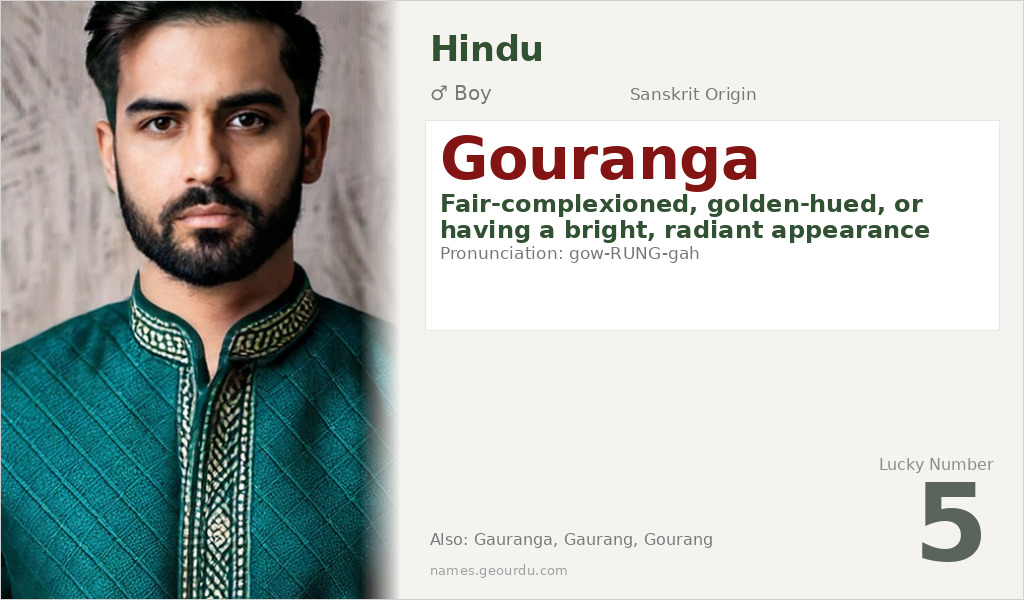
Gouranga is a spiritually significant Hindu boy name with deep roots in Sanskrit tradition. Meaning ‘fair-complexioned’ or ‘golden-hued’, this name carries both aesthetic and divine connotations. Most famously associated with the 15th-century saint Chaitanya Mahaprabhu, Gouranga represents spiritual radiance and divine beauty. This name continues to be cherished in Hindu families, particularly in Bengal and among Vaishnava communities.
Meaning of Gouranga
Gouranga originates from the Sanskrit language, combining two elements: ‘gaura’ (गौर) meaning ‘fair, white, golden, or bright’ and ‘anga’ (अङ्ग) meaning ‘limb, body, or part’. The complete meaning translates to ‘one with a fair or golden body/complexion’. In Hindu philosophical context, the ‘golden hue’ symbolizes divine light, purity, and spiritual illumination. The name gained particular prominence through Chaitanya Mahaprabhu (1486-1534), the founder of Gaudiya Vaishnavism, who was affectionately called ‘Gauranga’ due to his radiant fair complexion. This etymological construction follows common Sanskrit naming patterns where physical attributes become symbolic of spiritual qualities.
| 📛 Name | Gouranga |
| 💎 Meaning | Fair-complexioned, golden-hued, or having a bright, radiant appearance |
| 👤 Gender | Boy |
| 🕌 Religion | Hindu |
| 🌍 Origin | Sanskrit |
| 🗣 Pronunciation | gow-RUNG-gah |
| ✍️ Urdu | گورنگا |
| ✍️ Arabic | غورانغا |
| 🔢 Numerology | 5 |
| ✨ Spellings | Gauranga, Gaurang, Gourang, Gauranga |
Origin & Cultural Significance
Gouranga has its origins in classical Sanskrit literature and Hindu naming traditions. The name became historically significant through Sri Chaitanya Mahaprabhu, a 15th-16th century saint and social reformer in Bengal who revolutionized Bhakti yoga practices. His followers began using ‘Gauranga’ as both a name and a spiritual title, spreading its usage throughout Eastern India and Vaishnava communities. While the name appears in earlier Sanskrit texts describing fair-complexioned beings, its modern popularity is largely tied to the Chaitanya movement. Today, it remains particularly common in Bengal, Odisha, and among ISKCON devotees worldwide as both a given name and honorific title.
Personality Traits
Those named Gouranga are often perceived as having a radiant, charismatic presence that draws people toward them. They typically exhibit spiritual depth, philosophical thinking, and a natural inclination toward teaching or guiding others. Their ‘golden’ quality manifests not just in appearance but in a warm, illuminating personality that brings light to situations. Many Gourangas display artistic talents, adaptability to different circumstances, and a balanced approach to material and spiritual pursuits.
Similar Names
If you like Gouranga, consider: Gaur, Gaurang, Gaurikant, Gaurinandan, Gauriprasad
Famous People Named Gouranga
- Chaitanya Mahaprabhu (1486-1534) — Also known as Gauranga, founder of Gaudiya Vaishnavism and influential Bhakti saint in Bengal
- Gauranga Das Prabhu — Contemporary ISKCON spiritual leader and motivational speaker
Frequently Asked Questions About Gouranga
What does Gouranga mean?
Gouranga means 'fair-complexioned' or 'golden-hued' in Sanskrit, combining 'gaura' (fair/golden) and 'anga' (body/limb). It carries spiritual connotations of divine radiance and beauty.
Is Gouranga a boy or girl name?
Gouranga is exclusively a boy's name in Hindu naming tradition. It's historically associated with male spiritual figures like Chaitanya Mahaprabhu and follows masculine Sanskrit grammatical forms.
What is the origin of Gouranga?
Gouranga originates from Sanskrit language and Hindu culture. It gained prominence through the 15th-century saint Chaitanya Mahaprabhu in Bengal and is now used widely in Hindu communities, particularly in Eastern India and among Vaishnava devotees.





