
Table of Contents
Hagai is a name rich with Biblical heritage and joyful meaning. Derived from ancient Hebrew roots, this name carries the beautiful connotation of celebration and festivity. While less common than some Biblical names, Hagai offers a distinctive choice with deep historical resonance. Let’s explore the origins, meaning, and cultural significance of this meaningful name.
Meaning of Hagai
Hagai comes directly from the Hebrew name Haggai, which originates from the root word חָגַג (chagag). This verb means ‘to celebrate, to hold a feast, or to make a pilgrimage.’ The related noun חַג (chag) specifically refers to a festival or feast day in Jewish tradition. In the Biblical context, Haggai was one of the twelve minor prophets who lived around 520 BCE and whose book encourages the rebuilding of the Temple in Jerusalem. The name therefore embodies concepts of religious celebration, communal gathering, and spiritual renewal. Unlike many names that have evolved through multiple languages, Hagai remains closely tied to its original Hebrew etymology and meaning.
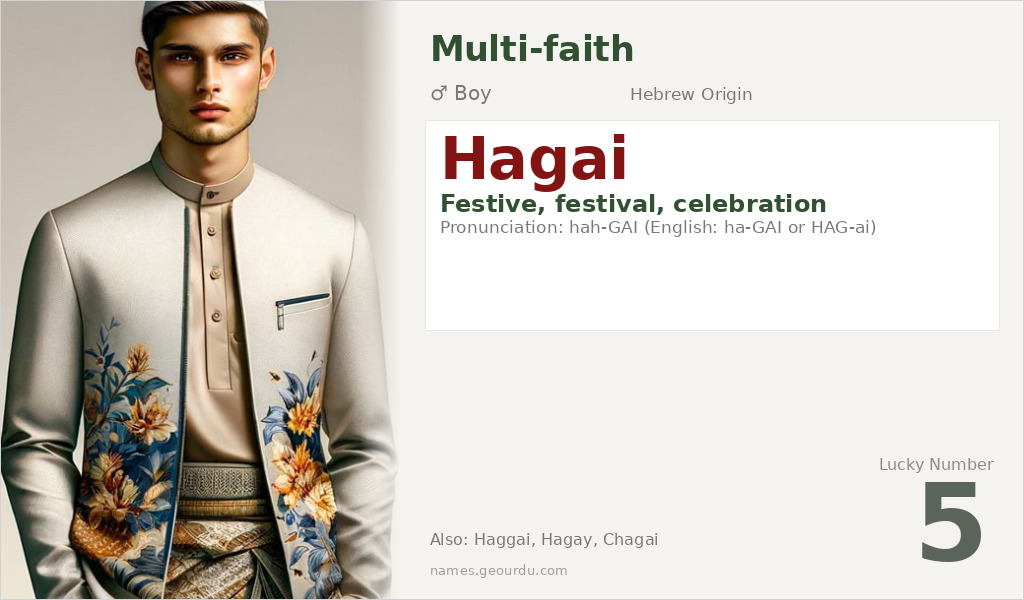
| 📛 Name | Hagai |
| 💎 Meaning | Festive, festival, celebration |
| 👤 Gender | Boy |
| 🕌 Religion | Multi-faith |
| 🌍 Origin | Hebrew |
| 🗣 Pronunciation | hah-GAI (English: ha-GAI or HAG-ai) |
| ✍️ Urdu | ہگائی |
| ✍️ Arabic | حَجَّاي |
| 🔢 Numerology | 5 |
| ✨ Spellings | Haggai, Hagay, Chagai, Chaggai |
Origin & Cultural Significance
Hagai has its origins in ancient Hebrew culture and appears in the Hebrew Bible (Old Testament) as the prophet Haggai. The name entered Christian tradition through the inclusion of Haggai’s prophecies in the Christian Old Testament. While primarily associated with Jewish heritage, the name has been adopted by Christians as well, particularly those who appreciate Biblical names. The name is used in Israel and among Jewish communities worldwide, and to a lesser extent among Christians familiar with Biblical names. Unlike names that have spread widely across cultures, Hagai remains most closely associated with its original Hebrew and Biblical context.
Personality Traits
People named Hagai often embody the joyful, celebratory spirit suggested by their name’s meaning. They may be naturally inclined toward community building and spiritual matters, reflecting the prophetic heritage of the Biblical Haggai. Their optimistic outlook and ability to bring people together make them valued members of their social and religious circles. While personality varies by individual, the name’s meaning suggests someone who finds joy in celebration and meaningful gatherings.
Similar Names
If you like Hagai, consider: Haggai, Hanan, Hosea, Habakkuk, Hezekiah
Famous People Named Hagai
- Haggai (Biblical Prophet) — One of the twelve minor prophets in the Hebrew Bible who lived around 520 BCE and whose book encourages rebuilding the Temple
- Hagai Shaham — Israeli violinist known for his interpretations of classical and Jewish music
Frequently Asked Questions About Hagai
What does Hagai mean?
Hagai means 'festive,' 'celebration,' or 'festival' in Hebrew, derived from the root word chagag meaning 'to celebrate.'
Is Hagai a boy or girl name?
Hagai is traditionally a masculine name, as it comes from the male Biblical prophet Haggai. There are no significant feminine uses in historical or contemporary contexts.
What is the origin of Hagai?
Hagai originates from Hebrew and appears in the Hebrew Bible as the prophet Haggai. It's primarily a Jewish/Biblical name that has also been adopted by some Christians.





