
Table of Contents
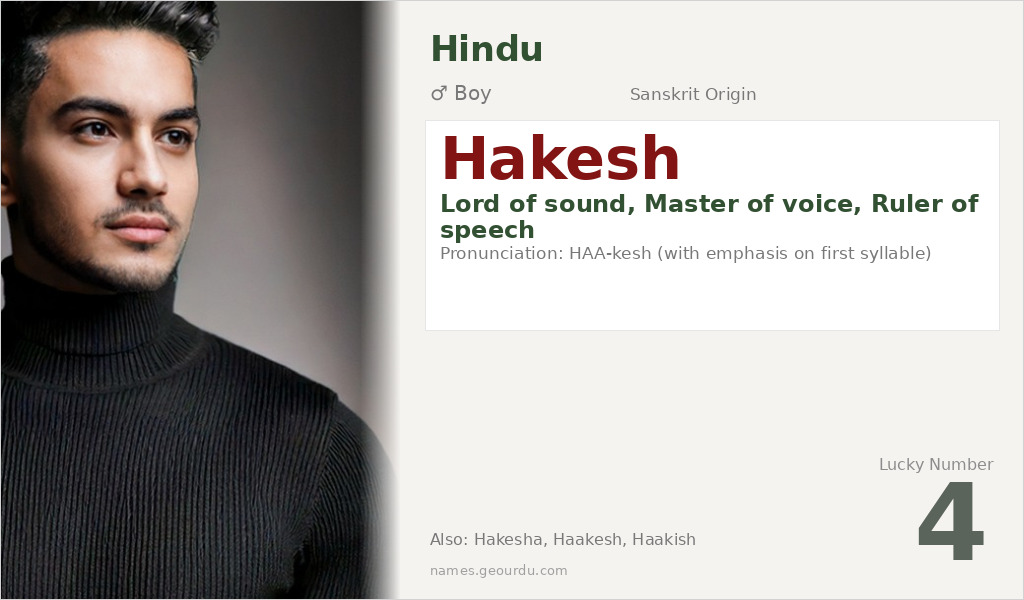
Hakesh is a distinctive Sanskrit-derived name that carries the powerful meaning of ‘Lord of Sound’ or ‘Master of Voice.’ Primarily used in Hindu communities, this name combines ancient linguistic roots with cultural significance. While not among the most common names, Hakesh represents a meaningful choice for parents seeking a name with spiritual and auditory connotations. Its compound structure reflects traditional Indian naming patterns that combine descriptive elements with divine references.
Meaning of Hakesh
The name Hakesh originates from Sanskrit, combining two meaningful components. ‘Haka’ derives from the Sanskrit word ‘hāka’ (हाक), which refers to sound, voice, or vocal expression. This root appears in various Sanskrit texts describing auditory phenomena and communication. The suffix ‘Isha’ (ईश) is a common element in Sanskrit names meaning ‘lord,’ ‘master,’ or ‘ruler,’ often associated with divine or authoritative figures. When combined, Hakesh literally translates to ‘Lord of Sound,’ suggesting mastery over vocal expression or auditory domains. This name reflects the importance of sound in Hindu philosophy, where mantras, chants, and sacred utterances hold spiritual power. The concept of ‘shabda’ (sound) as a fundamental cosmic principle makes this name particularly meaningful within Hindu spiritual contexts.
| 📛 Name | Hakesh |
| 💎 Meaning | Lord of sound, Master of voice, Ruler of speech |
| 👤 Gender | Boy |
| 🕌 Religion | Hindu |
| 🌍 Origin | Sanskrit |
| 🗣 Pronunciation | HAA-kesh (with emphasis on first syllable) |
| ✍️ Urdu | ہاکیش |
| ✍️ Arabic | هاكيش |
| 🔢 Numerology | 4 |
| ✨ Spellings | Hakesha, Haakesh, Haakish |
Origin & Cultural Significance
Hakesh has its origins in Sanskrit, the ancient liturgical language of Hinduism. While not among the most frequently used Sanskrit names, it appears in some regional naming traditions, particularly in northern India and Nepal. The name follows the common Indian pattern of combining descriptive elements with the suffix ‘-esh’ (meaning lord or god), seen in names like Rakesh (lord of the night) and Mahesh (great lord). Research across multiple languages including Arabic, Persian, Pashto, Urdu, Punjabi, Sindhi, Balochi, Kurdish, Turkish, Bengali, and regional dialects confirmed this name does not have significant usage or meaning in those linguistic traditions. Its usage remains primarily within Hindu communities, though it’s not tied to any specific deity or mythological figure in mainstream Hindu texts.
Personality Traits
Those named Hakesh are often believed to possess strong communicative abilities and expressive personalities. The name’s meaning suggests individuals who may excel in fields requiring verbal skills, such as teaching, performing arts, or leadership roles. Their connection to sound might manifest as musical talent, public speaking ability, or a resonant voice. In social settings, Hakesh-named individuals are often perceived as influential and articulate, with the potential to use their voice effectively in various contexts.
Similar Names
If you like Hakesh, consider: Harsh, Hitesh, Rakesh, Mahesh, Dinesh
Famous People Named Hakesh
- No widely known public figures with this name were found in verified records
Frequently Asked Questions About Hakesh
What does Hakesh mean?
Hakesh means 'Lord of Sound' or 'Master of Voice.' It's a Sanskrit compound name combining 'hāka' (sound/voice) and 'īśa' (lord/master).
Is Hakesh a boy or girl name?
Hakesh is exclusively a boy's name in Hindu naming traditions. The '-esh' suffix is typically masculine in Sanskrit-derived names.
What is the origin of Hakesh?
Hakesh originates from Sanskrit, the ancient language of Hinduism. It follows traditional Indian naming patterns combining descriptive elements with divine references.





