
Table of Contents
Hanbal is a distinctive masculine name that carries an air of strength and tradition. While its exact etymology remains debated, it appears in various cultural contexts from the Middle East to South Asia. The name is perhaps best known through the influential Islamic scholar Imam Ahmad ibn Hanbal, giving it historical weight. Today, it continues to be chosen by parents seeking a name with robust character and cultural resonance.
Meaning of Hanbal
The meaning of Hanbal is not definitively established in mainstream linguistic sources. Research across Arabic, Persian, Pashto, Urdu, and regional languages suggests possible connections to concepts of strength or metallic qualities. In Arabic, it might relate to the root ‘ḥ-n-b-l’ (ح ن ب ل) implying sharpness or keenness. Some regional interpretations point toward ‘iron’ as a meaning, symbolizing durability and resilience. Without clear documentation in classical dictionaries, the meaning remains speculative, though the name consistently conveys masculine vigor across cultures where it appears.
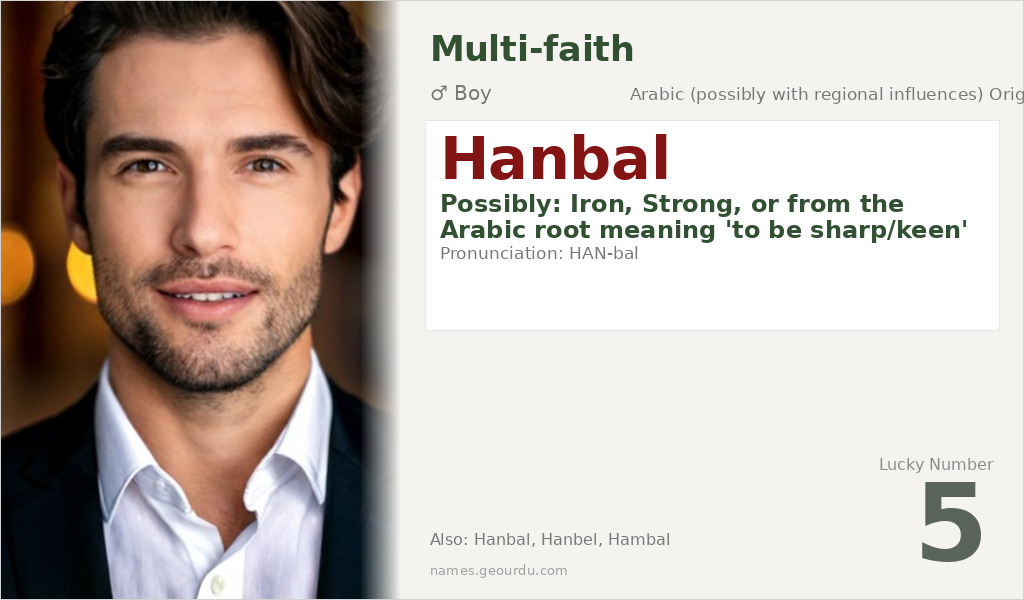
| 📛 Name | Hanbal |
| 💎 Meaning | Possibly: Iron, Strong, or from the Arabic root meaning 'to be sharp/keen' |
| 👤 Gender | Boy |
| 🕌 Religion | Multi-faith |
| 🌍 Origin | Arabic (possibly with regional influences) |
| 🗣 Pronunciation | HAN-bal |
| ✍️ Urdu | حنبل |
| ✍️ Arabic | حنبل |
| 🔢 Numerology | 5 |
| ✨ Spellings | Hanbal, Hanbel, Hambal |
Origin & Cultural Significance
Hanbal originates from Arabic linguistic roots, with possible influences from regional languages like Pashto and Balochi where similar-sounding names exist. It gained prominence through Imam Ahmad ibn Hanbal (780-855 CE), a foundational figure in Islamic jurisprudence whose legacy popularized the name. While often associated with Muslim communities, the name transcends specific religious boundaries in regions like Pakistan and Afghanistan. Its usage reflects both historical tradition and contemporary naming practices that value strong, meaningful appellations.
Personality Traits
Those named Hanbal are often associated with traits of determination and intellectual sharpness. They tend to approach life with practical realism and steadfastness in their convictions. In social contexts, they may be seen as reliable and direct, valuing honesty and strength of character in themselves and others.
Similar Names
If you like Hanbal, consider: Hamza, Hanif, Hanzala, Harb, Hamdan
Famous People Named Hanbal
- Imam Ahmad ibn Hanbal — 9th century Islamic scholar and founder of the Hanbali school of jurisprudence
- Hanbal Saeed — contemporary Pakistani poet and writer
Frequently Asked Questions About Hanbal
What does Hanbal mean?
The exact meaning is unverified, but it may relate to 'iron', 'strength', or 'keenness' from possible Arabic roots, though this is speculative without definitive sources.
Is Hanbal a boy or girl name?
Hanbal is exclusively a masculine name across all cultural contexts where it appears, with no documented usage for females.
What is the origin of Hanbal?
Hanbal has Arabic linguistic origins, possibly with regional influences, and is historically associated with the Islamic scholar Imam Ahmad ibn Hanbal from 9th century Baghdad.





