Table of Contents
Harisankara is a profound Sanskrit name that carries deep theological significance in Hinduism. Combining two of the most revered deities—Vishnu (Hari) and Shiva (Sankara)—this name symbolizes the unity of the preserver and destroyer aspects of the divine. Traditionally given to boys, Harisankara represents philosophical harmony and spiritual integration within Hindu traditions. Parents choosing this name often seek to imbue their child with qualities of balance and reverence for both major Hindu traditions.
Meaning of Harisankara
Harisankara derives from classical Sanskrit, combining ‘Hari’ (हरि) and ‘Sankara’ (शंकर). ‘Hari’ is a principal name of Vishnu, derived from the root ‘hṛ’ meaning ‘to take away’ or ‘remove’, referring to Vishnu’s role as the remover of sins and suffering. ‘Sankara’ comes from ‘śam’ (auspiciousness) and ‘kara’ (maker), meaning ‘the maker of auspiciousness’, a primary epithet of Shiva. The compound follows Sanskrit sandhi rules where the final ‘i’ of Hari combines with the initial ‘ś’ of Sankara. This name represents the philosophical concept of ‘Harihara’ in Hinduism, where Vishnu and Shiva are viewed as complementary aspects of the supreme reality rather than separate entities.
| 📛 Name | Harisankara |
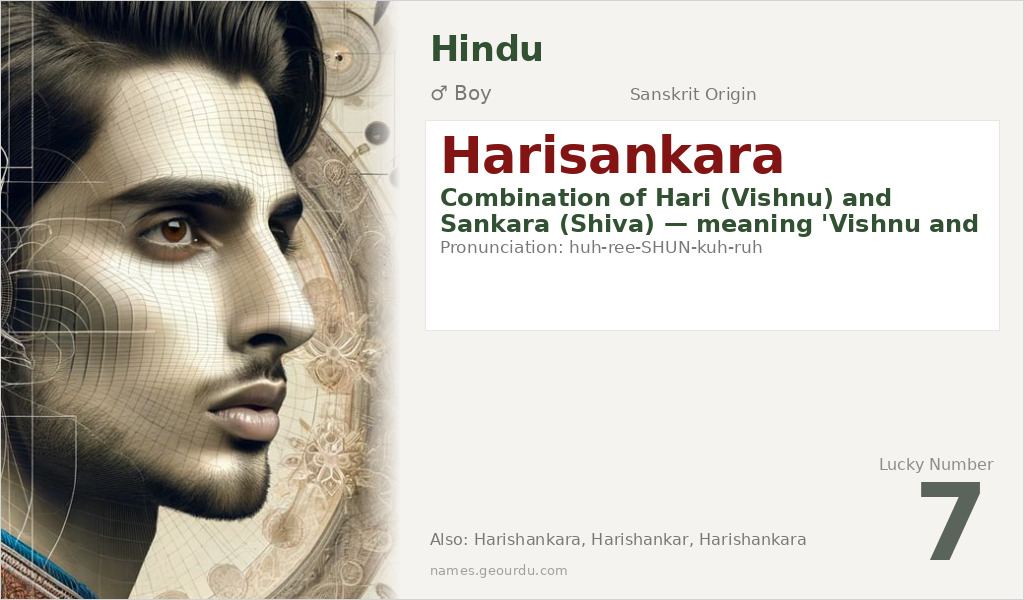
| 💎 Meaning | Combination of Hari (Vishnu) and Sankara (Shiva) — meaning 'Vishnu and Shiva united' or 'the union of Vishnu and Shiva' |
| 👤 Gender | Boy |
| 🕌 Religion | Hindu |
| 🌍 Origin | Sanskrit |
| 🗣 Pronunciation | huh-ree-SHUN-kuh-ruh |
| ✍️ Urdu | ہری شنکر |
| ✍️ Arabic | هاري شانكارا |
| 🔢 Numerology | 7 |
| ✨ Spellings | Harishankara, Harishankar, Harishankara, Hari Shankara |
Origin & Cultural Significance
The name Harisankara originates from ancient Sanskrit texts and Hindu philosophical traditions that emphasize the unity of divine manifestations. It gained prominence during the medieval Bhakti movement when saints like Appayya Dikshita and others promoted syncretic worship of both Vishnu and Shiva. In South Indian traditions particularly, the name reflects the Smarta tradition which venerates five deities including both Vishnu and Shiva. The name appears in various regional forms across India, with ‘Harishankar’ being a common variant in North India. Historical records show the name being used by scholars, musicians, and religious figures who embodied integrative spiritual approaches.
Personality Traits
Those named Harisankara are believed to embody the balanced qualities of both Vishnu and Shiva—combining Vishnu’s preserving, nurturing aspects with Shiva’s transformative, ascetic qualities. They often display diplomatic skills, able to reconcile opposing viewpoints and find middle ground. With a natural inclination toward spirituality and philosophy, they may seek deeper meanings in life while maintaining practical wisdom. The numerological association with number 7 suggests analytical abilities and introspective tendencies.
Similar Names
If you like Harisankara, consider: Harinarayana, Shivavishnu, Harihara, Vishnushiva, Narayanashiva
Famous People Named Harisankara
- Harisankara Sastri — 19th century Sanskrit scholar and commentator from Kerala
- Harisankara Pillai — Indian classical musician specializing in Carnatic music
Frequently Asked Questions About Harisankara
What does Harisankara mean?
Harisankara means 'Vishnu and Shiva united' or 'the union of Vishnu and Shiva' in Sanskrit, combining the names of two principal Hindu deities.
Is Harisankara a boy or girl name?
Harisankara is exclusively a boy's name in Hindu naming traditions, reflecting masculine divine principles in its composition.
What is the origin of Harisankara?
Harisankara originates from Sanskrit language and Hindu religious philosophy, specifically from syncretic traditions that honor both Vaishnavism and Shaivism.