
Table of Contents
Hasanmukh is a distinctive boy’s name that beautifully bridges linguistic and cultural traditions. Combining Arabic elegance with Sanskrit depth, this name carries the poetic meaning of ‘beautiful face’ or ‘pleasant countenance’. Used across various South Asian communities, Hasanmukh represents the rich cultural synthesis found in the region’s naming practices. Its harmonious blend of two major language families makes it a fascinating study in cross-cultural etymology.
Meaning of Hasanmukh
Hasanmukh derives from two powerful linguistic traditions. The first element ‘Hasan’ comes from the Arabic root ḥ-s-n (ح س ن), which conveys goodness, beauty, and excellence. This root appears in numerous Arabic names and words, including the popular name Hasan and the Islamic concept of ‘Ihsan’ (excellence in worship). The second element ‘mukh’ originates from the Sanskrit word ‘mukha’ (मुख), meaning face, mouth, or opening. In Sanskrit literature and philosophy, ‘mukha’ often represents the gateway to expression and identity. When combined, these elements create a name that literally means ‘beautiful face’, but carries deeper connotations of having a pleasing appearance, gracious demeanor, and attractive personality. This compound structure follows a pattern common in South Asian names where Arabic adjectives modify Sanskrit nouns.
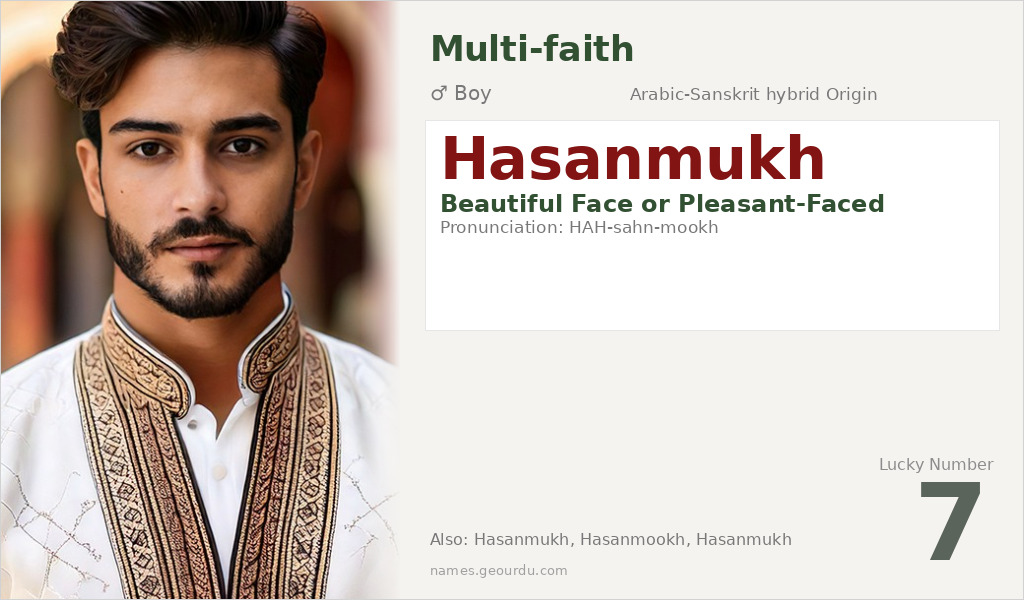
| 📛 Name | Hasanmukh |
| 💎 Meaning | Beautiful Face or Pleasant-Faced |
| 👤 Gender | Boy |
| 🕌 Religion | Multi-faith |
| 🌍 Origin | Arabic-Sanskrit hybrid |
| 🗣 Pronunciation | HAH-sahn-mookh |
| ✍️ Urdu | حسن مکھ |
| ✍️ Arabic | حسن موخ |
| 🔢 Numerology | 7 |
| ✨ Spellings | Hasanmukh, Hasanmookh, Hasanmukh, Hasanmukh |
Origin & Cultural Significance
Hasanmukh emerged in the Indian subcontinent during periods of cultural exchange between Islamic and Hindu traditions. The name reflects the linguistic synthesis that occurred particularly in regions like Gujarat, Rajasthan, and Punjab where Muslim communities adopted Sanskrit elements into their naming conventions. This hybrid naming practice became especially popular among communities that maintained connections to both Islamic and indigenous cultural roots. Historically, such names served as bridges between communities, demonstrating how language adapts and evolves through cultural interaction. Today, Hasanmukh is used by families of various religious backgrounds including Muslims, Hindus, and Sikhs, particularly in western and northern India.
Personality Traits
Those named Hasanmukh are often associated with qualities of grace, thoughtfulness, and aesthetic sensitivity. The name’s meaning suggests someone who presents themselves with dignity and charm, potentially influencing how they interact with the world. They may possess an intuitive understanding of beauty in various forms—whether in art, nature, or human relationships. The dual linguistic heritage of the name might also indicate someone comfortable navigating multiple cultural contexts with ease and appreciation.
Similar Names
If you like Hasanmukh, consider: Hasan, Hussain, Mukesh, Anmukh, Sundermukh, Hasmukh
Famous People Named Hasanmukh
- Hasanmukh Adhvaryu — Indian classical vocalist and musicologist
- Hasanmukh Patel — Gujarati poet and writer
Frequently Asked Questions About Hasanmukh
What does Hasanmukh mean?
Hasanmukh means 'Beautiful Face' or 'Pleasant-Faced'. It's a compound name combining Arabic 'Hasan' (beautiful) with Sanskrit 'mukh' (face).
Is Hasanmukh a boy or girl name?
Hasanmukh is exclusively a boy's name in all cultural contexts where it's used. The masculine form of 'Hasan' and traditional naming patterns in South Asia confirm this gender assignment.
What is the origin of Hasanmukh?
Hasanmukh originates from South Asia as a hybrid name combining Arabic and Sanskrit elements. It emerged from cultural interactions between Islamic and Hindu traditions in regions like Gujarat and Punjab.





