
Table of Contents
Havishh is a distinctive Hindu boy name with deep roots in ancient Sanskrit tradition. Derived from Vedic rituals, this name carries profound spiritual significance that connects to India’s oldest religious practices. Unlike many modern names, Havishh maintains a direct link to the ceremonial language of Hinduism’s foundational texts. Its meaning reflects the core concept of devotional offering that has been central to Hindu worship for millennia.
Meaning of Havishh
Havishh originates from the Sanskrit word ‘havis’ (हविस्), which specifically means ‘sacrificial offering’ or ‘oblation’. In Vedic literature, havis refers to the offerings made during yajnas (fire rituals), typically consisting of clarified butter (ghee), grains, milk, or soma. The term is derived from the Sanskrit root ‘hu’ meaning ‘to pour, offer, or sacrifice’, which is cognate with similar words in other Indo-European languages like the Latin ‘fundo’ (to pour). This linguistic connection highlights the ancient practice of ritual offerings that predates classical Hinduism. The name thus embodies the concept of devotion through giving, representing both material and spiritual offerings to the divine.
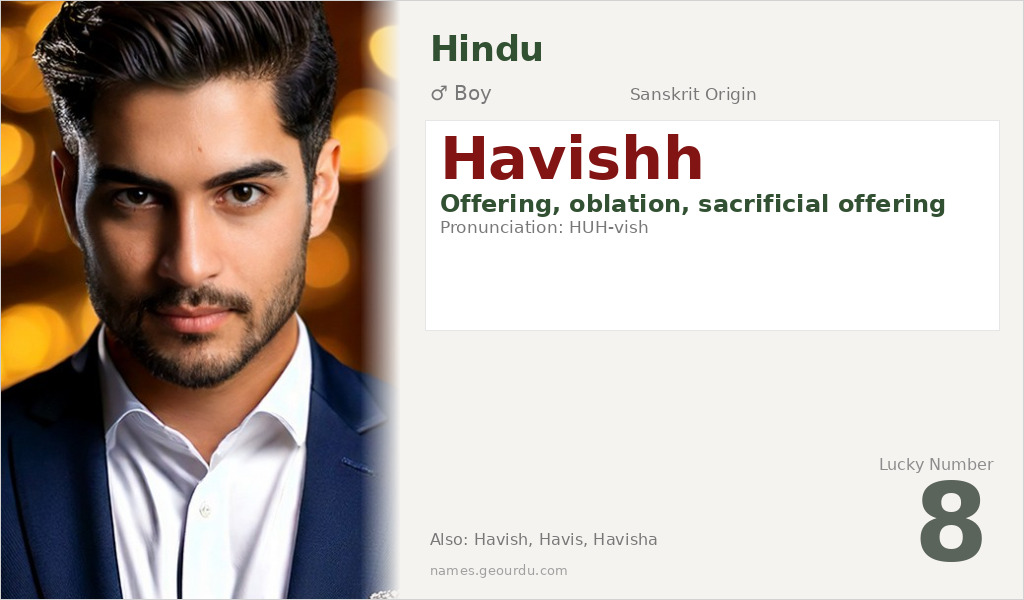
| 📛 Name | Havishh |
| 💎 Meaning | Offering, oblation, sacrificial offering |
| 👤 Gender | Boy |
| 🕌 Religion | Hindu |
| 🌍 Origin | Sanskrit |
| 🗣 Pronunciation | HUH-vish |
| ✍️ Urdu | حویش |
| ✍️ Arabic | هافيش |
| 🔢 Numerology | 8 |
| ✨ Spellings | Havish, Havis, Havisha |
Origin & Cultural Significance
Havishh has its origins in the Vedic period of ancient India, dating back over 3,000 years. The name comes directly from the ritual language used in the Vedas, Hinduism’s oldest sacred texts. In cultural context, names derived from ritual terms like Havishh were often given to boys in priestly or scholarly families, reflecting their connection to religious practices. While less common than some other Sanskrit names, Havishh maintains cultural authenticity and appears in modern India, particularly among families with strong ties to Vedic traditions. The name represents continuity with India’s ancient spiritual heritage.
Personality Traits
Those named Havishh often exhibit qualities of generosity, spirituality, and dedication. The name’s meaning of ‘offering’ tends to manifest in a personality that is giving and considerate of others. They may show strong attachment to traditions and rituals, valuing cultural heritage and spiritual practices. Their approach to life often reflects the sacrificial aspect of their name’s meaning, demonstrating willingness to contribute selflessly to family and community.
Similar Names
If you like Havishh, consider: Havan, Yajna, Aahuti, Bali, Prasad
Famous People Named Havishh
- Havish Kotian — Indian television actor known for roles in Hindi TV series
- Havish — Contemporary musician and composer in the Indian music industry
Frequently Asked Questions About Havishh
What does Havishh mean?
Havishh means 'offering', 'oblation', or 'sacrificial offering' in Sanskrit. It comes from the Vedic term 'havis' used for ritual offerings made to deities during Hindu ceremonies.
Is Havishh a boy or girl name?
Havishh is exclusively a boy name in Hindu naming tradition. It follows the grammatical gender rules of Sanskrit, where the word 'havis' is masculine, and names derived from it are traditionally given to boys.
What is the origin of Havishh?
Havishh originates from Sanskrit, the ancient liturgical language of Hinduism. Specifically, it comes from Vedic Sanskrit used in the oldest Hindu scriptures, where 'havis' refers to ritual offerings made during fire sacrifices (yajnas).





