
Table of Contents
Hayagrīva is a profound Sanskrit name with deep roots in Hindu mythology and spirituality. Meaning ‘horse-necked’ or ‘horse-headed,’ this name refers to a significant avatar of Lord Vishnu known for restoring sacred knowledge. As a baby name, Hayagrīva carries connotations of wisdom, protection, and divine intervention. This guide explores the complete meaning, origin, and cultural significance of this powerful name.
Meaning of Hayagrīva
Hayagrīva is a classical Sanskrit compound name derived from two elements: ‘haya’ (हय) meaning ‘horse’ and ‘grīva’ (ग्रीव) meaning ‘neck.’ Literally translated as ‘horse-necked,’ the name specifically refers to the horse-headed avatar of Vishnu in Hindu mythology. This form of Vishnu appears in several Puranic texts where he defeats the demon Madhu and restores the stolen Vedas, making him a symbol of preserved wisdom and cosmic order. The name’s etymology is well-documented in Sanskrit lexicons and religious scriptures, with the horse symbolism representing speed, power, and nobility in Vedic tradition. Hayagrīva is also venerated in some Buddhist and Jain traditions, showing the name’s cross-religious significance in Indian spirituality.
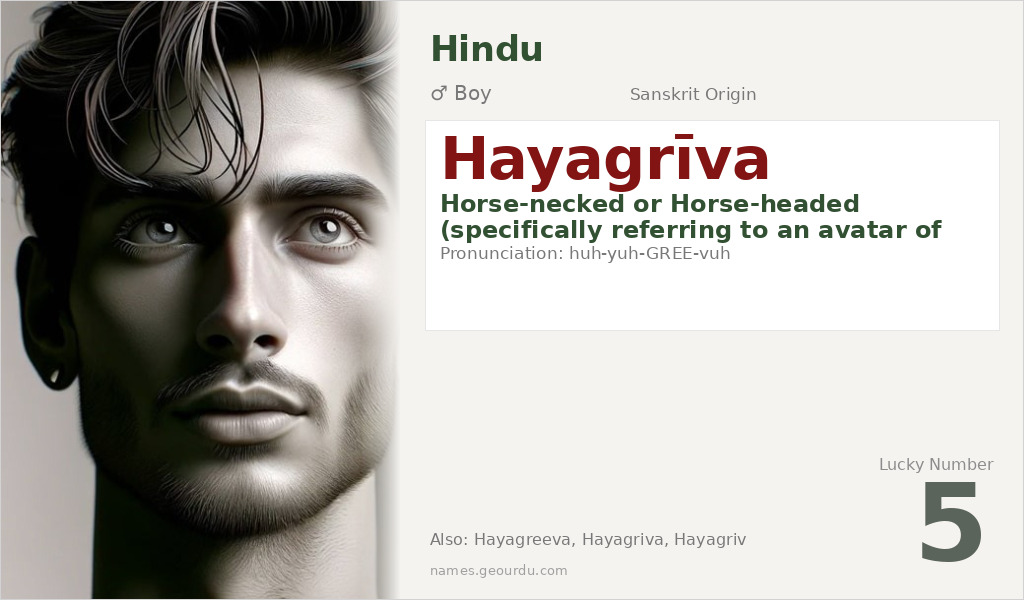
| 📛 Name | Hayagrīva |
| 💎 Meaning | Horse-necked or Horse-headed (specifically referring to an avatar of Vishnu) |
| 👤 Gender | Boy |
| 🕌 Religion | Hindu |
| 🌍 Origin | Sanskrit |
| 🗣 Pronunciation | huh-yuh-GREE-vuh |
| ✍️ Urdu | ہیاگرِیوا |
| ✍️ Arabic | هاياغريفا |
| 🔢 Numerology | 5 |
| ✨ Spellings | Hayagreeva, Hayagriva, Hayagriv |
Origin & Cultural Significance
Hayagrīva originates from ancient Sanskrit texts of Hinduism, first appearing in the Mahabharata and later elaborated in Puranas like the Vishnu Purana and Bhagavata Purana. The name is deeply embedded in Vaishnavism, where Hayagrīva is worshipped as a wisdom-bestowing form of Vishnu, particularly in South Indian temples. Culturally, the name represents the synthesis of animal and divine forms common in Hindu iconography, symbolizing the transcendence of ordinary limitations. Historical references show Hayagrīva worship dating back to at least the Gupta period (4th-6th centuries CE), with continued reverence in modern Hindu practice, especially among scholars and students seeking knowledge blessings.
Personality Traits
Those named Hayagrīva are often perceived as wise, knowledgeable, and spiritually inclined individuals. The mythological association with restoring sacred texts suggests personality traits of preservation, teaching, and intellectual leadership. The horse element indicates energetic, noble characteristics combined with the protective nature associated with Vishnu’s avatars. Such individuals may naturally gravitate toward philosophical pursuits, education, or spiritual guidance roles in their communities.
Similar Names
If you like Hayagrīva, consider: Hayavadana, Ashvamedha, Vishnu, Narasimha, Varaha
Famous People Named Hayagrīva
- Hayagriva Swami — 16th century Vaishnava saint and scholar
- Hayagriva Das — American spiritual teacher and author
Frequently Asked Questions About Hayagrīva
What does Hayagrīva mean?
Hayagrīva means 'horse-necked' or 'horse-headed' in Sanskrit, specifically referring to an avatar of Vishnu with a horse's head on a human body.
Is Hayagrīva a boy or girl name?
Hayagrīva is exclusively a masculine name in Hindu tradition, referring to a male deity avatar and used for boys.
What is the origin of Hayagrīva?
Hayagrīva originates from Sanskrit and Hindu mythology, first appearing in ancient Indian texts like the Mahabharata and Puranas as an avatar of Vishnu.





