
Table of Contents
Hazel is a beautiful nature-inspired name that has charmed parents for generations. With its gentle sound and earthy meaning, this name evokes images of woodland groves and autumnal harvests. Originally an English surname, Hazel transitioned to a feminine given name during the Victorian era’s fascination with botanical names. Today, it remains popular across cultures for its timeless appeal and natural elegance.
Meaning of Hazel
Hazel derives from the Old English word ‘hæsel’, which specifically refers to the hazel tree (Corylus species) or its nuts. This places the name firmly within the Germanic language family, with cognates appearing in other Germanic languages like Old Norse ‘hasl’ and German ‘Hasel’. The name originally functioned topographically or occupationally, describing someone who lived near hazel trees or worked with hazel wood. In Celtic mythology, hazel trees were associated with wisdom and poetic inspiration, with hazelnuts believed to impart knowledge. The name’s botanical connection gives it a grounded, natural quality that has maintained its appeal through centuries of naming traditions.
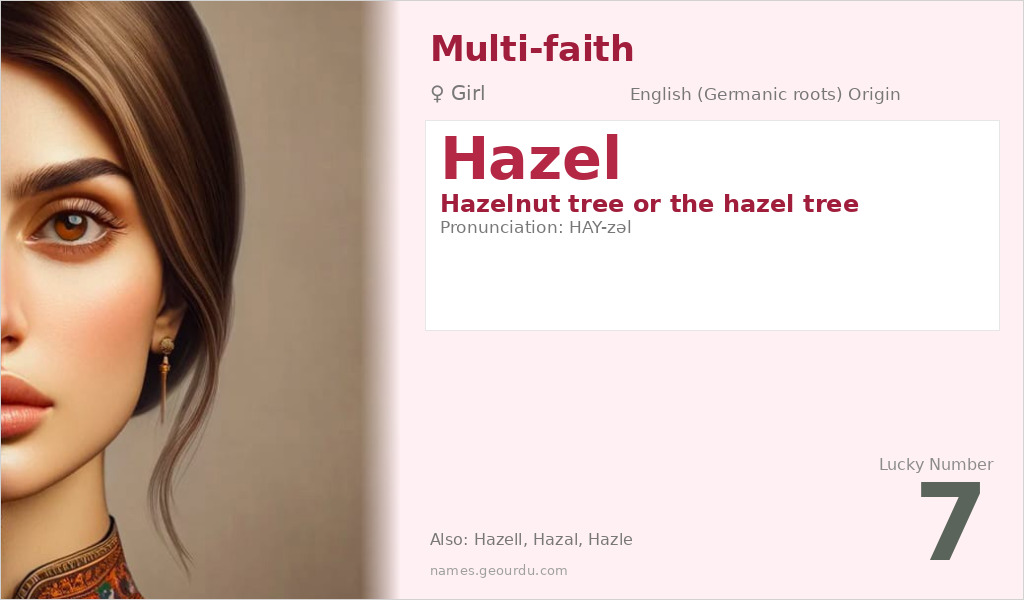
| 📛 Name | Hazel |
| 💎 Meaning | Hazelnut tree or the hazel tree |
| 👤 Gender | Girl |
| 🕌 Religion | Multi-faith |
| 🌍 Origin | English (Germanic roots) |
| 🗣 Pronunciation | HAY-zəl |
| ✍️ Urdu | ہیزل |
| ✍️ Arabic | هازل |
| 🔢 Numerology | 7 |
| ✨ Spellings | Hazell, Hazal, Hazle |
Origin & Cultural Significance
Hazel originated as an English surname during the Middle Ages, typically given to families living near hazel groves or working with hazel wood. It entered use as a feminine given name in the 19th century, coinciding with the Victorian era’s trend of adopting nature and plant names. While its roots are English/Germanic, the name has been adopted across multiple cultures and religions without specific religious affiliation. Hazel gained particular popularity in the early 20th century, experienced a decline mid-century, and has seen a significant resurgence since the 1990s as vintage names returned to fashion. The name appears in various forms across cultures, maintaining its core botanical meaning while adapting to different linguistic contexts.
Personality Traits
Those named Hazel often embody qualities associated with their namesake tree—grounded, resilient, and nurturing. They tend to approach life with practical wisdom and quiet observation, much like the hazel tree that stands firm through seasons. Their connection to nature often manifests as appreciation for beauty in everyday surroundings and a calm, steady presence that others find comforting. While individual personalities vary, the name carries connotations of gentle strength and natural grace.
Similar Names
If you like Hazel, consider: Heather, Holly, Ivy, Willow, Olive
Famous People Named Hazel
- Hazel Scott — American jazz pianist and singer (1920-1981)
- Hazel Keech — British-Indian actress and dancer (born 1987)
Frequently Asked Questions About Hazel
What does Hazel mean?
Hazel means 'hazelnut tree' or 'the hazel tree,' derived from the Old English word 'hæsel' with Germanic roots.
Is Hazel a boy or girl name?
Hazel is primarily a feminine name in modern usage, though it originated as a gender-neutral surname. It is overwhelmingly given to girls today across English-speaking countries.
What is the origin of Hazel?
Hazel originates from English, specifically from the Old English word 'hæsel' referring to the hazel tree. It began as a surname before becoming a given name in the 19th century.





