Table of Contents
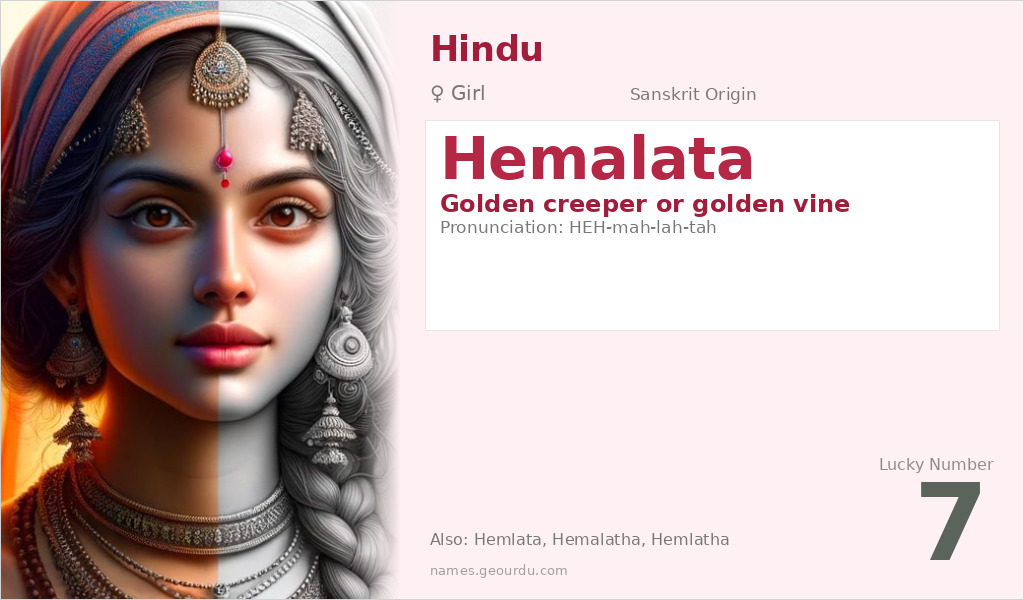
Hemalata is a beautiful and meaningful name of Sanskrit origin that has been cherished in Hindu culture for centuries. Meaning ‘golden creeper’ or ‘golden vine’, this name evokes images of natural beauty, prosperity, and graceful growth. Traditionally given to girls, Hemalata carries both aesthetic appeal and spiritual significance. In this comprehensive guide, we explore the rich etymology, cultural context, and modern relevance of this classic Indian name.
Meaning of Hemalata
Hemalata derives from the Sanskrit language, combining two distinct elements that create a poetic and meaningful whole. The first component, ‘hema’ (हेम), translates directly to ‘gold’ or ‘golden’, representing not just the precious metal but also qualities of purity, value, and radiance. The second element, ‘lata’ (लता), means ‘creeper’, ‘vine’, or ‘climbing plant’, symbolizing growth, connection, and natural beauty. Together, they form ‘golden creeper’ – an image frequently found in Sanskrit poetry and Hindu mythology, often associated with the divine, prosperity, and the interconnectedness of life. This compound construction follows classical Sanskrit naming conventions where natural elements combine to create names with layered symbolism.
| 📛 Name | Hemalata |
| 💎 Meaning | Golden creeper or golden vine |
| 👤 Gender | Girl |
| 🕌 Religion | Hindu |
| 🌍 Origin | Sanskrit |
| 🗣 Pronunciation | HEH-mah-lah-tah |
| ✍️ Urdu | ہیم لتا |
| ✍️ Arabic | هيمالاتا |
| 🔢 Numerology | 7 |
| ✨ Spellings | Hemlata, Hemalatha, Hemlatha |
Origin & Cultural Significance
Hemalata originates from classical Sanskrit, the ancient liturgical language of Hinduism that has influenced numerous modern Indian languages. As a compound Sanskrit name, it follows traditional naming patterns where natural imagery conveys desired qualities for the child. The name appears in various Hindu texts and has been used for centuries across different regions of India. While most commonly associated with Hindu families, the name’s Sanskrit roots give it cultural significance beyond religious boundaries in South Asia. The imagery of golden vines or creepers has particular resonance in Indian culture, where such plants are often associated with temples, sacred spaces, and divine manifestations.
Personality Traits
Those named Hemalata are often perceived as having qualities that reflect their name’s meaning – they tend to be graceful, resilient, and naturally beautiful in character. Like a vine that grows steadily and connects different elements, Hemalatas are often good at building relationships and creating harmony in their environments. Their ‘golden’ aspect suggests they bring value, warmth, and positivity to situations, with many showing artistic or creative talents. This combination typically results in individuals who are both grounded and aspirational, practical yet dreamy.
Similar Names
If you like Hemalata, consider: Hema, Malati, Lata, Kavita, Shobha
Famous People Named Hemalata
- Hemlata – Indian playback singer known for Bollywood and devotional music
- Hemalata D. Keshava – Indian classical dancer and choreographer
Frequently Asked Questions About Hemalata
What does Hemalata mean?
Hemalata means 'golden creeper' or 'golden vine' in Sanskrit, combining 'hema' (gold) and 'lata' (creeper/vine).
Is Hemalata a boy or girl name?
Hemalata is exclusively a feminine name in all Indian naming traditions and is never used for boys.
What is the origin of Hemalata?
Hemalata originates from Sanskrit, the classical language of Hinduism, and has been used in Indian culture for centuries.