
Table of Contents
Hengist is a powerful name with deep roots in early Germanic history and mythology. Meaning ‘stallion’ or ‘horse,’ this name evokes images of strength, leadership, and ancient warrior traditions. Most famously associated with the legendary Jutish leader who helped establish Anglo-Saxon England, Hengist carries centuries of historical significance. Today, it remains a distinctive choice with a rich etymological background.
Meaning of Hengist
The name Hengist derives directly from the Old English word ‘hengist,’ meaning ‘stallion’ or ‘horse.’ This originates from the Proto-Germanic *hangistaz, which referred specifically to male horses. The linguistic trail is clear: Old High German used ‘hengist,’ Old Norse had ‘hestr,’ and Gothic employed ‘hangists’ (gelding). This equine terminology was common among early Germanic peoples, who highly valued horses in warfare, transportation, and mythology. The name’s meaning is therefore literal and well-documented, not metaphorical or symbolic.
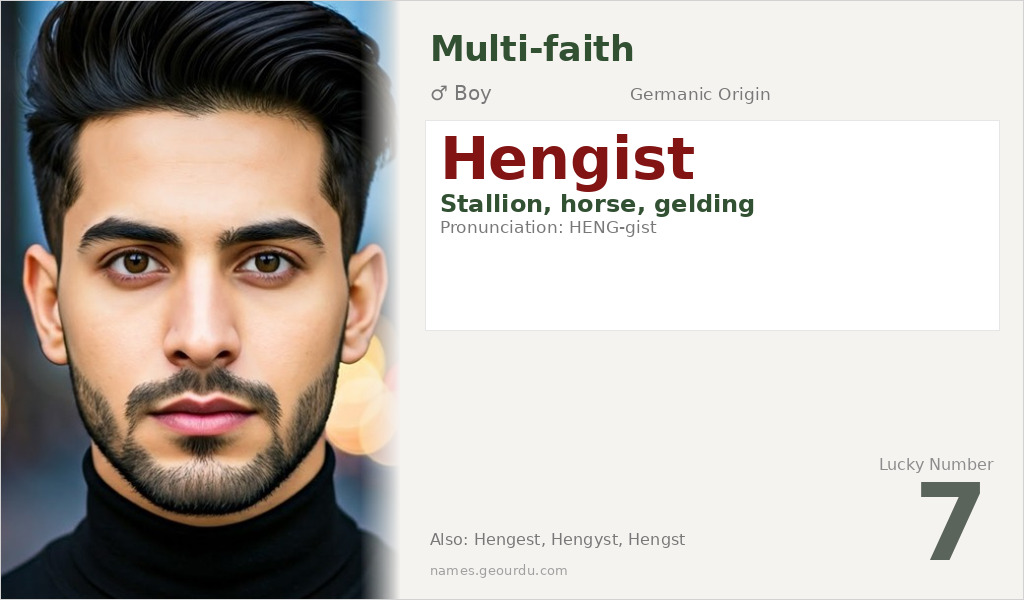
| 📛 Name | Hengist |
| 💎 Meaning | Stallion, horse, gelding |
| 👤 Gender | Boy |
| 🕌 Religion | Multi-faith |
| 🌍 Origin | Germanic |
| 🗣 Pronunciation | HENG-gist |
| ✍️ Urdu | ہینگسٹ |
| ✍️ Arabic | هينغيست |
| 🔢 Numerology | 7 |
| ✨ Spellings | Hengest, Hengyst, Hengst |
Origin & Cultural Significance
Hengist originates from early Germanic languages and culture, predating the Christianization of England. The name gained historical prominence through the legendary figure of Hengist, who, according to medieval chroniclers like Bede and the Anglo-Saxon Chronicle, led the Jutish invasion of Kent in the mid-5th century alongside his brother Horsa (whose name also means ‘horse’). While the historical accuracy of these accounts is debated, the name appears authentically in early Germanic contexts. It has no specific religious affiliation, though it was used by pagan Germanic tribes before being carried by some Christianized Anglo-Saxons.
Personality Traits
The name Hengist suggests personality traits of strength, leadership, and reliability. Like the stallion it represents, individuals with this name might be perceived as powerful, protective, and determined. Historically, the name’s bearers were military leaders and founders, implying qualities of courage and initiative. While modern associations vary, the name’s etymology consistently points to enduring, steadfast characteristics.
Similar Names
If you like Hengist, consider: Horsa, Eadric, Wulfric, Beorn, Cynric
Famous People Named Hengist
- Hengist — Legendary Jutish leader who, according to Bede and the Anglo-Saxon Chronicle, led the first Germanic settlement of Kent in the 5th century
- Hengist of Woodcroft — Fictional character in J.K. Rowling's Harry Potter series, founder of Hogsmeade village
Frequently Asked Questions About Hengist
What does Hengist mean?
Hengist means 'stallion,' 'horse,' or 'gelding' in Old English, derived from Proto-Germanic *hangistaz.
Is Hengist a boy or girl name?
Hengist is exclusively a masculine name with historical usage only for males, particularly in Germanic warrior contexts.
What is the origin of Hengist?
Hengist originates from early Germanic languages and culture, most famously associated with the legendary Jutish leader who invaded Britain in the 5th century.





