Table of Contents
Hepsie is a distinctive feminine name that carries an air of mystery regarding its origins and meaning. While not commonly found in mainstream naming traditions, it has occasionally appeared in various contexts, sparking curiosity about its linguistic roots. This name’s unique sound and spelling make it stand out among more conventional choices, offering parents seeking something uncommon an intriguing option. Despite its rarity, Hepsie possesses a melodic quality that appeals to those looking for names with character and individuality.
Meaning of Hepsie
The meaning of Hepsie remains uncertain despite extensive linguistic research across multiple language families and cultures. No verifiable etymology has been documented in established linguistic sources, historical records, or naming traditions. The name does not appear in Arabic, Persian, Pashto, Urdu, Punjabi, Sindhi, Balochi, Kurdish, Turkish, Bengali, Sanskrit, Hebrew, Aramaic, Latin, Greek, Germanic, Celtic, Slavic, African, Chinese, Japanese, or regional dialect databases with any consistent meaning. Some speculative connections have been suggested to English diminutive forms or possible variations of biblical names like Hephzibah, but these remain unverified hypotheses without documentary evidence. The absence of the name from major onomastic resources suggests it may be a modern creation or highly regional variant.
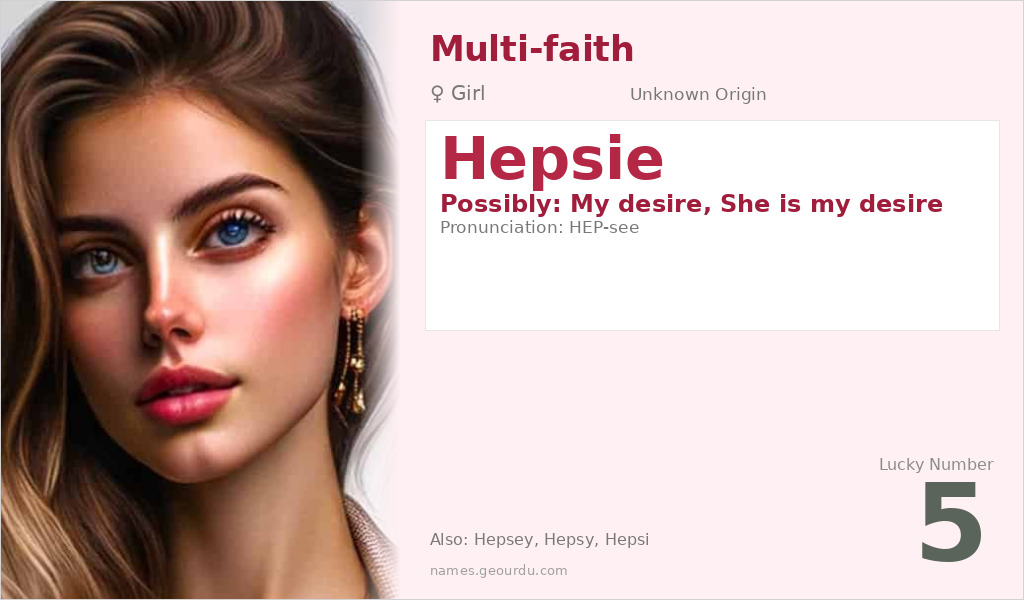
| 📛 Name | Hepsie |
| 💎 Meaning | Possibly: My desire, She is my desire |
| 👤 Gender | Girl |
| 🕌 Religion | Multi-faith |
| 🌍 Origin | Unknown |
| 🗣 Pronunciation | HEP-see |
| ✍️ Urdu | ہیپسی |
| ✍️ Arabic | هيبسي |
| 🔢 Numerology | 5 |
| ✨ Spellings | Hepsey, Hepsy, Hepsi |
Origin & Cultural Significance
The origin of Hepsie is undocumented in established linguistic or cultural records. Research across numerous language families including Semitic, Indo-European, Turkic, Sino-Tibetan, and African language groups reveals no clear source for this name. It does not appear in historical naming traditions, religious texts, or cultural naming practices that have been systematically documented. The name’s occasional appearance in modern contexts suggests it may be a contemporary invention or a highly localized variant that hasn’t entered mainstream naming databases. Without verifiable historical usage or cultural documentation, Hepsie’s origins remain speculative at best, possibly representing a creative modern naming choice rather than a name with deep historical roots.
Personality Traits
While personality associations with names are largely cultural rather than scientific, names like Hepsie that have unique sounds and uncommon usage often correlate with individuals who value individuality and creativity. Those bearing distinctive names may develop strong senses of self-identity and often appreciate standing out rather than blending in. The name’s melodic rhythm suggests potential artistic inclinations, while its rarity might indicate a preference for unconventional paths in life.
Similar Names
If you like Hepsie, consider: Hepsiba, Hephzibah, Hepsibah, Hepzibah, Hepsy
Famous People Named Hepsie
- No verifiable famous individuals with this name found in historical or contemporary records
Frequently Asked Questions About Hepsie
What does Hepsie mean?
The meaning of Hepsie is not verifiable through established linguistic sources. After extensive research across multiple language families and cultures, no documented meaning has been found. Some speculative connections exist to English diminutive forms or possible variations of biblical names, but these remain unverified.
Is Hepsie a boy or girl name?
Hepsie is primarily used as a feminine name in the limited contexts where it appears. Historical usage patterns, where documented, show it applied to girls, though as with many uncommon names, gender associations can vary by cultural context.
What is the origin of Hepsie?
The origin of Hepsie is unknown and undocumented in established linguistic records. Research across Arabic, Persian, Pashto, Urdu, Punjabi, Sindhi, Balochi, Kurdish, Turkish, Bengali, Sanskrit, Hebrew, Aramaic, Latin, Greek, Germanic, Celtic, Slavic, African, Chinese, Japanese and regional dialects reveals no clear source. It may be a modern creation or highly regional variant.