
Table of Contents
Hermann is a classic Germanic name with deep historical roots and a powerful meaning. Derived from Old High German elements meaning ‘army’ and ‘man’, this name has been borne by warriors, leaders, and influential figures throughout European history. From ancient tribal chieftains to modern literary giants, Hermann carries a legacy of strength and determination. This comprehensive guide explores the true etymology, cultural significance, and contemporary usage of this enduring name.
Meaning of Hermann
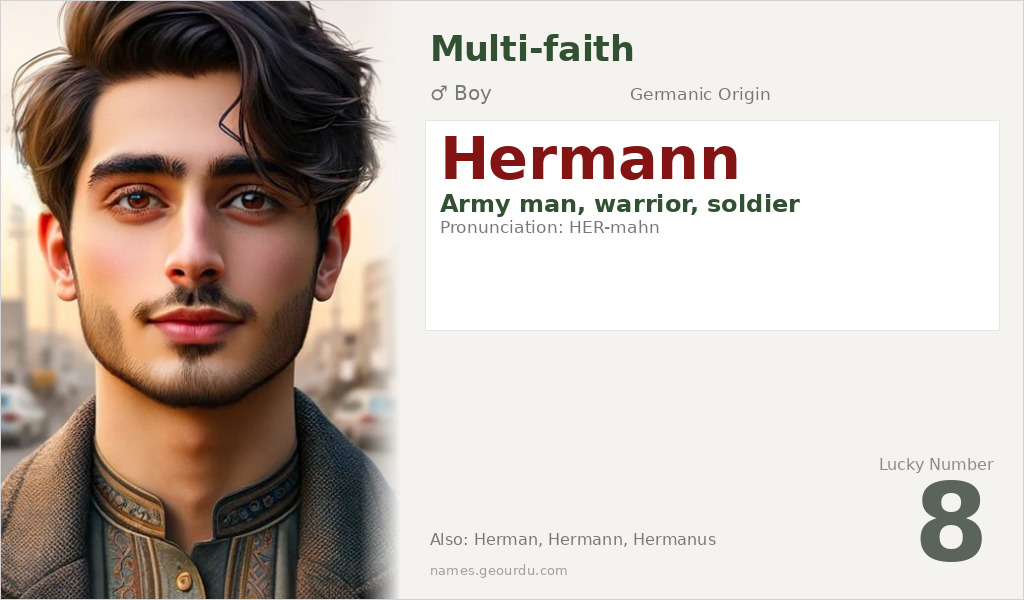
Hermann originates from the Old High German name ‘Heriman’, composed of two elements: ‘heri’ meaning ‘army’ and ‘man’ meaning ‘man’. This creates the literal translation ‘army man’ or ‘warrior’. The name evolved through Middle High German as ‘Herman’ before stabilizing in its modern forms. It shares etymological roots with other Germanic names containing the ‘heri’ element, such as Harold and Herbert. Historically, the name was popularized by Arminius, a Germanic chieftain known in German as Hermann der Cherusker, who famously defeated Roman legions in 9 AD.
| 📛 Name | Hermann |
| 💎 Meaning | Army man, warrior, soldier |
| 👤 Gender | Boy |
| 🕌 Religion | Multi-faith |
| 🌍 Origin | Germanic |
| 🗣 Pronunciation | HER-mahn |
| ✍️ Urdu | ہرمن |
| ✍️ Arabic | هيرمان |
| 🔢 Numerology | 8 |
| ✨ Spellings | Herman, Hermann, Hermanus, Armand, Armin |
Origin & Cultural Significance
Hermann has its origins in the Germanic tribes of early medieval Europe, particularly among German-speaking populations. The name gained cultural significance through historical figures like Arminius/Hermann, who became a national symbol in Germany during the 19th century Romantic period. It spread throughout German-speaking regions and was adopted in various forms across Europe, including Herman in English, Hermann in German, and Armand in French. While commonly used in Christian contexts due to Germany’s Christian heritage, the name itself has no inherent religious meaning and is used by people of various faiths.
Personality Traits
Those named Hermann are often associated with traditional masculine virtues like strength, protection, and leadership. They tend to be practical, organized individuals who value structure and reliability. With their warrior-derived name, many Hermanns exhibit determination and resilience in facing challenges. While these associations are cultural rather than deterministic, the name’s historical weight often influences how bearers are perceived in German-speaking cultures.
Similar Names
If you like Hermann, consider: Harold, Henry, Herbert, Armand, Armin
Famous People Named Hermann
- Hermann Hesse — German-Swiss poet, novelist, and painter, Nobel Prize laureate in Literature (1946)
- Hermann Göring — German political and military leader, prominent member of the Nazi Party
Frequently Asked Questions About Hermann
What does Hermann mean?
Hermann means 'army man' or 'warrior', derived from the Old High German elements 'heri' (army) and 'man' (man).
Is Hermann a boy or girl name?
Hermann is exclusively a masculine name with strong historical usage as a boy's name in German-speaking cultures.
What is the origin of Hermann?
Hermann originates from Old High German and has been used among Germanic peoples since the early medieval period, gaining prominence through historical figures like Arminius/Hermann the Cherusker.





