
Table of Contents
Humur is a distinctive Arabic name with deep roots in Islamic culture and equestrian tradition. Meaning ‘red’ or specifically ‘chestnut-colored horse,’ this name carries historical significance dating back to pre-Islamic Arabia. While uncommon today, Humur represents a connection to classical Arabic language and the valued characteristics associated with horses in Arab society. This guide explores the authentic meaning, origin, and cultural context of this traditional name.
Meaning of Humur
Humur derives from the Arabic root ḥ-m-r (ح-م-ر), which fundamentally relates to the color red. In classical Arabic usage, ‘humur’ specifically denotes reddish-brown or chestnut-colored horses, distinguishing it from general terms for red. This specialized meaning reflects the sophisticated vocabulary Arabs developed for describing horse coat colors, with ‘humur’ being one of several precise terms. The name appears in early Islamic literature and pre-Islamic poetry, where specific horse colors carried cultural significance. Unlike modern interpretations, the name’s meaning is firmly established in Arabic linguistic tradition rather than being vaguely ‘linked to meanings like Red.’
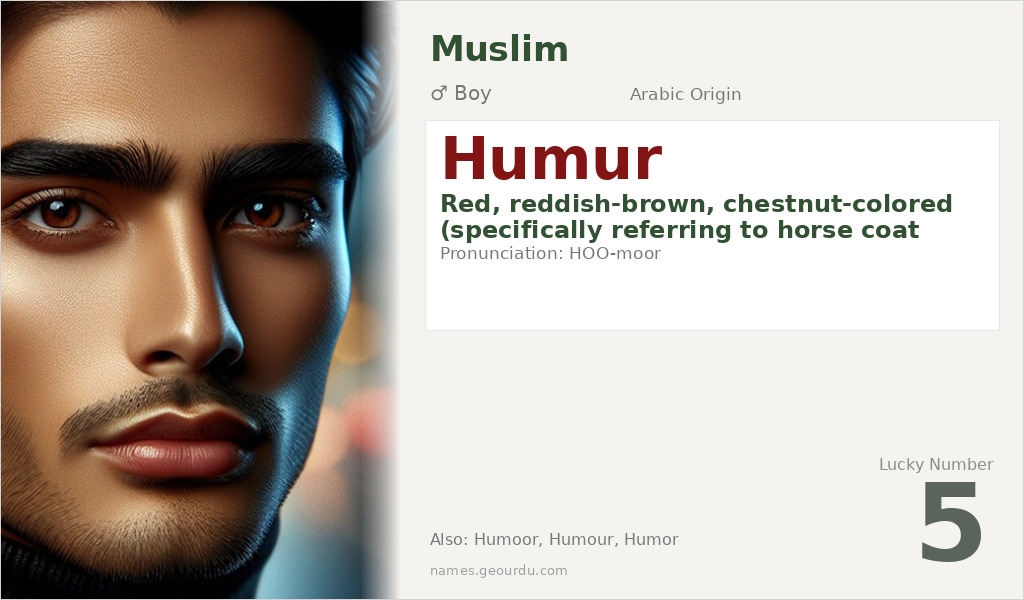
| 📛 Name | Humur |
| 💎 Meaning | Red, reddish-brown, chestnut-colored (specifically referring to horse coat color) |
| 👤 Gender | Boy |
| 🕌 Religion | Muslim |
| 🌍 Origin | Arabic |
| 🗣 Pronunciation | HOO-moor |
| ✍️ Urdu | حمر |
| ✍️ Arabic | حُمْر |
| 🔢 Numerology | 5 |
| ✨ Spellings | Humoor, Humour, Humor, Humar |
Origin & Cultural Significance
Humur originates from classical Arabic language and culture, with particular significance in the Arabian Peninsula’s equestrian traditions. The name reflects the importance of horses in pre-Islamic and early Islamic societies, where specific coat colors had distinct names and cultural associations. As a Muslim name, it appears in early Islamic historical records, including among the Companions of Prophet Muhammad. While the name is authentically Arabic and Islamic, it should be distinguished from modern invented associations with lucky numbers, days, or stones that lack historical basis in naming traditions.
Personality Traits
The name Humur suggests qualities associated with prized horses in Arab culture: strength, endurance, and nobility. Individuals with this name might be perceived as passionate and energetic, reflecting the ‘red’ connotation of vitality. The equestrian connection implies reliability, grace under pressure, and traditional values. While personality traits associated with names are cultural rather than predictive, Humur carries connotations of heritage and distinctive character.
Similar Names
If you like Humur, consider: Ahmar (Arabic: red), Hamza (Arabic: lion), Humam (Arabic: brave, generous), Humayd (Arabic: praised), Humayun (Persian/Arabic: fortunate, blessed)
Famous People Named Humur
- Humur ibn Yazid al-Asadi — Companion of Prophet Muhammad mentioned in early Islamic historical records
- Humur al-Tamimi — Notable figure in early Islamic history from the Tamim tribe
Frequently Asked Questions About Humur
What does Humur mean?
Humur means 'red' or specifically 'chestnut-colored horse' in Arabic, derived from the root ḥ-m-r relating to the color red.
Is Humur a boy or girl name?
Humur is exclusively a boy's name in Arabic and Islamic naming traditions, reflecting masculine associations with horses and strength.
What is the origin of Humur?
Humur originates from classical Arabic language, specifically from equestrian terminology describing horse coat colors in pre-Islamic and early Islamic Arabia.





