Table of Contents
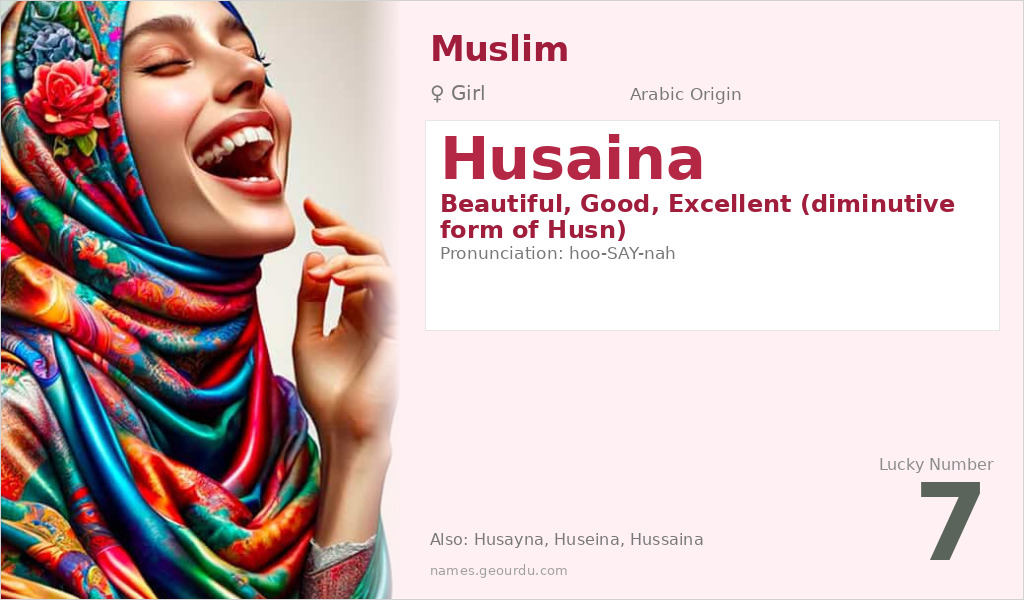
Husaina is a beautiful Arabic feminine name that has graced generations of Muslim families across the world. With roots in classical Arabic language, this name carries profound meaning related to beauty and excellence. As a diminutive form of ‘Husn’, it expresses endearment and affection. Discover the rich linguistic heritage and cultural significance of this timeless name.
Meaning of Husaina
Husaina derives from the Arabic triliteral root ‘ḥ-s-n’ (ح-س-ن), which forms the basis for numerous words related to beauty, goodness, and excellence. The name specifically is the diminutive (taṣghīr) form of ‘Husn’, created by adding the ‘-aina’ suffix common in Arabic diminutives. This grammatical construction gives the name an affectionate quality, essentially meaning ‘little beautiful one’ or ‘dear beauty’. The root appears in the Quran multiple times, including in Surah Al-Hujurat (49:13) where believers are called to ‘know one another’, with the concept of ‘ahsanu’ (best) derived from the same root. Throughout Islamic history, this name has maintained its popularity due to its positive connotations and linguistic elegance.
| 📛 Name | Husaina |
| 💎 Meaning | Beautiful, Good, Excellent (diminutive form of Husn) |
| 👤 Gender | Girl |
| 🕌 Religion | Muslim |
| 🌍 Origin | Arabic |
| 🗣 Pronunciation | hoo-SAY-nah |
| ✍️ Urdu | حسینہ |
| ✍️ Arabic | حُسَيْنَة |
| 🔢 Numerology | 7 |
| ✨ Spellings | Husayna, Huseina, Hussaina, Husainah |
Origin & Cultural Significance
Husaina originates from classical Arabic and has been used since pre-Islamic times, though it gained particular prominence in Islamic culture. The name appears in historical records referencing early Muslim women, including family members of the Prophet Muhammad’s household. It spread throughout the Muslim world via Arabic linguistic influence, appearing in Persian, Urdu, Turkish, and other languages with Islamic cultural connections. While primarily used in Muslim communities, the name’s appeal transcends religious boundaries in some regions due to its purely aesthetic meaning. In South Asia, particularly Pakistan and India, Husaina became popular among both Arabic-speaking communities and local populations who adopted Arabic names through Islamic influence.
Personality Traits
The meaning of Husaina often influences perceived personality traits associated with bearers of this name. They are frequently described as individuals who embody grace and refinement, with a natural inclination toward harmony and beauty. Many Husainas develop strong aesthetic sensibilities and creative talents, whether in arts, literature, or everyday life. Their name’s connection to ‘goodness’ also suggests a moral compass oriented toward kindness and ethical behavior.
Similar Names
If you like Husaina, consider: Husna, Hasan, Hussein, Hasna, Ahsan
Famous People Named Husaina
- Husaina bint Ali – Historical figure, daughter of Ali ibn Abi Talib and Umm al-Banin
- Husaina J. – Contemporary poet and writer from South Asia
Frequently Asked Questions About Husaina
What does Husaina mean?
Husaina means 'beautiful', 'good', or 'excellent' in Arabic. It is the diminutive form of 'Husn', carrying an affectionate connotation similar to 'little beautiful one' or 'dear beauty'.
Is Husaina a boy or girl name?
Husaina is exclusively a feminine name in Arabic and Islamic naming traditions. The masculine equivalents would be Hasan, Hussein, or Ahsan.
What is the origin of Husaina?
Husaina originates from classical Arabic, derived from the root 'ḥ-s-n' meaning beauty/goodness. It has been used in Arab and Islamic cultures for centuries and spread to other regions through Islamic influence.