
Table of Contents
Ibraheem is a name that resonates across three major world religions, carrying profound historical and spiritual significance. As the Arabic form of Abraham, this name connects millions of people to one of humanity’s most important patriarchal figures. Whether spelled Ibraheem, Ibrahim, or Ebrahim, this name represents faith, leadership, and legacy. Its enduring popularity reflects its deep roots in Abrahamic traditions and its powerful meaning of fatherhood and community.
Meaning of Ibraheem
The name Ibraheem originates from the Hebrew name Abraham (אַבְרָהָם), which combines ‘av’ meaning ‘father’ and ‘hamon’ meaning ‘multitude’ or ‘many’. This gives the name its core meaning of ‘father of many nations’ or ‘father of multitudes’. In Arabic, the name became إبراهيم (Ibrāhīm) through linguistic adaptation, maintaining the same essential meaning. The name appears 69 times in the Quran, where Prophet Ibraheem is described as a hanif (monotheist) and the builder of the Kaaba. Across Semitic languages, the name’s components remain consistent, reflecting Abraham’s biblical role as patriarch of the Israelite and Ishmaelite peoples.
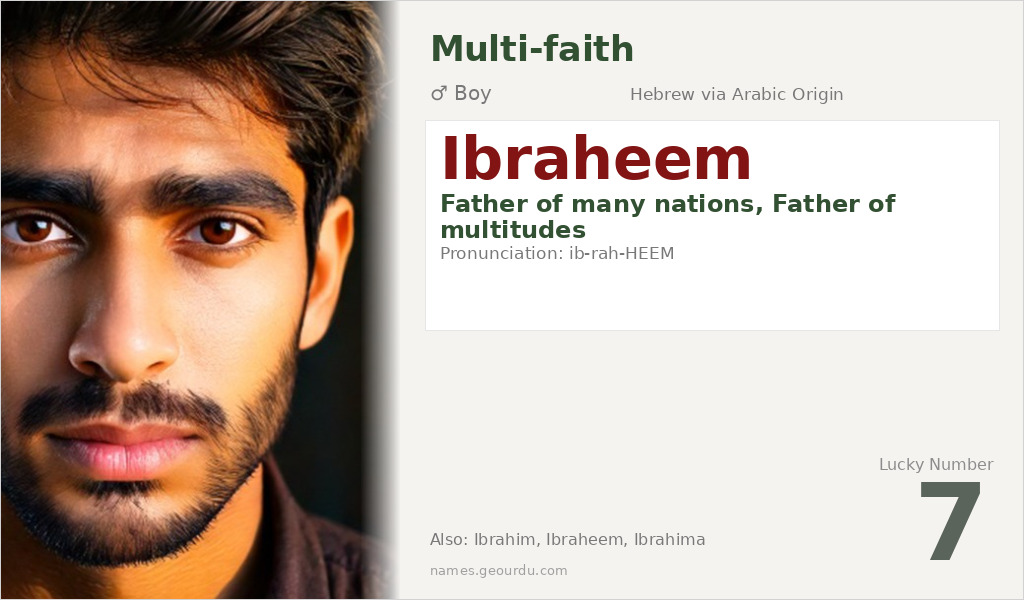
| 📛 Name | Ibraheem |
| 💎 Meaning | Father of many nations, Father of multitudes |
| 👤 Gender | Boy |
| 🕌 Religion | Multi-faith |
| 🌍 Origin | Hebrew via Arabic |
| 🗣 Pronunciation | ib-rah-HEEM |
| ✍️ Urdu | ابراہیم |
| ✍️ Arabic | إبراهيم |
| 🔢 Numerology | 7 |
| ✨ Spellings | Ibrahim, Ibraheem, Ibrahima, Ebrahim, Ibrahem |
Origin & Cultural Significance
Ibraheem entered Arabic through pre-Islamic contact with Jewish and Christian communities in the Arabian Peninsula. The name appears in early Arabic poetry and was well-established before the advent of Islam. In the 7th century, the Quran’s revelation cemented Ibraheem’s status as a central prophet in Islam, leading to widespread adoption of the name among Muslims. The name spread throughout the Islamic world from Spain to Indonesia, with local variations developing in different languages. Today, Ibraheem/Ibrahim remains one of the most common male names in Muslim-majority countries and is also used by Arabic-speaking Christians and Jews.
Personality Traits
Those named Ibraheem often carry the weight of their namesake’s legacy, which can influence their self-perception and how others view them. They may feel drawn to leadership roles or community service, reflecting the name’s association with patriarchhood. The name’s religious significance often instills a sense of moral responsibility and connection to tradition. At the same time, the ‘father of many nations’ meaning suggests qualities of inclusivity, protection, and the ability to bridge different communities.
Similar Names
If you like Ibraheem, consider: Ismail, Ishaq, Yaqub, Yusuf, Musa
Famous People Named Ibraheem
- Ibrahim Pasha — Ottoman statesman and military commander (1789-1848)
- Ibrahim Rugova — first President of Kosovo (1944-2006)
- Ibrahim Ferrer — Cuban singer and Buena Vista Social Club member (1927-2005)
Frequently Asked Questions About Ibraheem
What does Ibraheem mean?
Ibraheem means 'father of many nations' or 'father of multitudes.' It comes from the Hebrew name Abraham, combining 'av' (father) and 'hamon' (multitude), adapted into Arabic as إبراهيم.
Is Ibraheem a boy or girl name?
Ibraheem is exclusively a masculine name across all cultures where it's used. There are no feminine variants in common usage, though some cultures might use 'Ibraheema' or similar forms.
What is the origin of Ibraheem?
Ibraheem originates from Hebrew (Abraham) and was adopted into Arabic before Islam. It's now used across the Islamic world and by Arabic-speaking Christians and Jews, making it a truly multi-faith name with Semitic roots.





