
Table of Contents
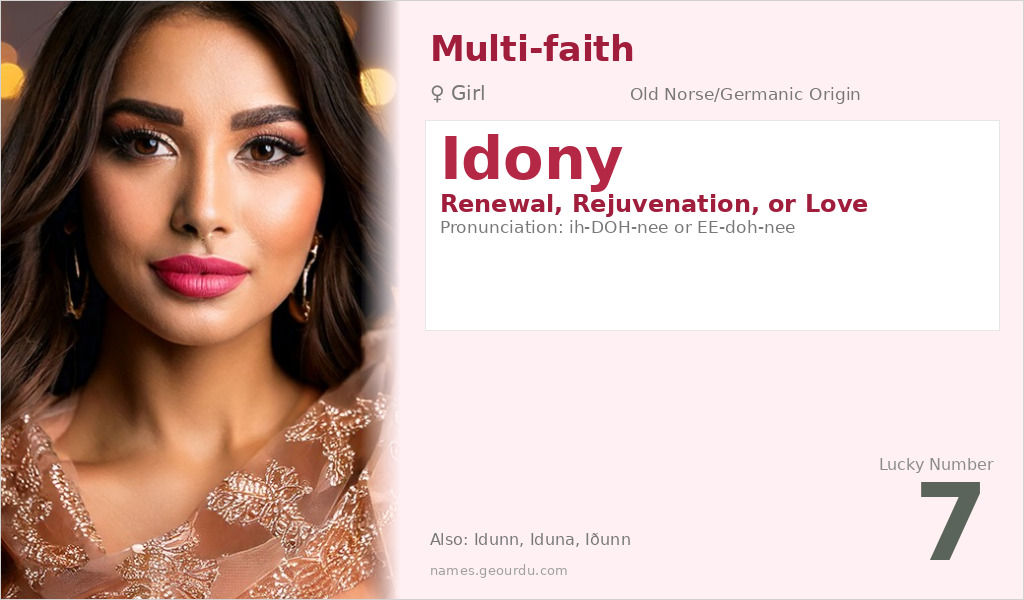
Idony is a beautiful, mythological name with deep roots in Norse tradition. Derived from the goddess Iðunn who guarded the apples of immortality, this name carries powerful connotations of renewal, eternal youth, and loving care. While relatively rare today, Idony offers a unique connection to ancient Scandinavian mythology with a melodic, feminine sound. This guide explores the true meaning, origin, and cultural significance of this distinctive name.
Meaning of Idony
The name Idony originates from Old Norse mythology, specifically from the goddess Iðunn (pronounced ee-THOON). The etymology breaks down to ‘ið’ meaning ‘again, repeatedly’ or ‘work, activity’ combined with ‘unna’ meaning ‘to love’ or ‘to grant.’ Some scholars also connect it to ‘unnr’ meaning ‘wave,’ suggesting cyclical renewal. In Norse myths, Iðunn was responsible for the golden apples that maintained the gods’ youth and immortality, making her one of the most important deities in the Norse pantheon. The name thus embodies concepts of rejuvenation, eternal life, and loving preservation. While sometimes simplified as ‘ever young’ or ‘renewing love,’ the full meaning encompasses both the cyclical nature of life and nurturing care.
| 📛 Name | Idony |
| 💎 Meaning | Renewal, Rejuvenation, or Love |
| 👤 Gender | Girl |
| 🕌 Religion | Multi-faith |
| 🌍 Origin | Old Norse/Germanic |
| 🗣 Pronunciation | ih-DOH-nee or EE-doh-nee |
| ✍️ Urdu | ایدونی |
| ✍️ Arabic | إيدوني |
| 🔢 Numerology | 7 |
| ✨ Spellings | Idunn, Iduna, Iðunn, Idun, Idonia |
Origin & Cultural Significance
Idony has its origins in pre-Christian Scandinavian mythology, specifically from the Old Norse tradition that flourished in Viking Age Scandinavia (approximately 793-1066 CE). The goddess Iðunn appears in multiple Old Norse texts including the Poetic Edda and Prose Edda, where she is described as the wife of Bragi, god of poetry. The name entered English usage through 19th century interest in Norse mythology and romantic revival of ancient names. While not traditionally a Christian name, it has been adopted by some Christian families attracted to its melodic sound and positive meanings. The name remains most popular in Scandinavian countries and among people of Norse heritage, though it appears occasionally in English-speaking countries as well.
Personality Traits
Those named Idony often embody the nurturing, rejuvenating qualities of their mythological namesake. They tend to be creative individuals who value tradition while embracing positive change and renewal. With a natural inclination toward caretaking roles, Idonys often excel in fields involving healing, education, or artistic expression. Their connection to cyclical patterns makes them particularly attuned to natural rhythms and seasonal changes.
Similar Names
If you like Idony, consider: Freya, Astrid, Sigrid, Brynhild, Gudrun
Famous People Named Idony
- Idony Jones — British actress known for her work in Shakespearean theater
- Idony Smit — Dutch artist and illustrator specializing in mythological themes
Frequently Asked Questions About Idony
What does Idony mean?
Idony means 'renewal,' 'rejuvenation,' or 'love' derived from Old Norse elements 'ið' (again/repeatedly) and 'unna' (to love/grant). It comes from the Norse goddess Iðunn who guarded the apples of immortality.
Is Idony a boy or girl name?
Idony is exclusively a girl's name, derived from the feminine Norse goddess Iðunn. There are no traditional masculine versions, though similar Norse names like Idun could be considered unisex in modern usage.
What is the origin of Idony?
Idony originates from Old Norse mythology and language. It comes specifically from the name of the goddess Iðunn in Norse tradition, with roots in pre-Christian Scandinavian culture that dates back to the Viking Age.





